A Voice, Tuilleadh agus Tráigh
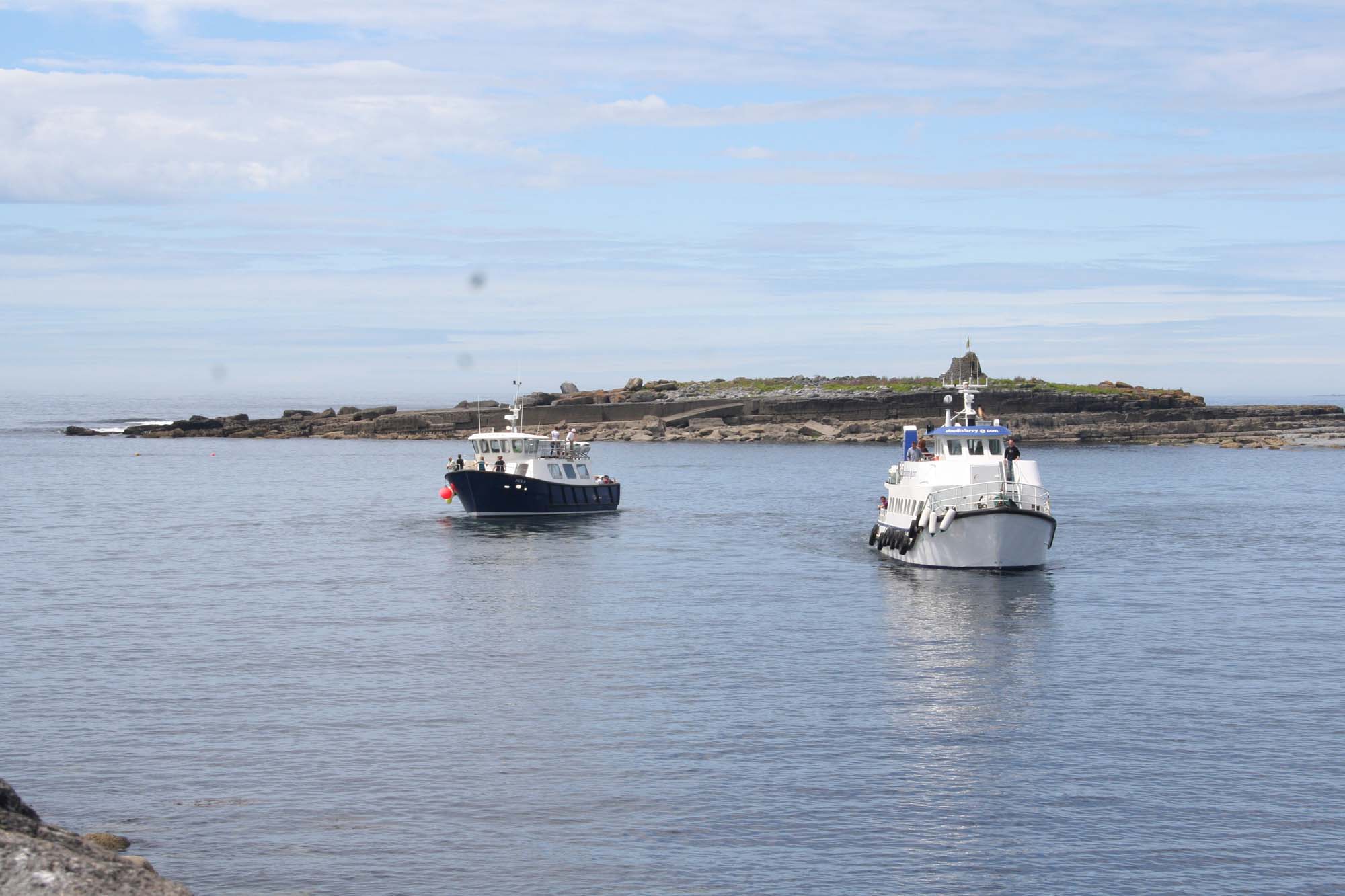
The project began at sea. On ferries crossing between Doolin and the Aran Islands, the recorded voice of a Bríd Ban Ui Conaille from Inis Oirr drifted through the air. She spoke of the sea’s demands and gifts — fish and turf, driftwood and footballs — ordinary materials of survival that became metaphors for exchange and resilience. Her words folded into the sound of the waves, creating a space of listening and reflection, where myth emerged not as story, but as lived rhythm.
Contemporary HyBrasil
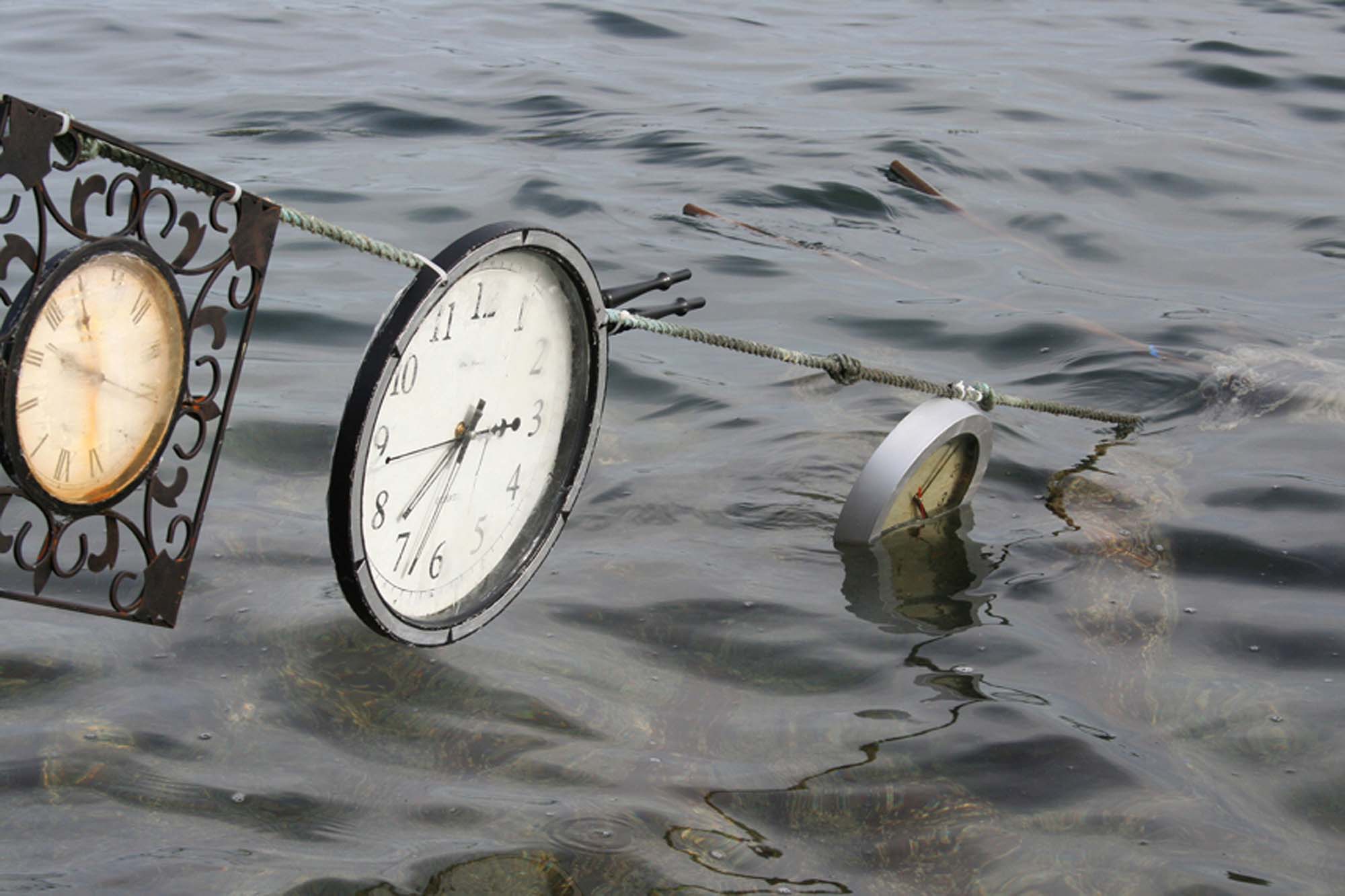
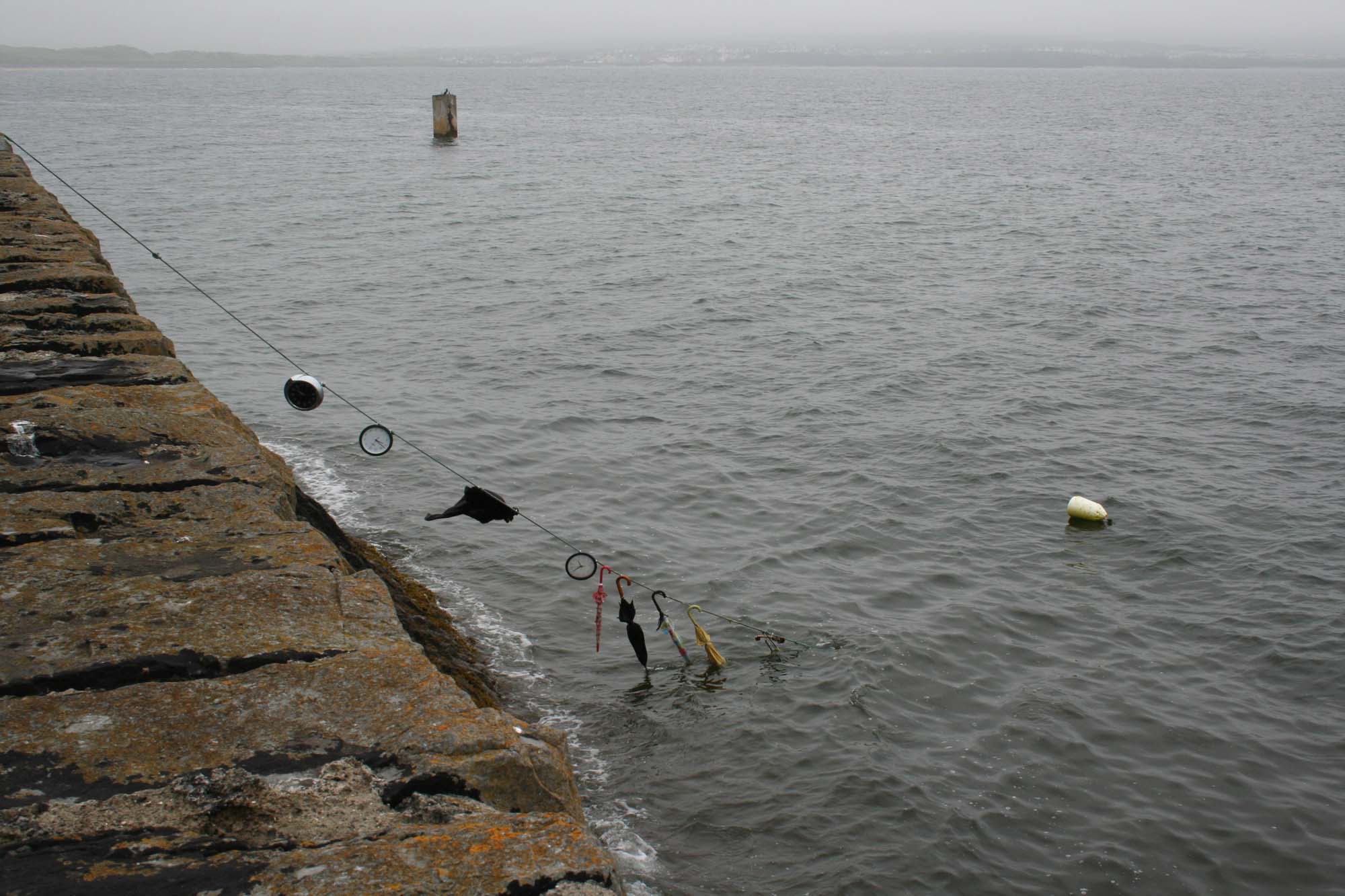
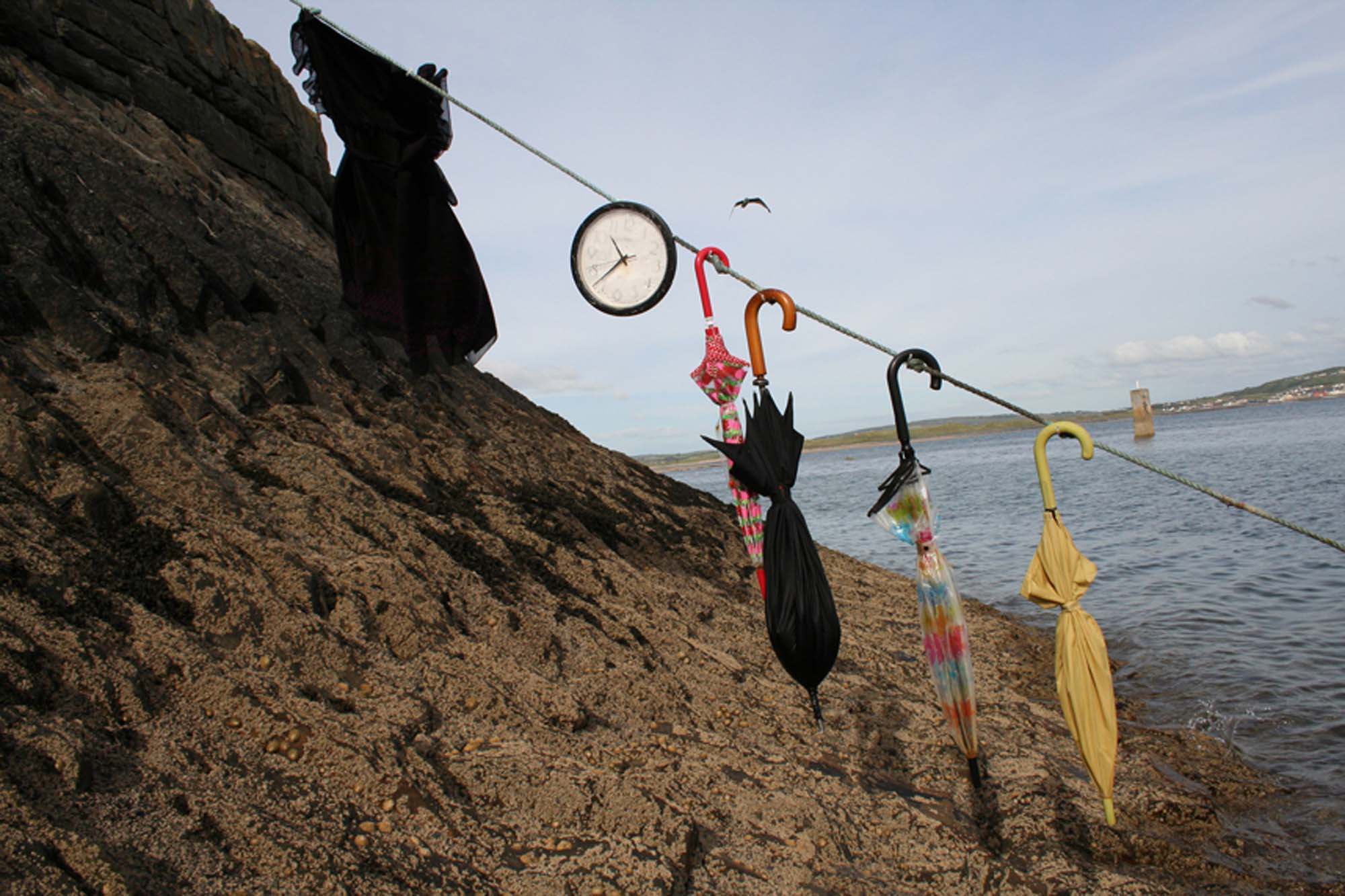
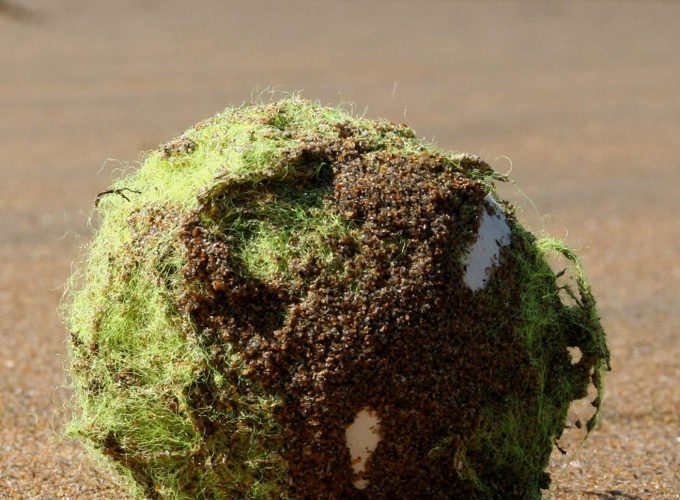
From the ferry routes, the line extended to Liscannor Bay, where Collins installed a rope between the pier and the tide, hung with found objects — a black dress, an umbrella, a pair of green shoes, a fiddle, mops and brushes, and several clocks. The work, titled Contemporary Hy Brasil, was a meditation on disappearance and return. As the tide rose and fell, the visible length of rope- an umbilical thread to the unseen island of Hybrasil or Cill Stephane – changed; the seaweed gathered; the clocks stopped. Some objects vanished, some drifted back. The work, left to the ocean became an offering, a letting go.
Sídh
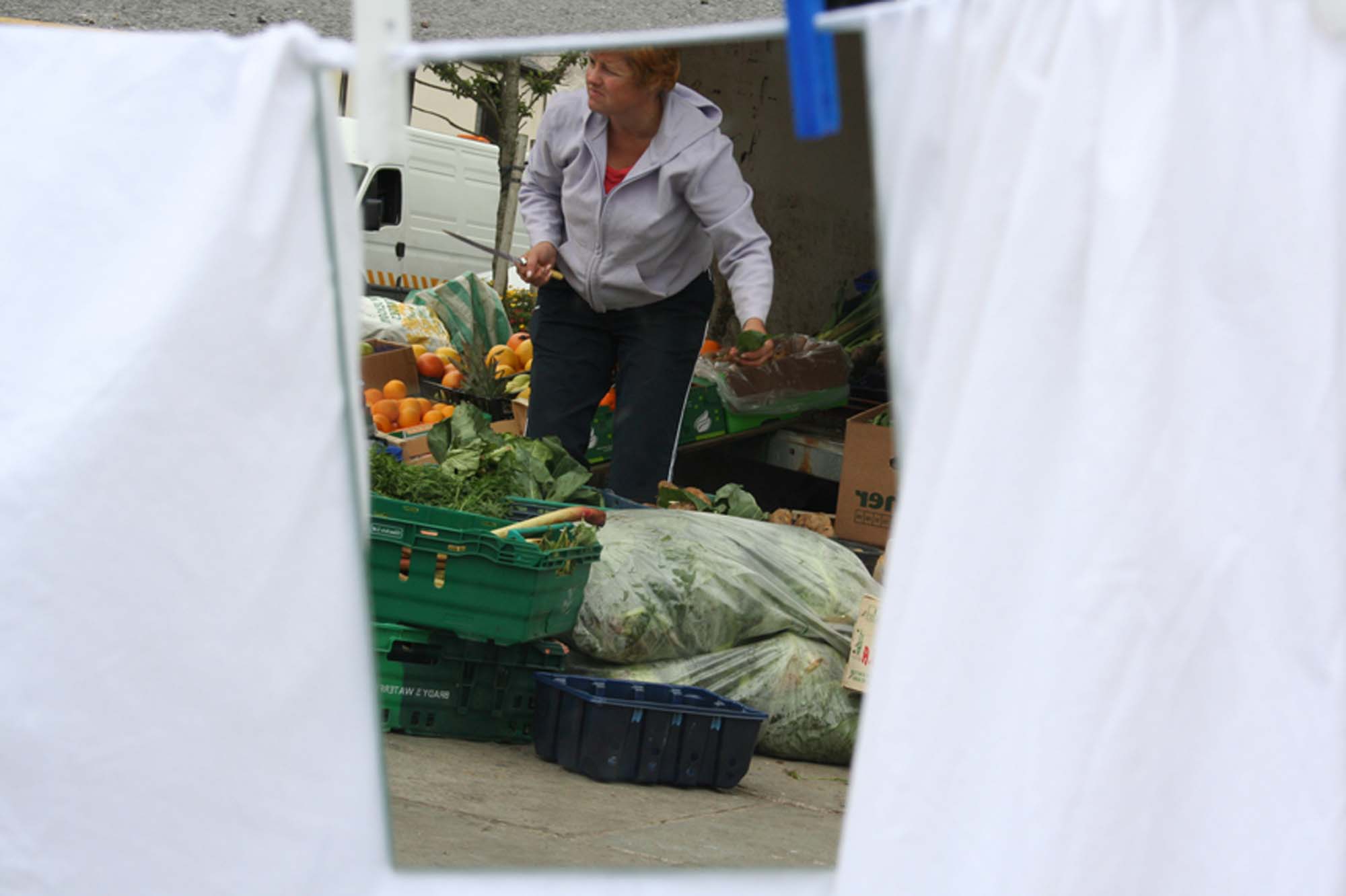
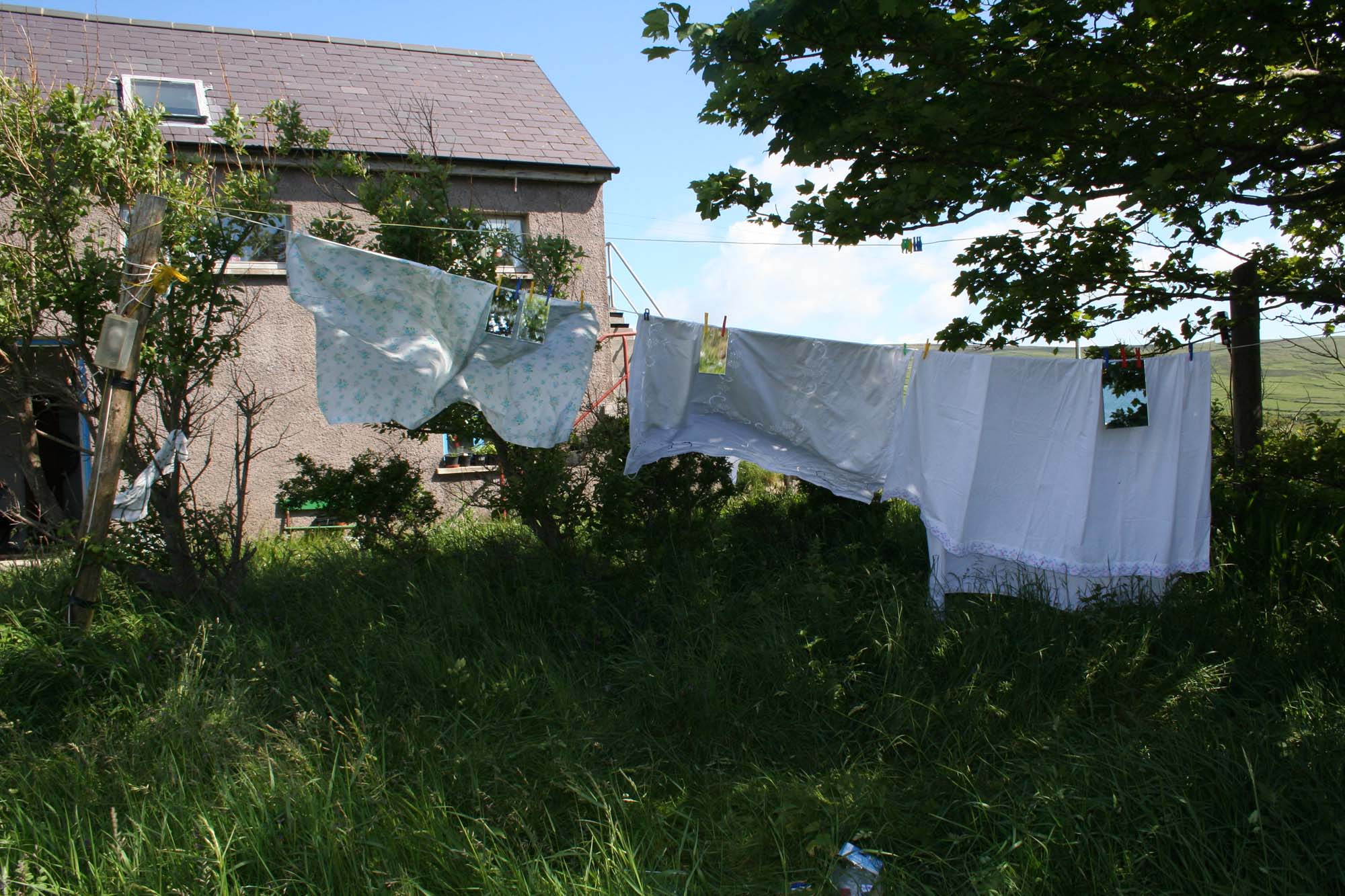
In Ennistymon, the same themes took a domestic form. Each morning for two weeks, Collins strung a washing line across the town square, hanging sheets and mirrors that caught the passing light. Named Sídh, the Irish word for fairy mound, threshold to the Otherworld — the piece blurred the space between public and private, daily life and myth. The wind moved the sheets; mirrors flashed fragments of faces and clouds. The act of looking became an encounter: fleeting, reflective, alive.
Crossing Times
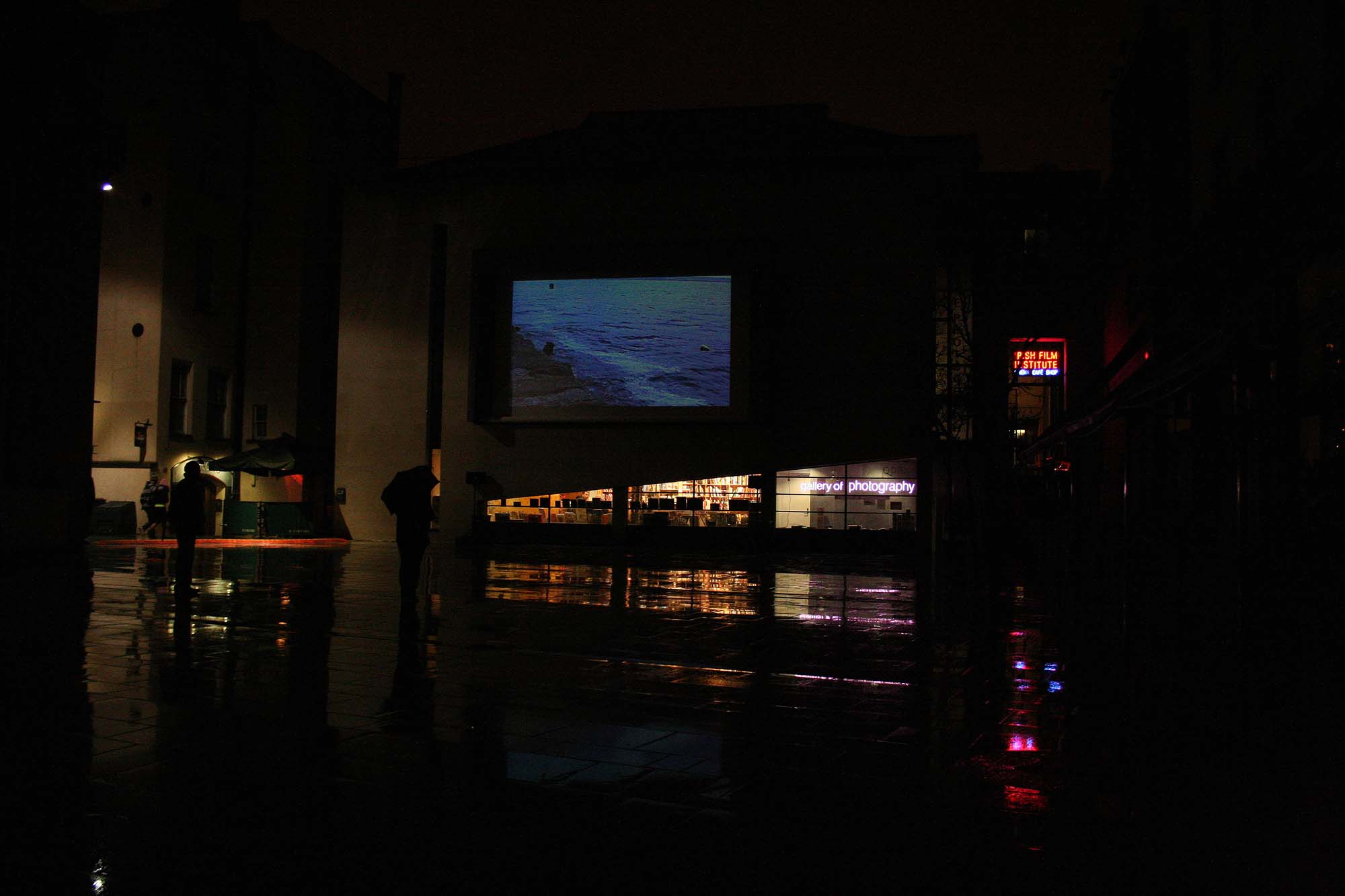
The journey ended in Dublin, at the Winter Solstice, where Collins brought the rhythm of the tide into Meeting House Square. Between low tide and high tide, the sound of the sea filled the space, merging with the pulse of the city. At dusk, a four-minute film of the incoming tide at Liscannor Bay was projected beneath a clock that kept its own time. This alignment of sea, sun, and city drew a line back to the coast — closing the circle of the work while extending its resonance infinitely outward.
Cycles of Tide and Time
Across all four sites, two symbols recur: the line and the clock. The line is extension, a reaching outward toward connection, relation, and recognition. The clock is return, the circling back through time, through tide, through memory. Together they form what Cutaya called “constellations of an ever-growing imaginative space” — a pattern that moves like breath or wave, expanding and contracting, opening and closing, again and again.
I Thought I Saw the Tuath Dé Danann, But It Was Me I Was Looking At… thus becomes both an artwork and a cartography, a mapping of correspondences between coasts and consciousness. It asks what it means to seek something lost, an island, a myth, a self and to find, in that seeking, one’s own reflection.
“Whether a light reflection, a mythical land, or a real island, Hy Brasil becomes a mirror, a way of looking outward and seeing oneself.”
Maeve Collins
Supported by:
Ealaíon na Gaeltachta • Foras na Gaeilge • Alternative Entertainment • Temple Bar Cultural Trust • The Gallery of Photography and an Aras Eanna Residency Programme. Thanks to Brid Ní Connaile.