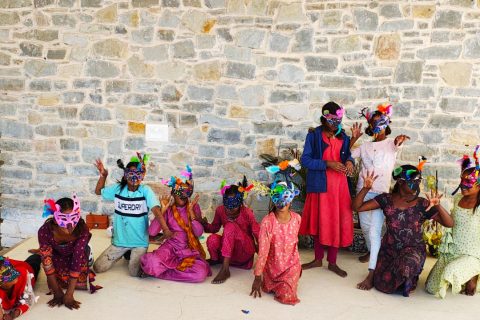


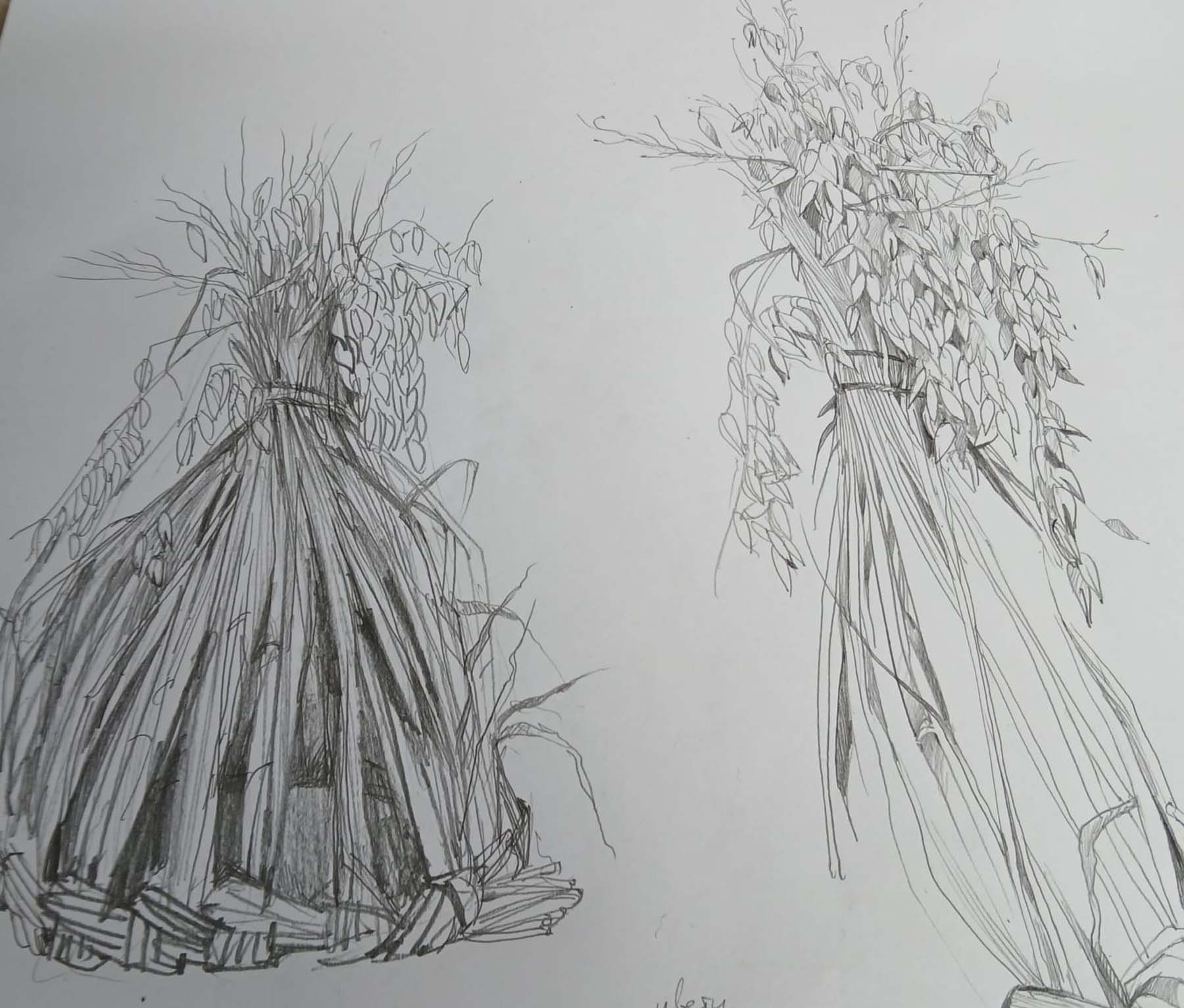
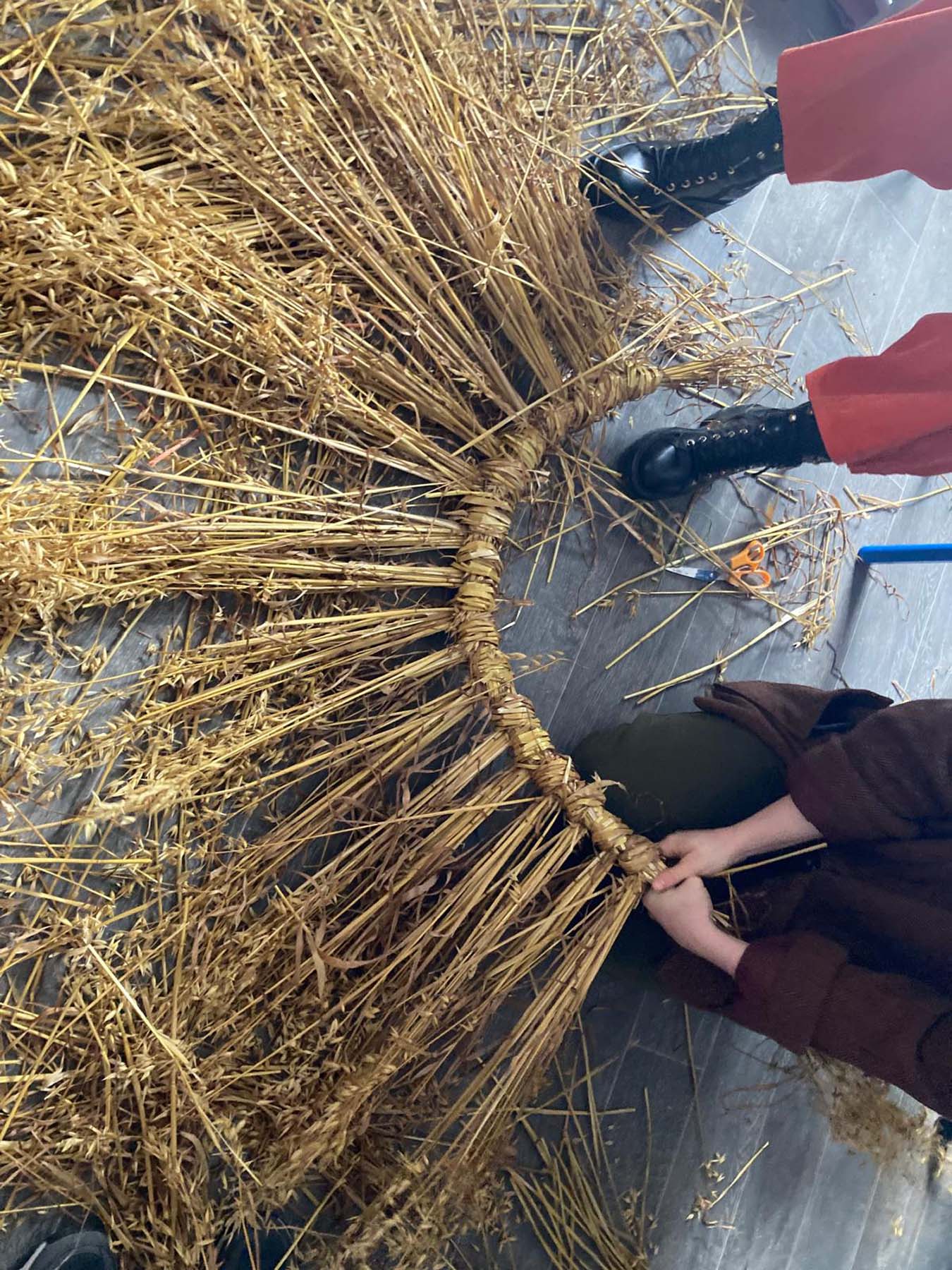
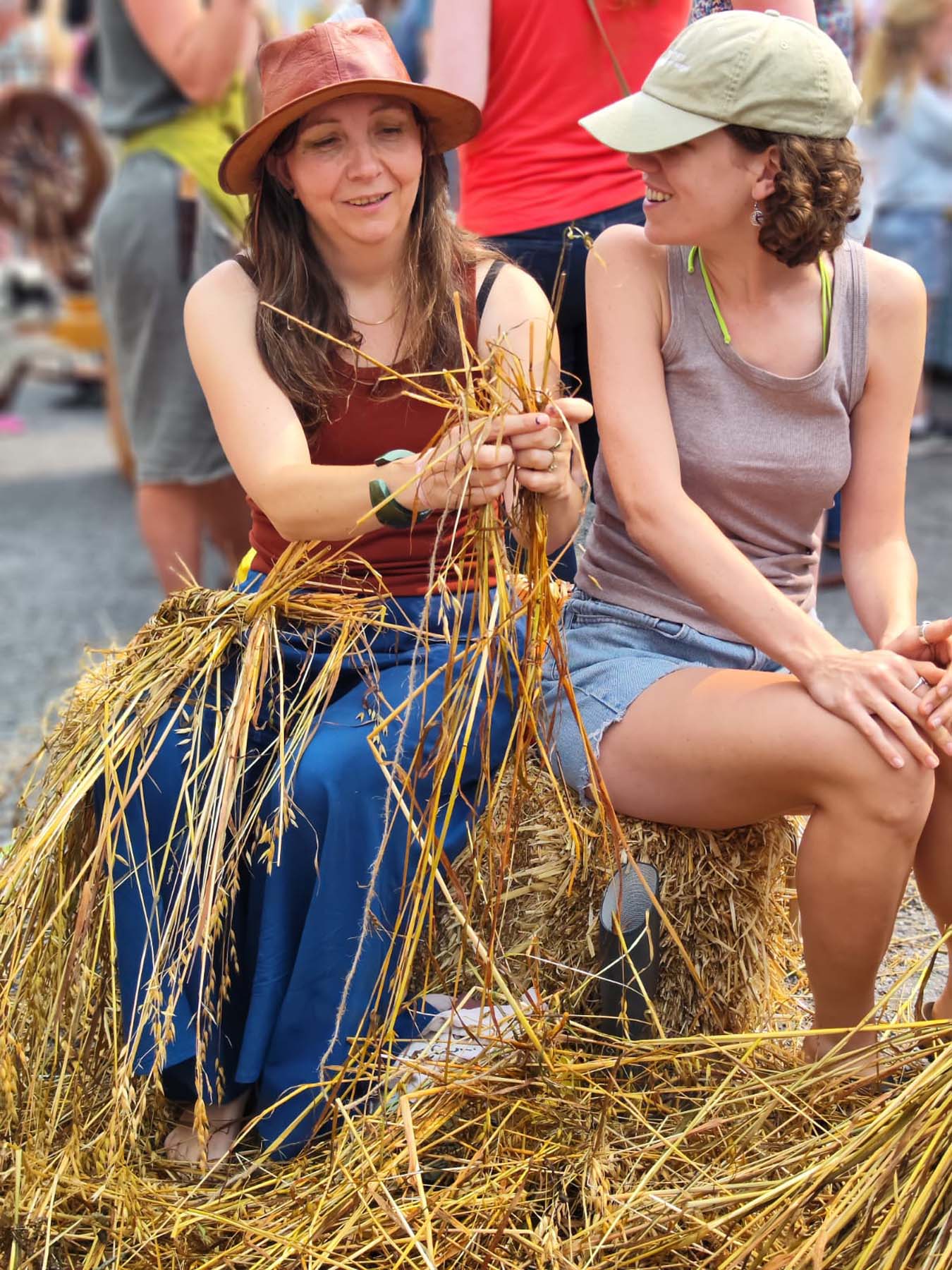
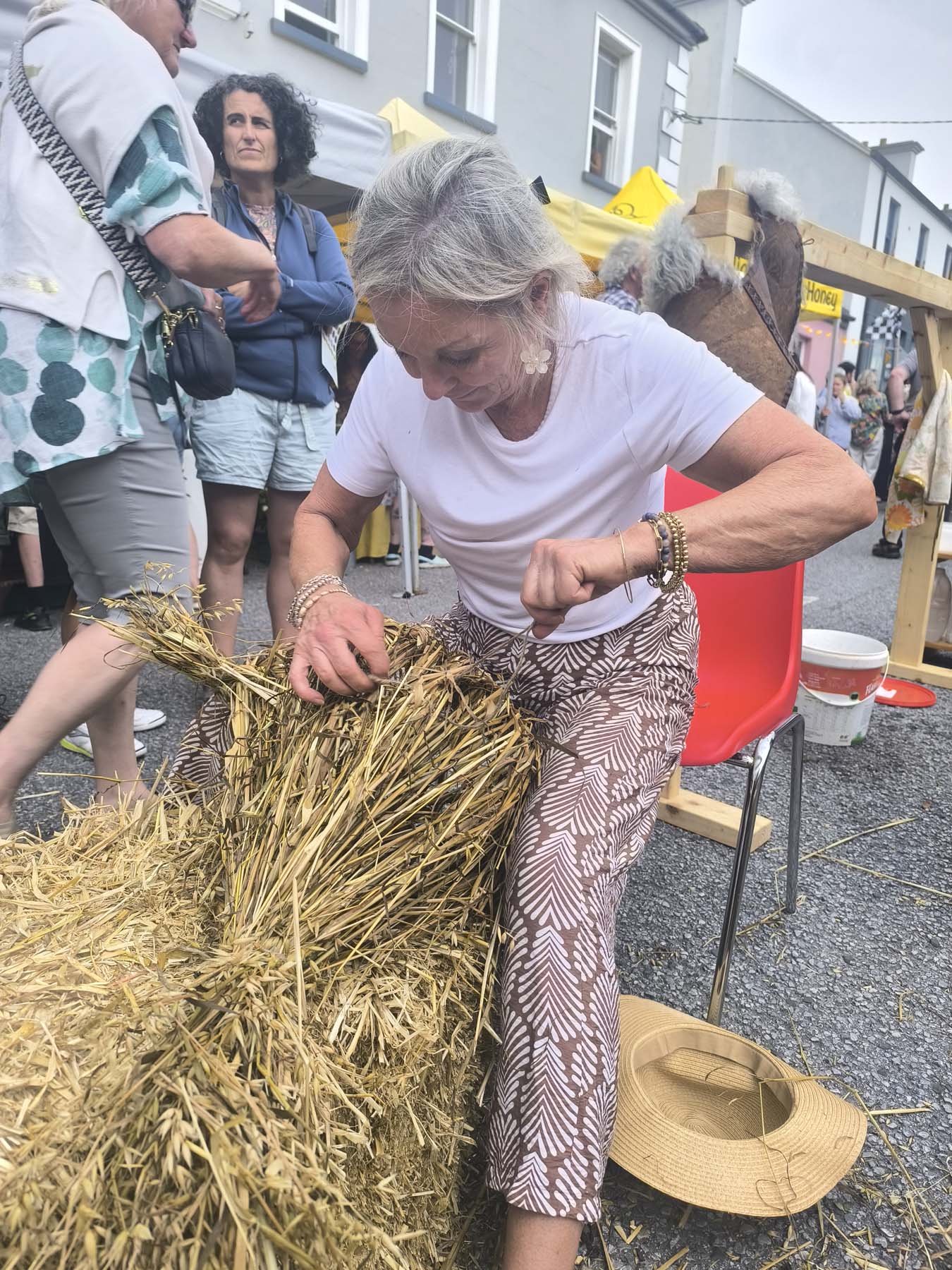
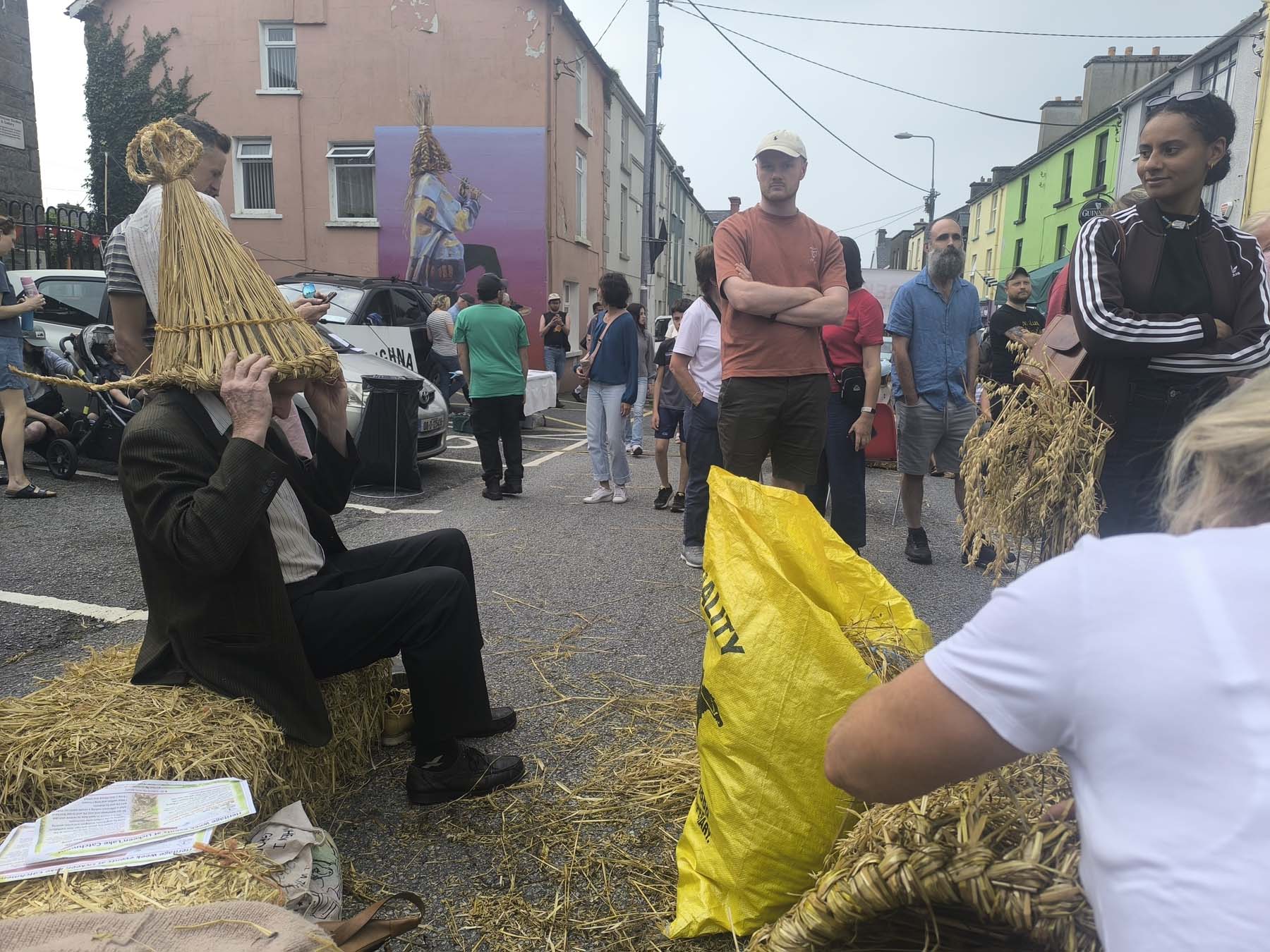
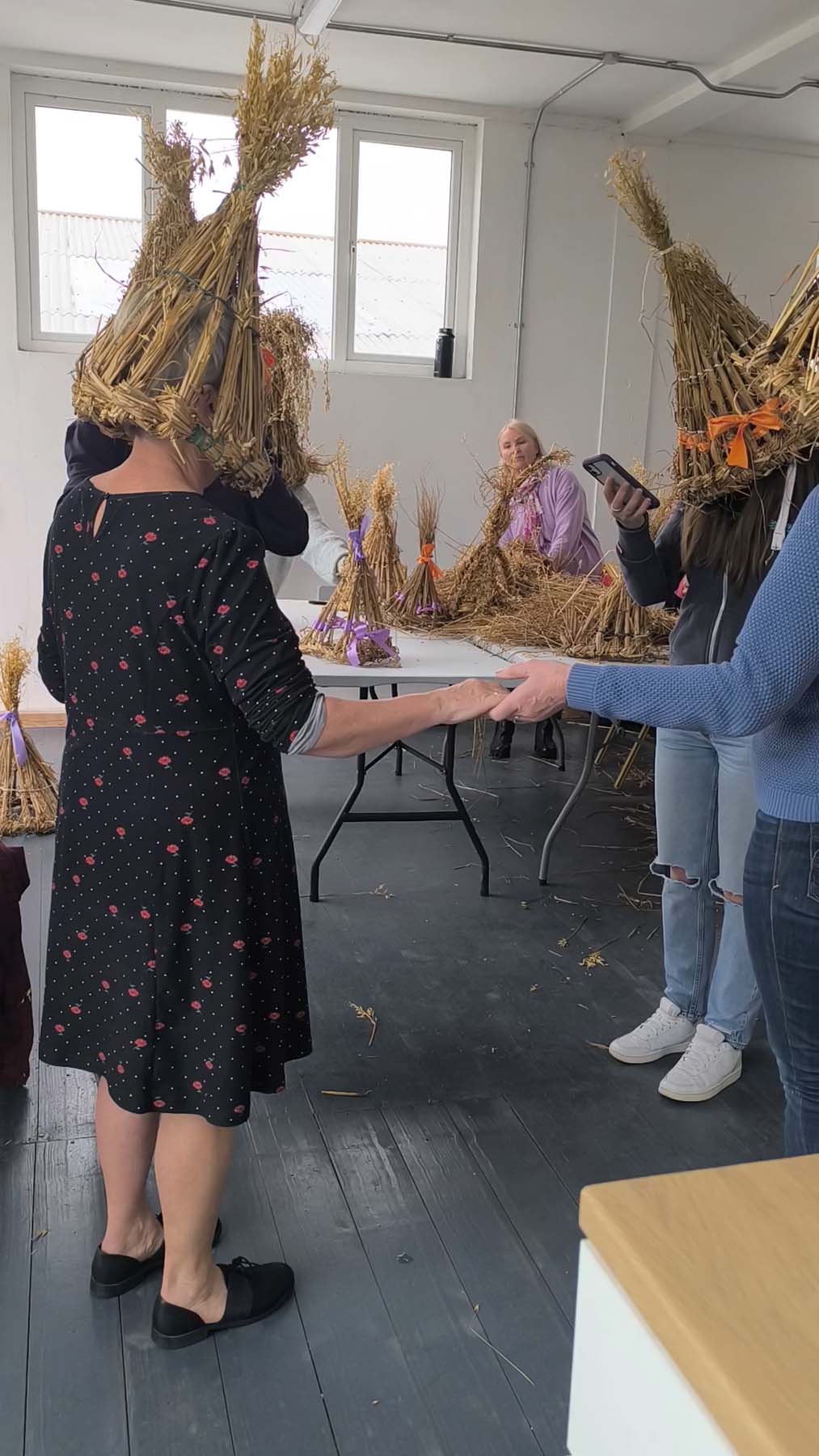
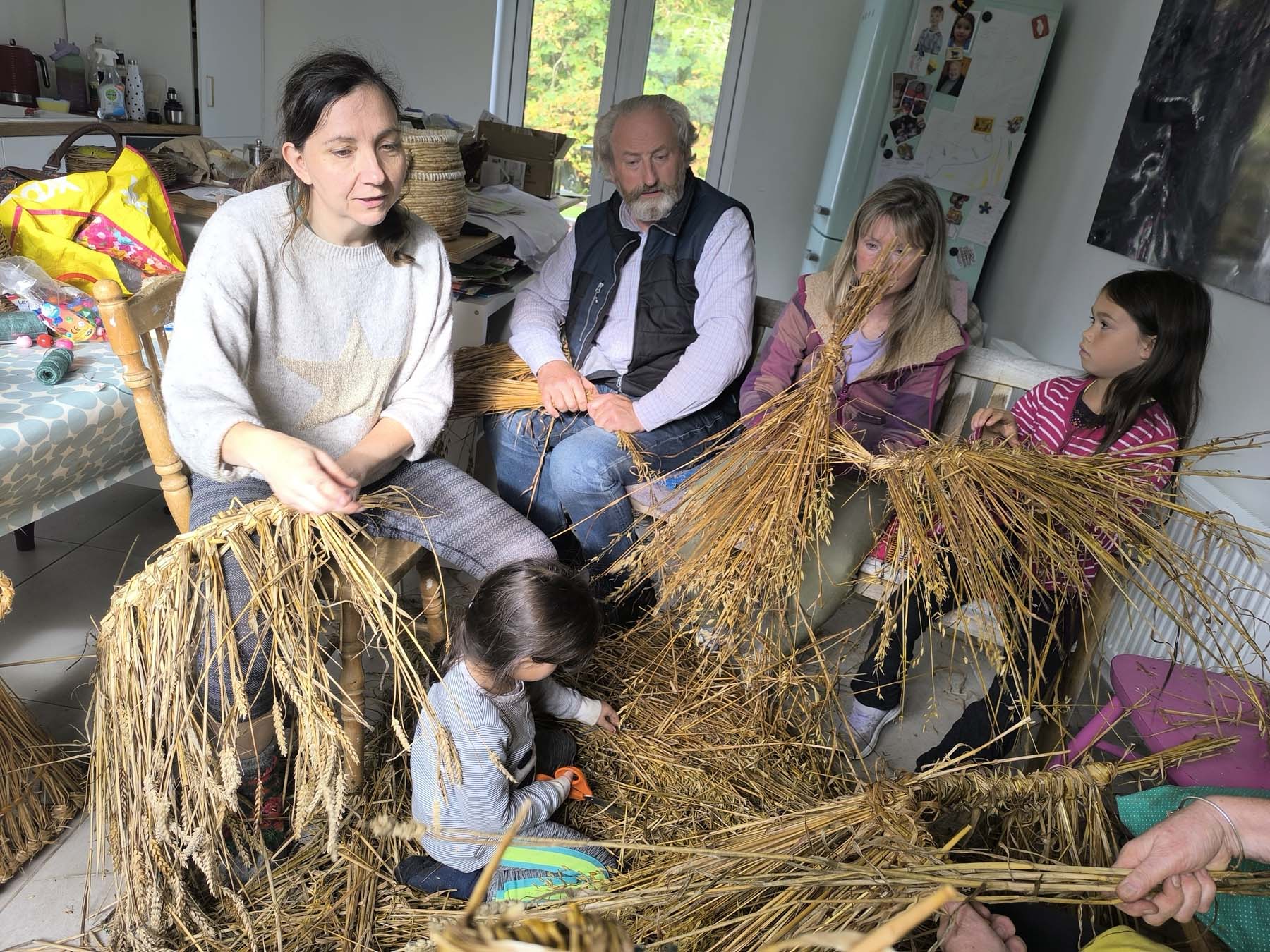
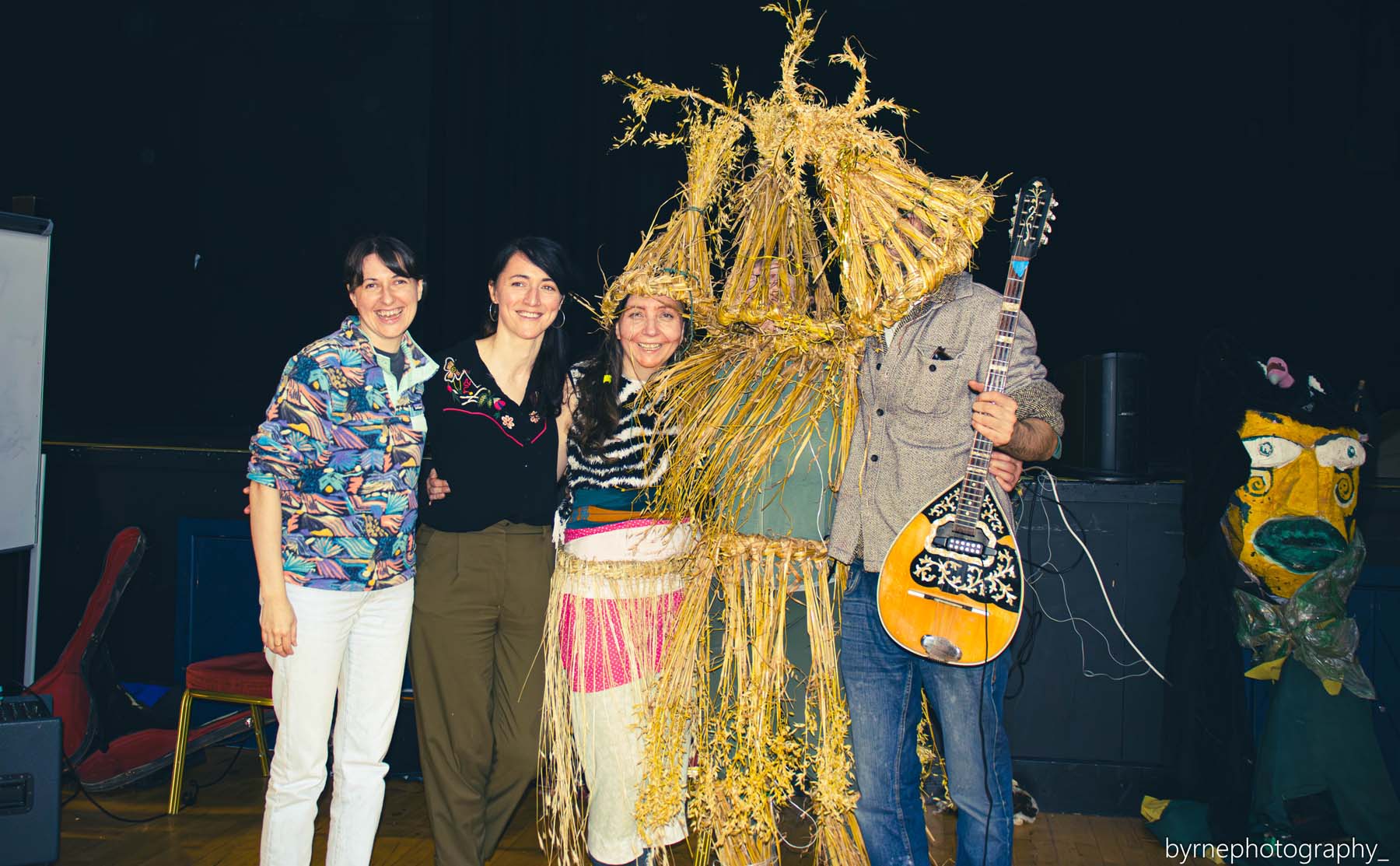
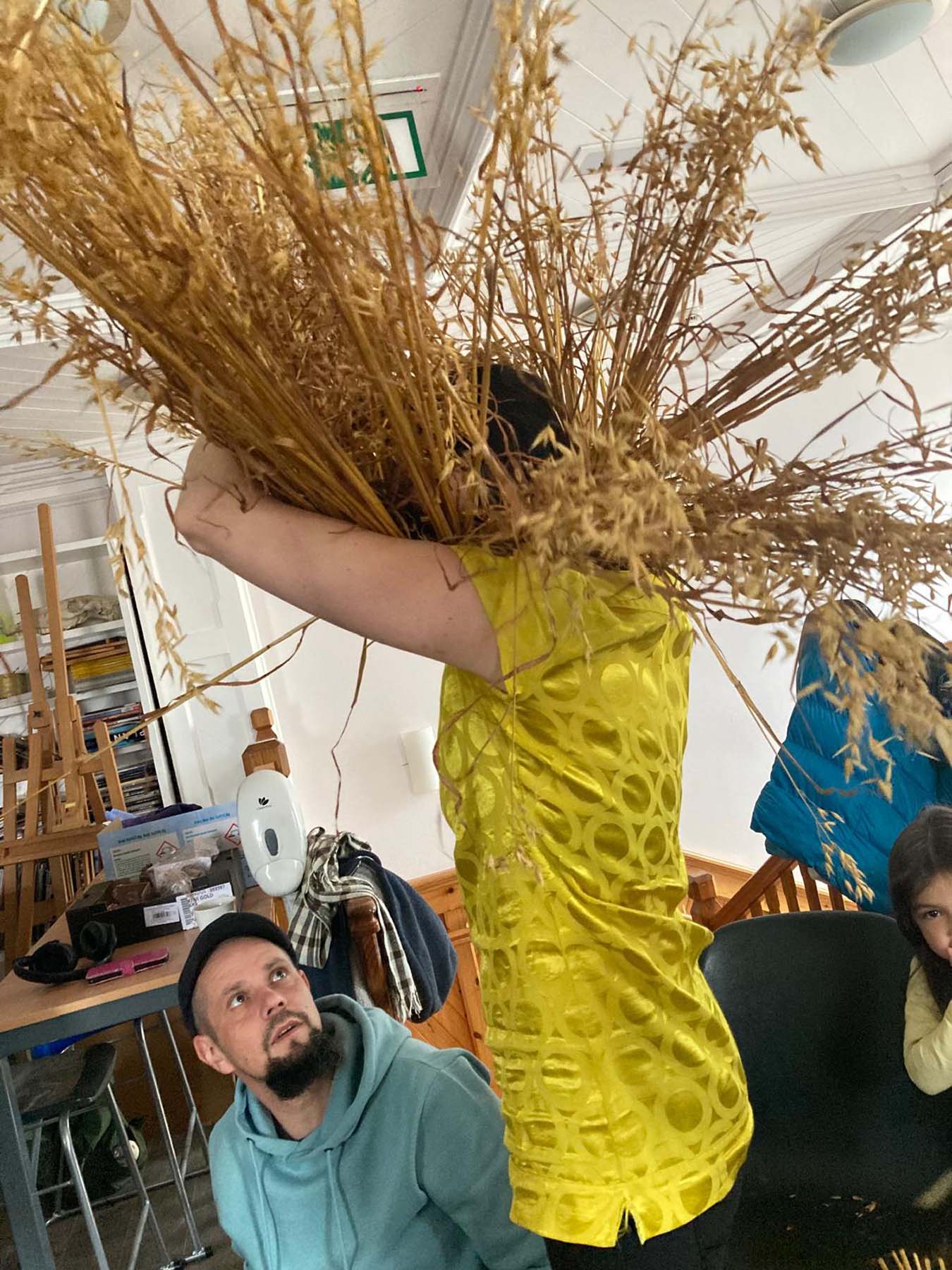
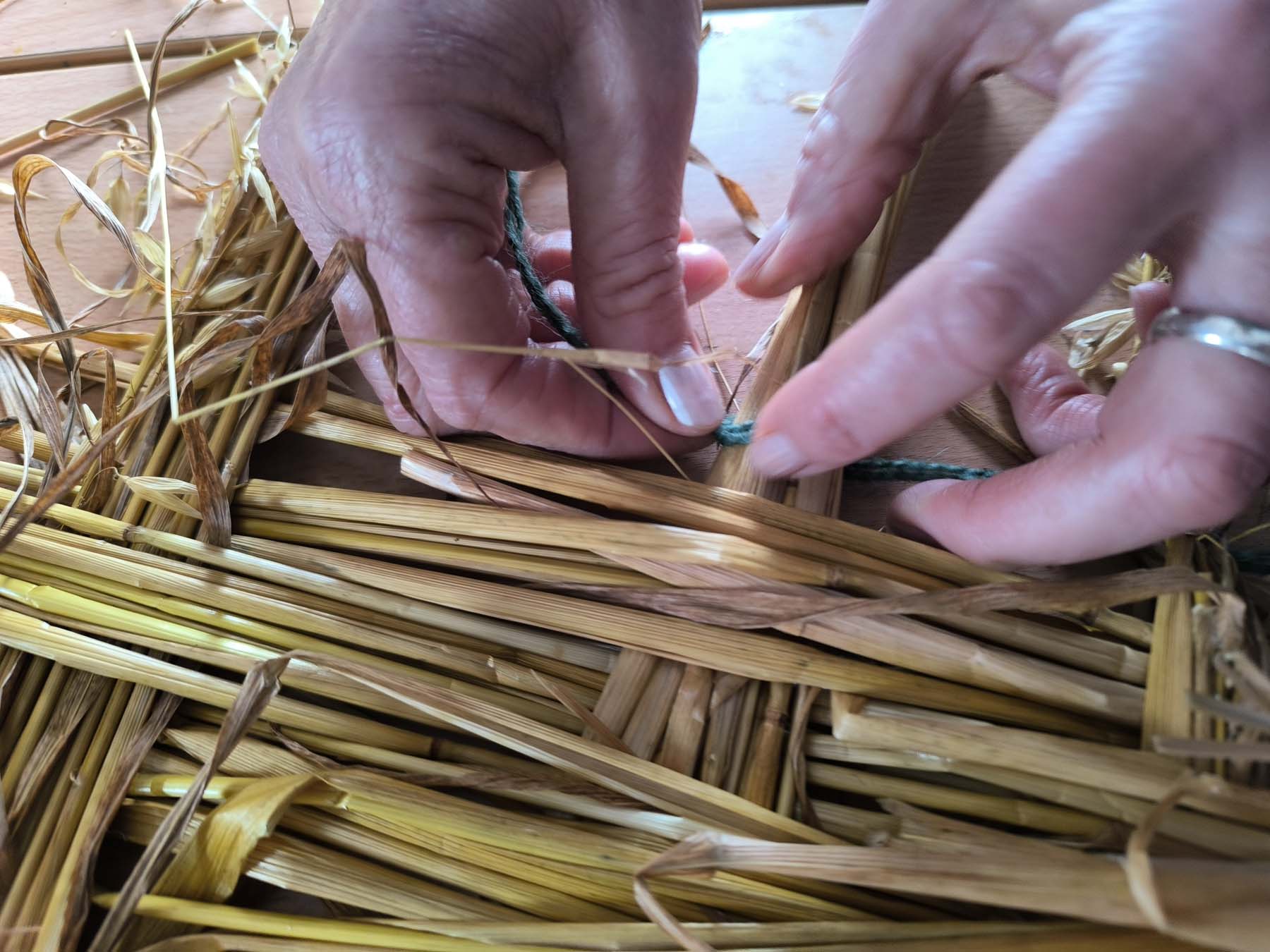
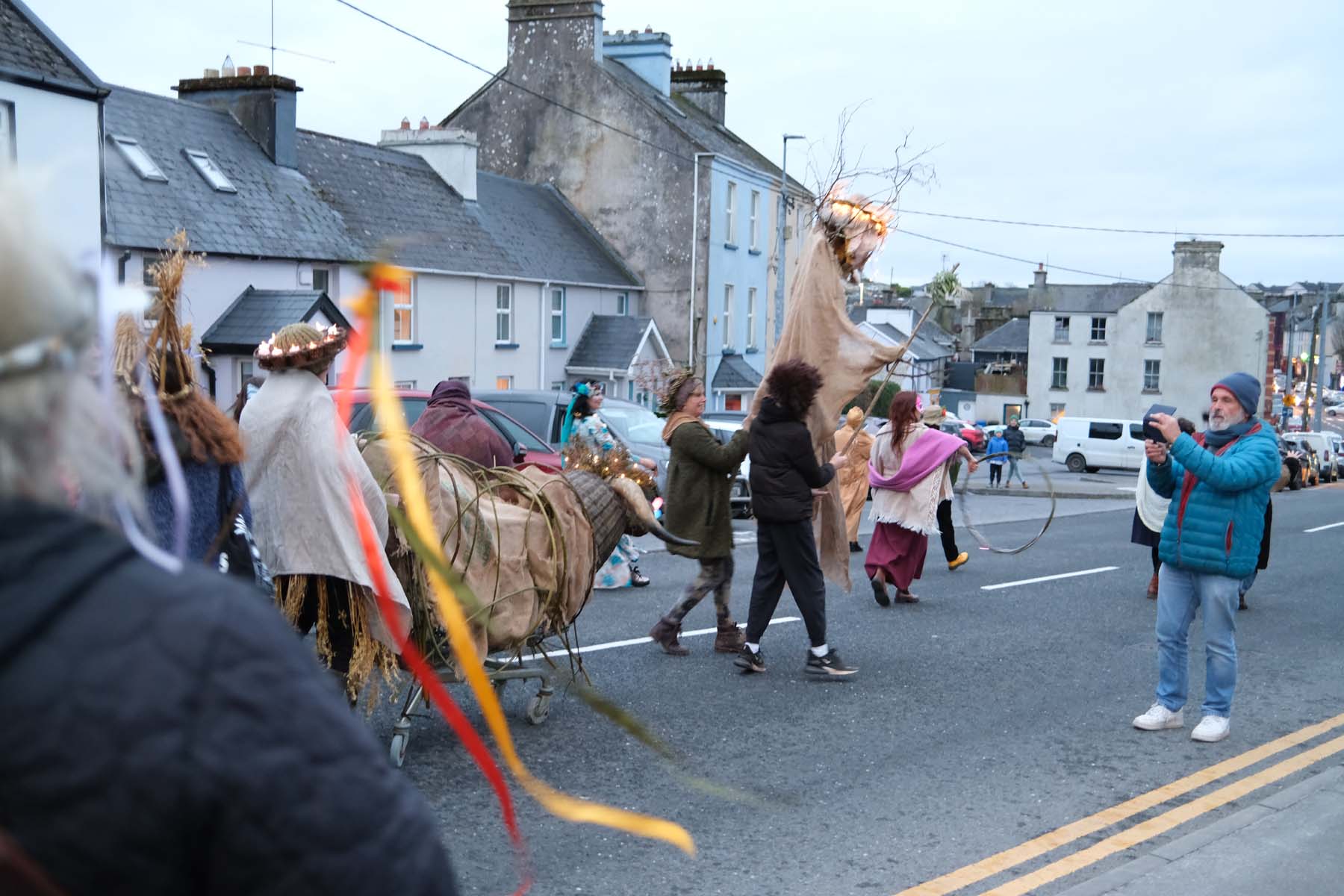
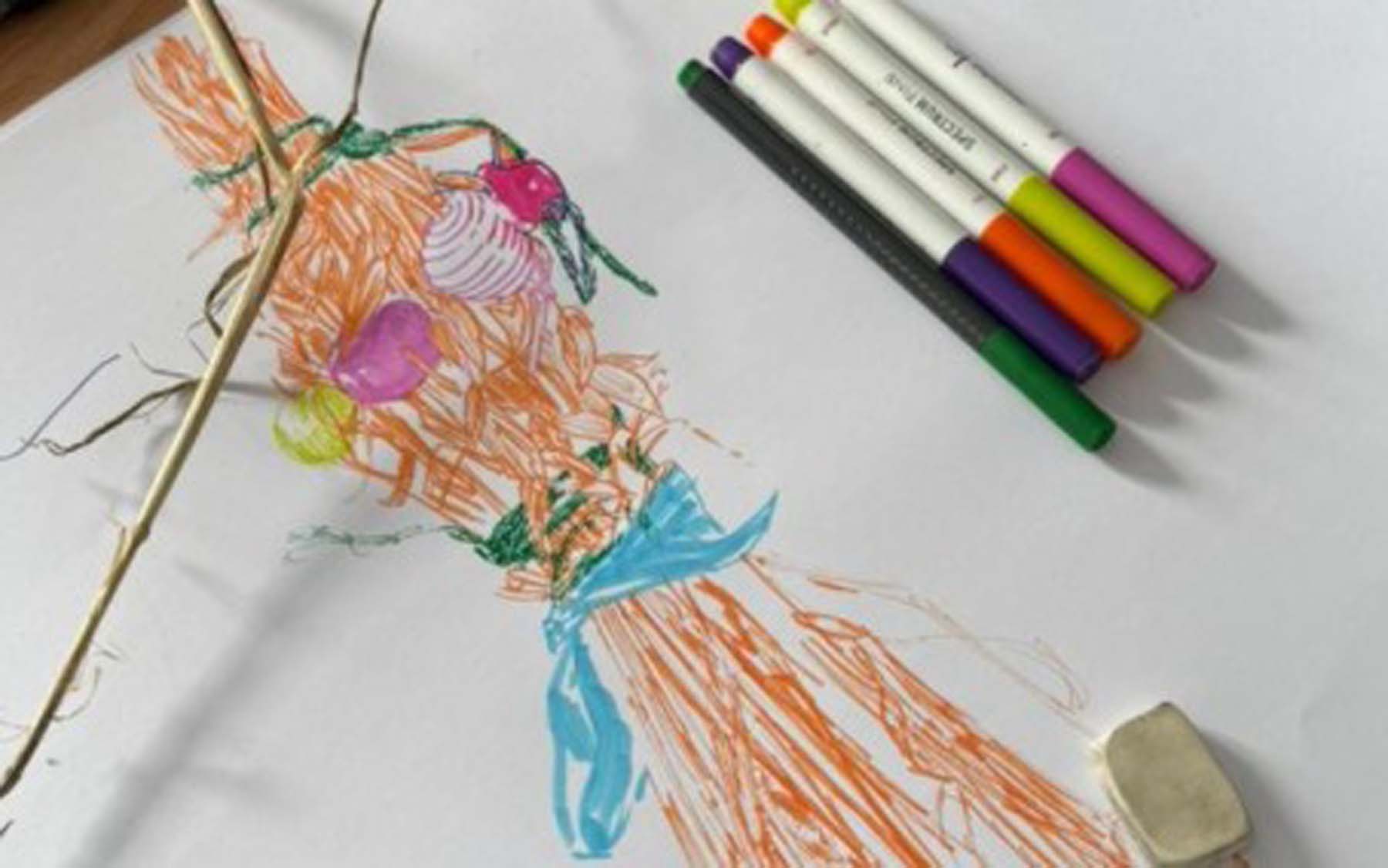
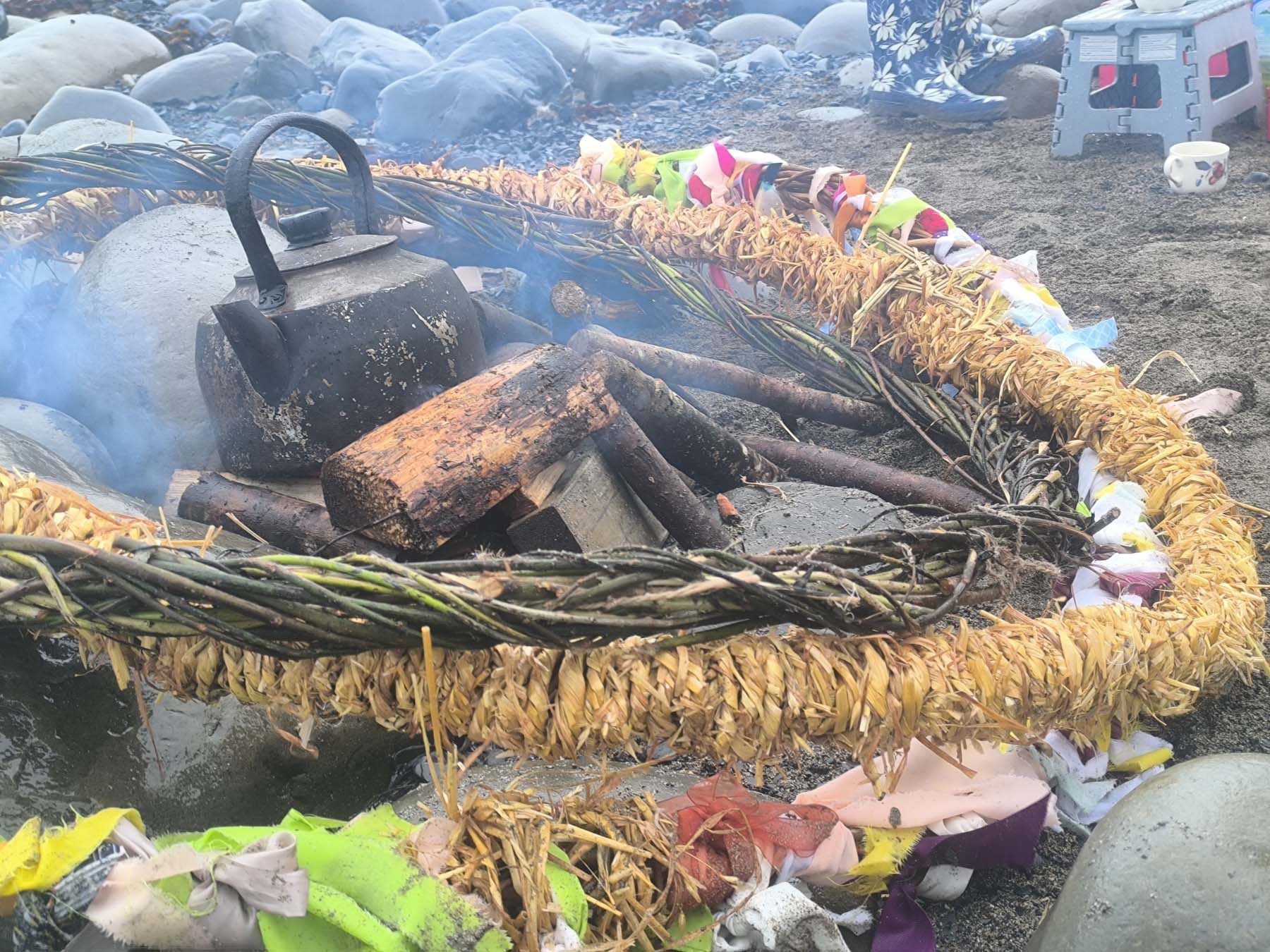
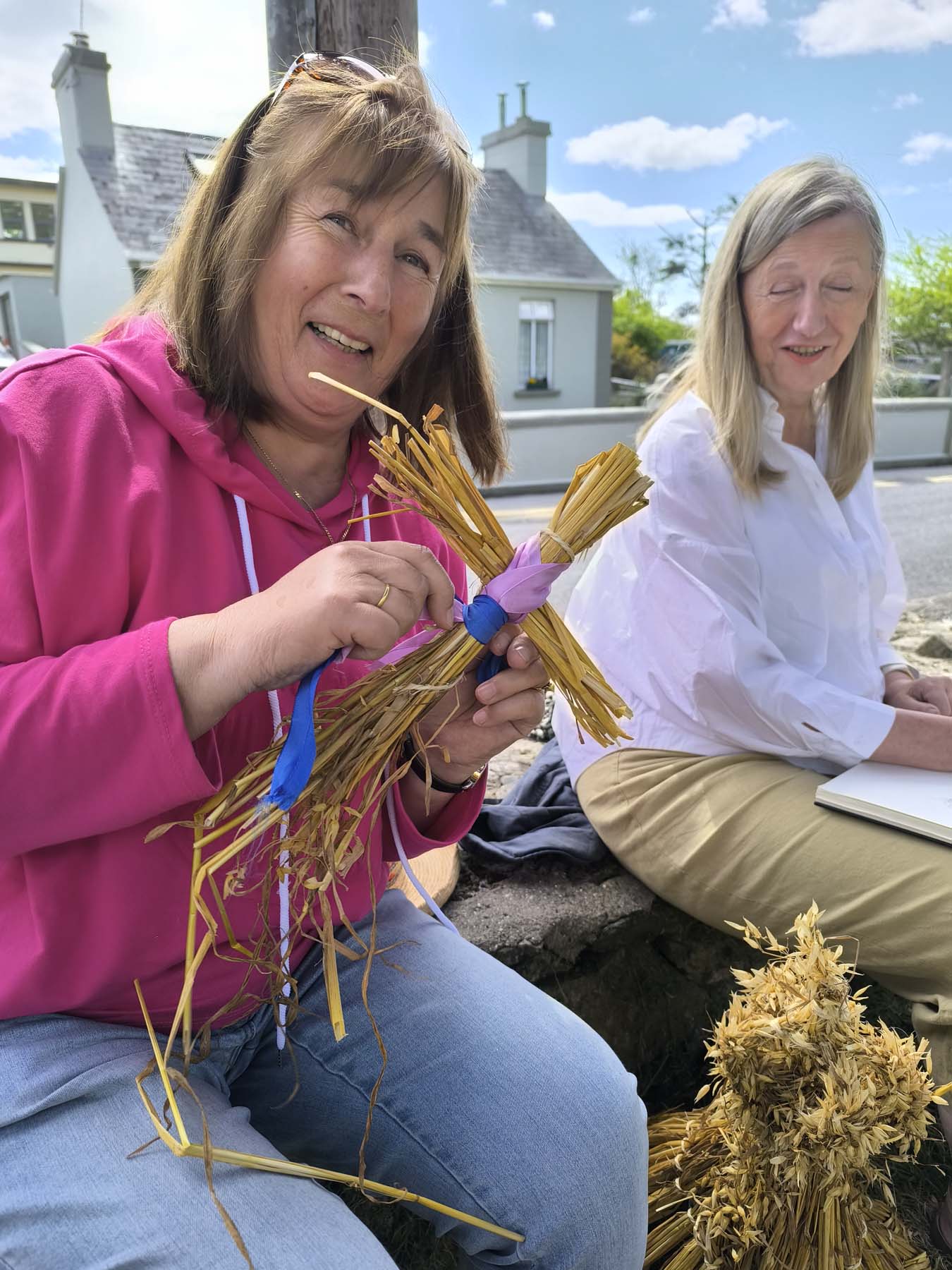
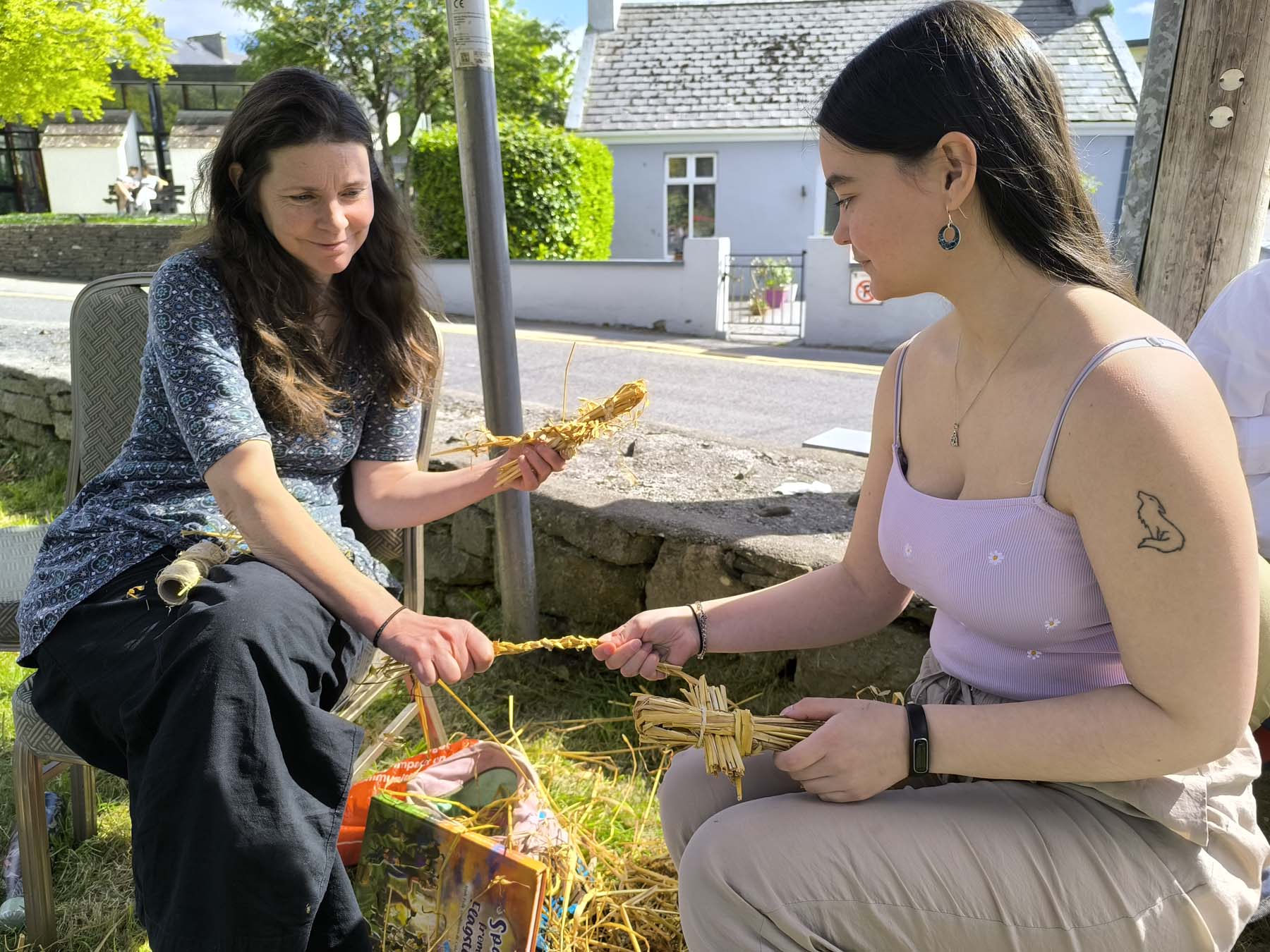
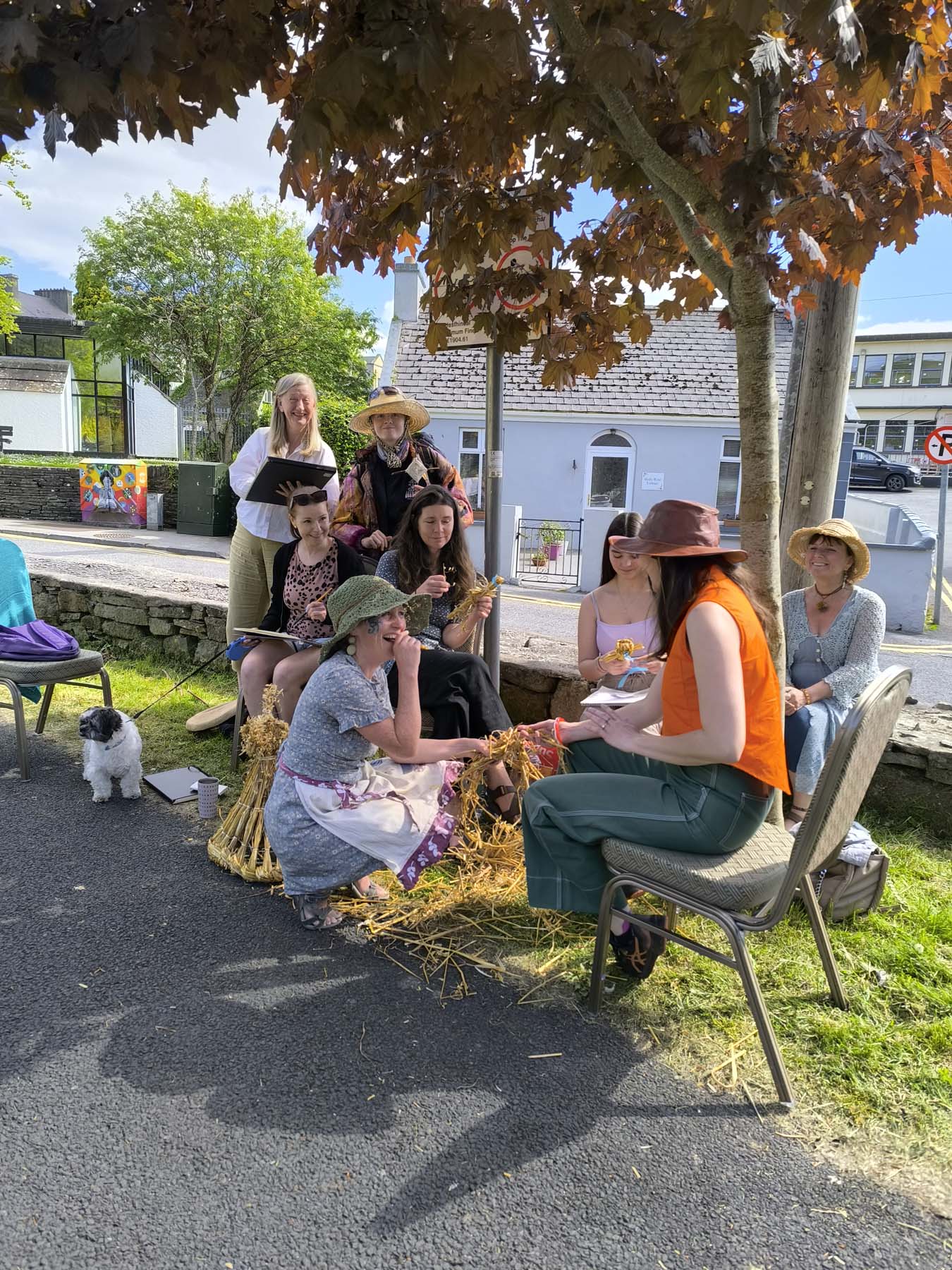
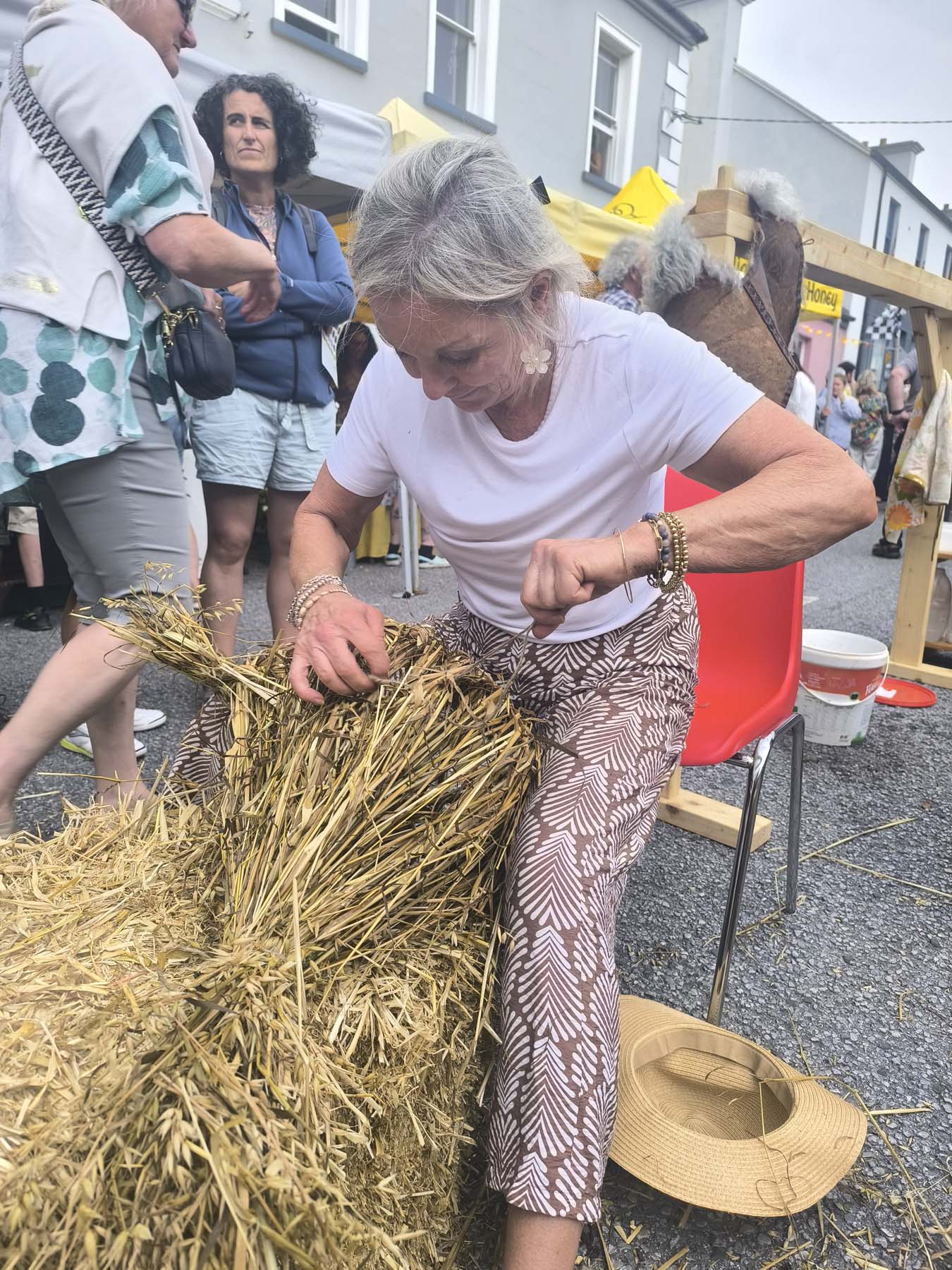
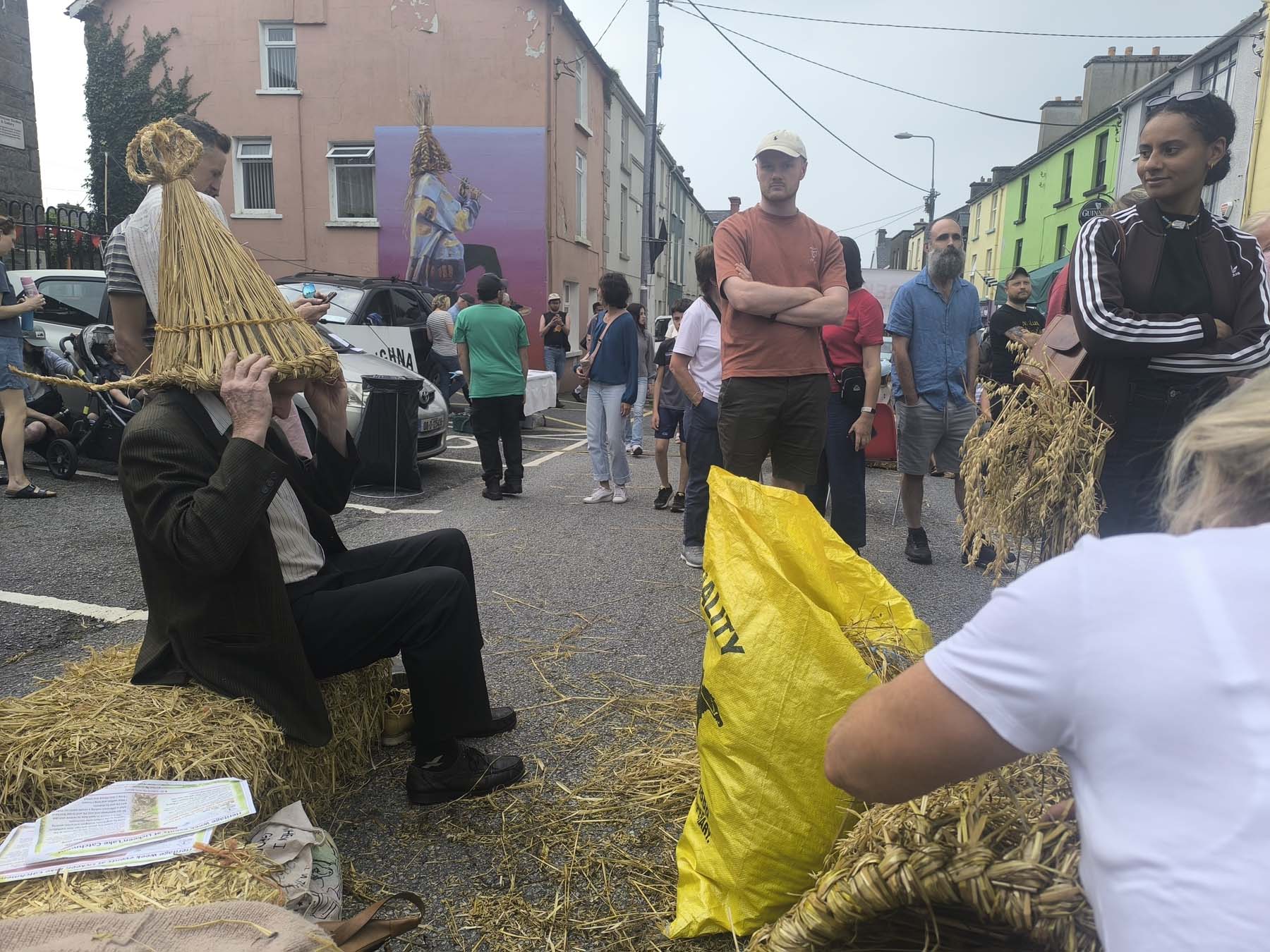
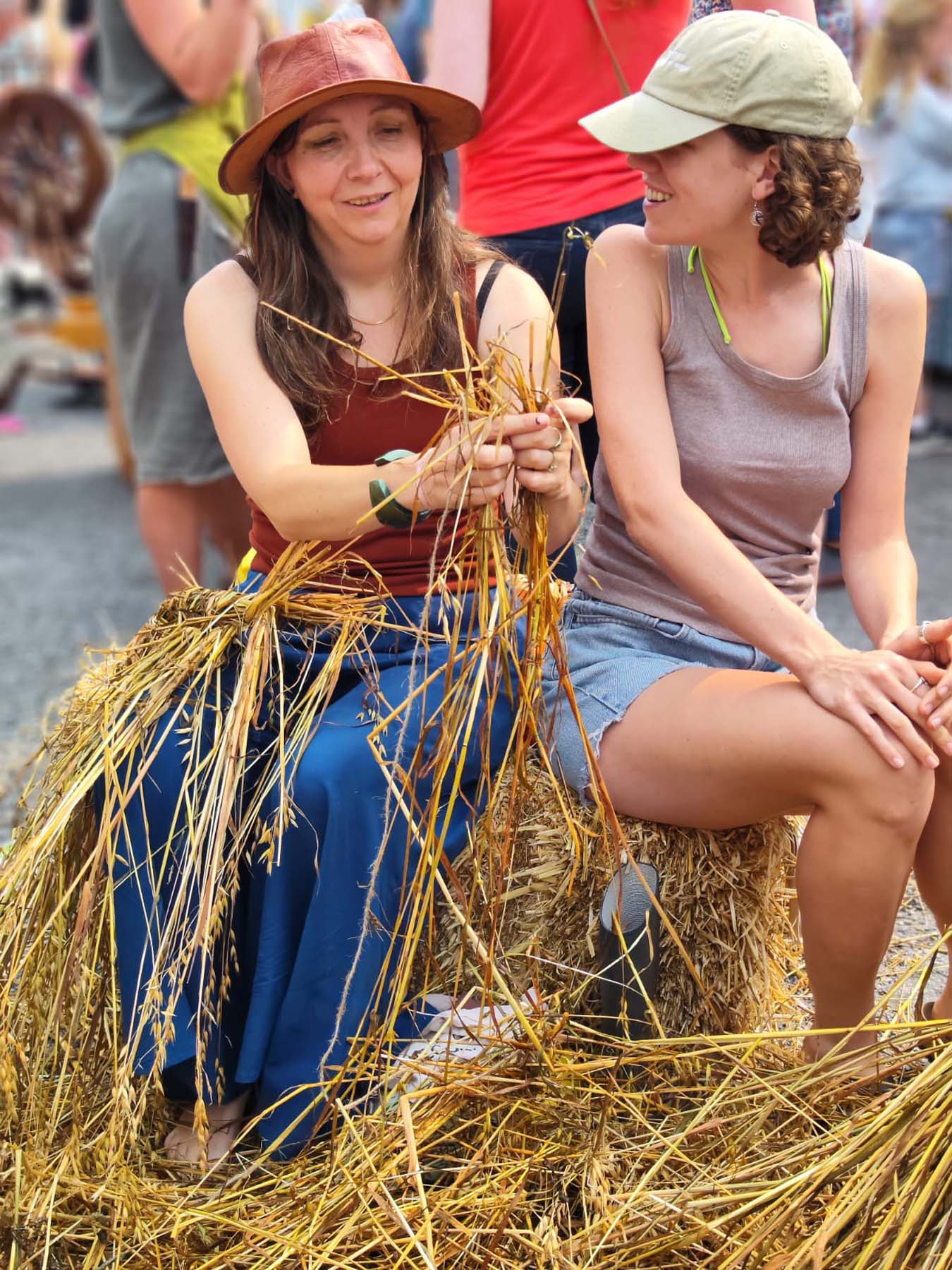
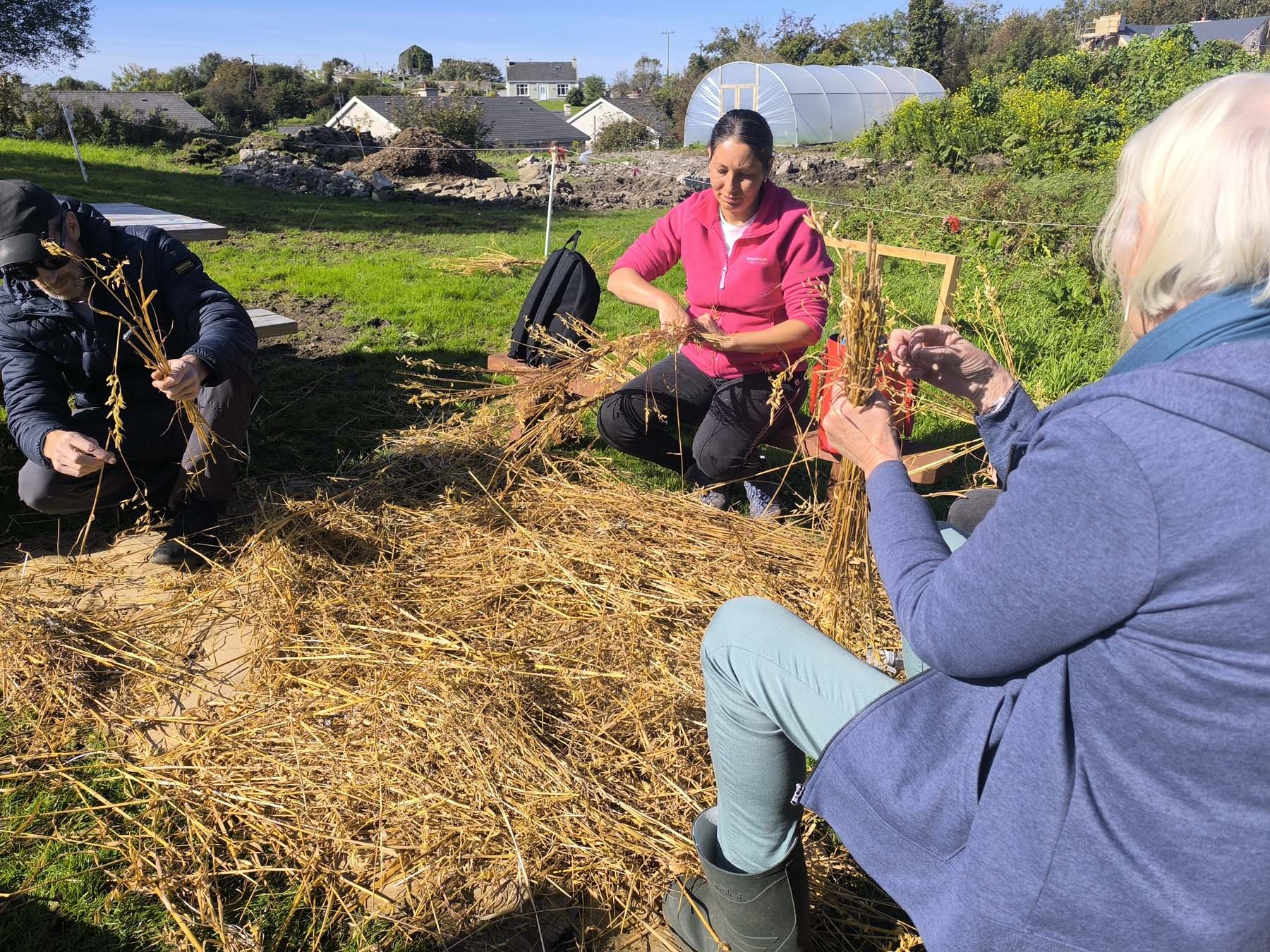
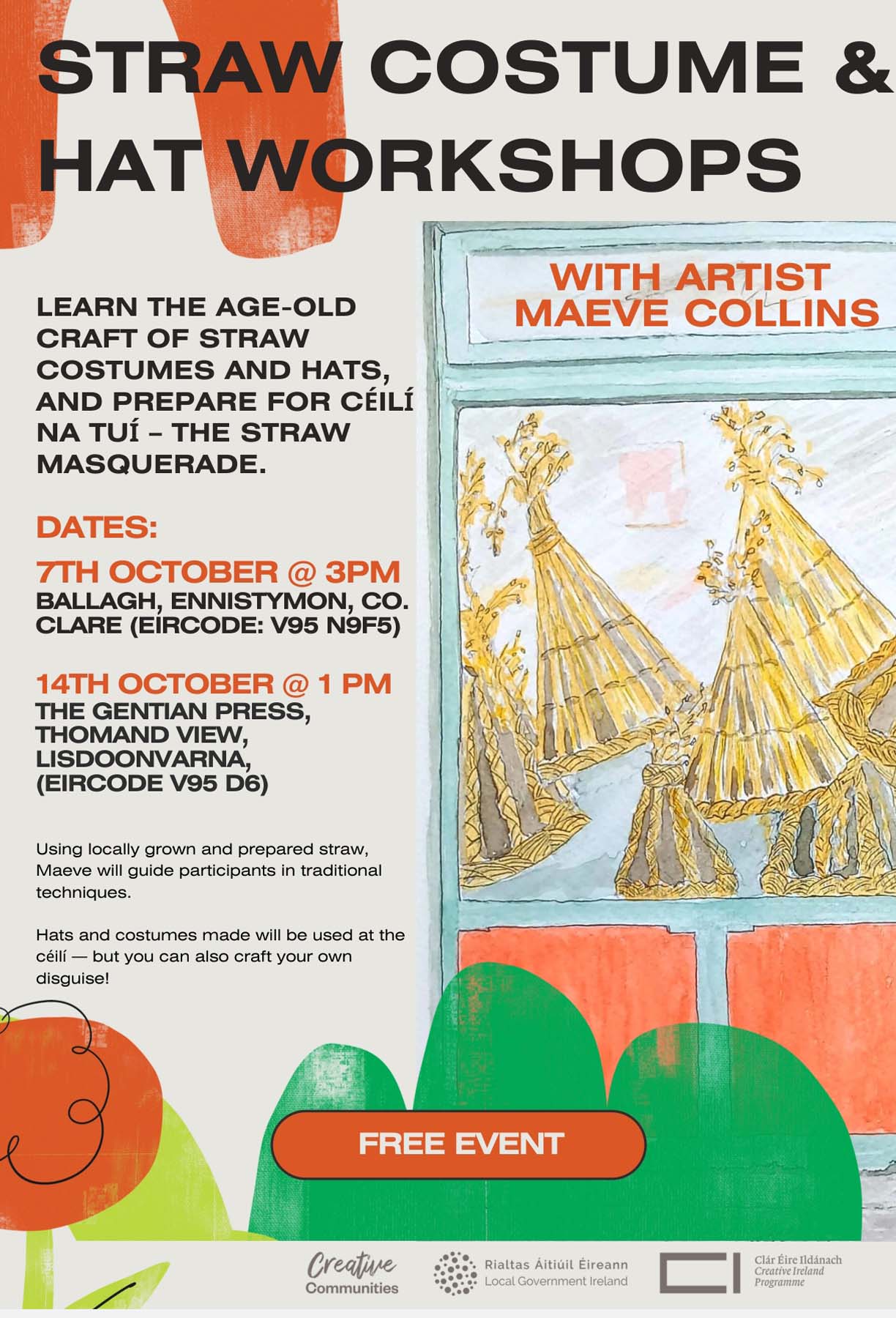
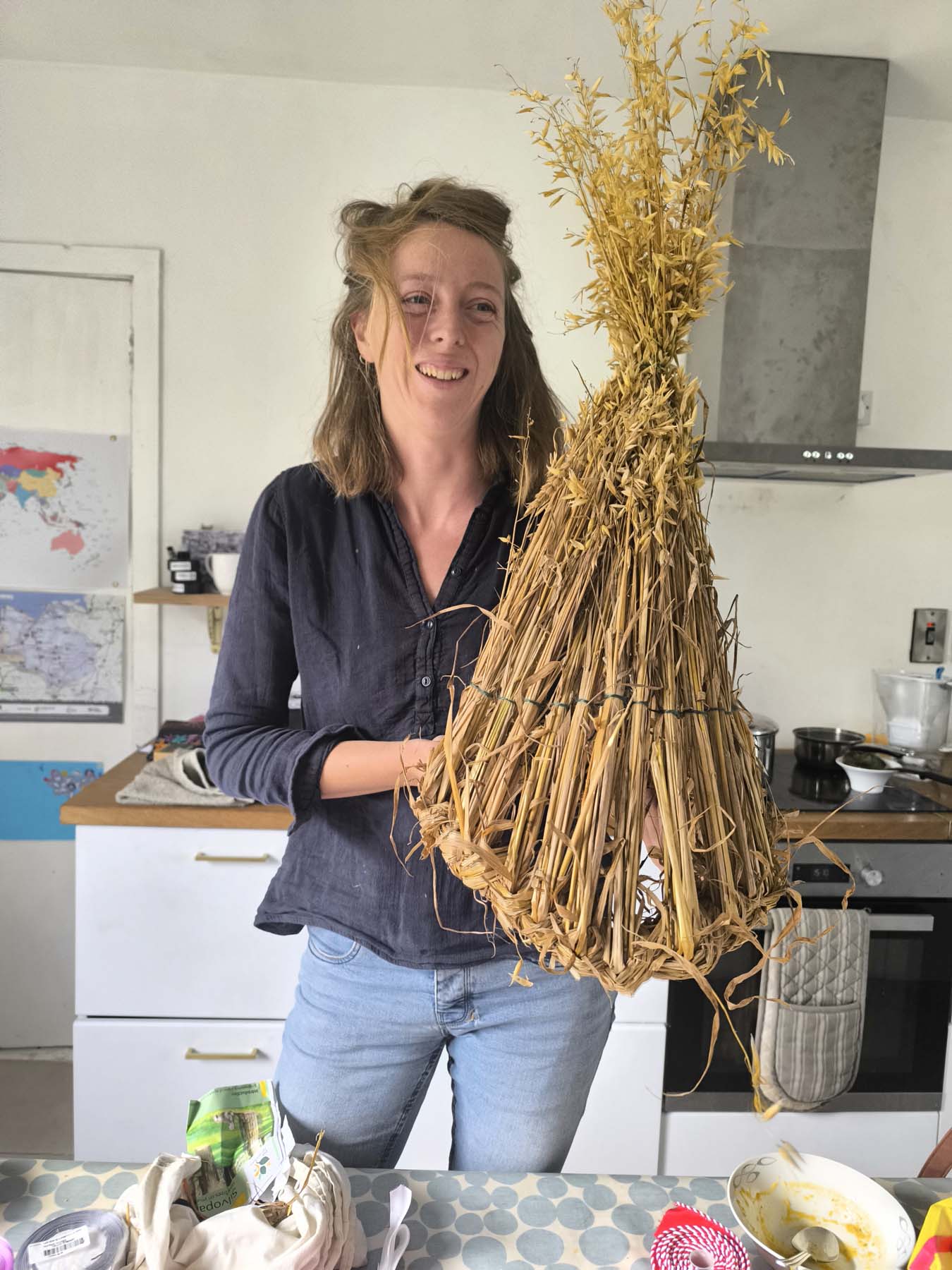
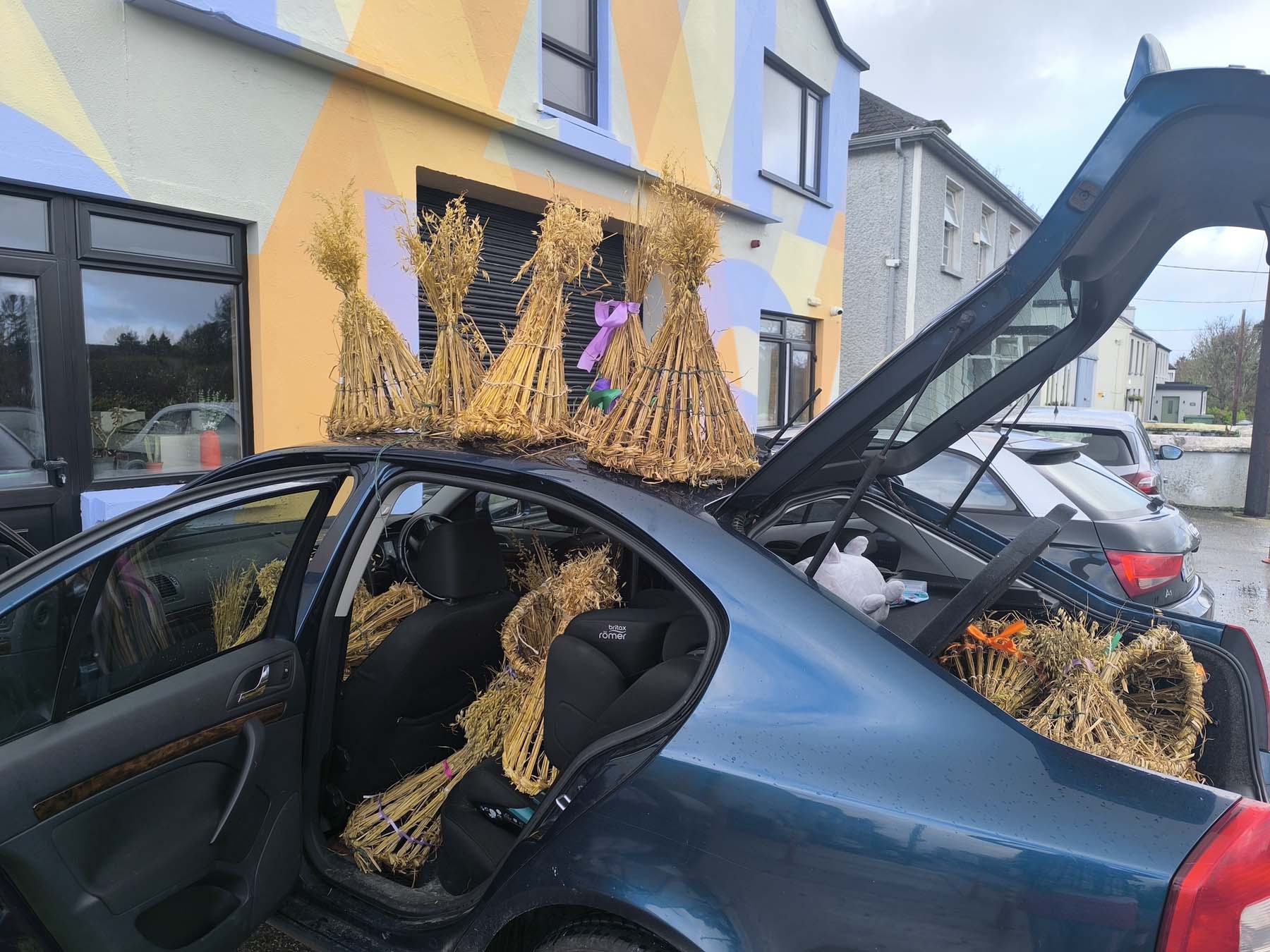
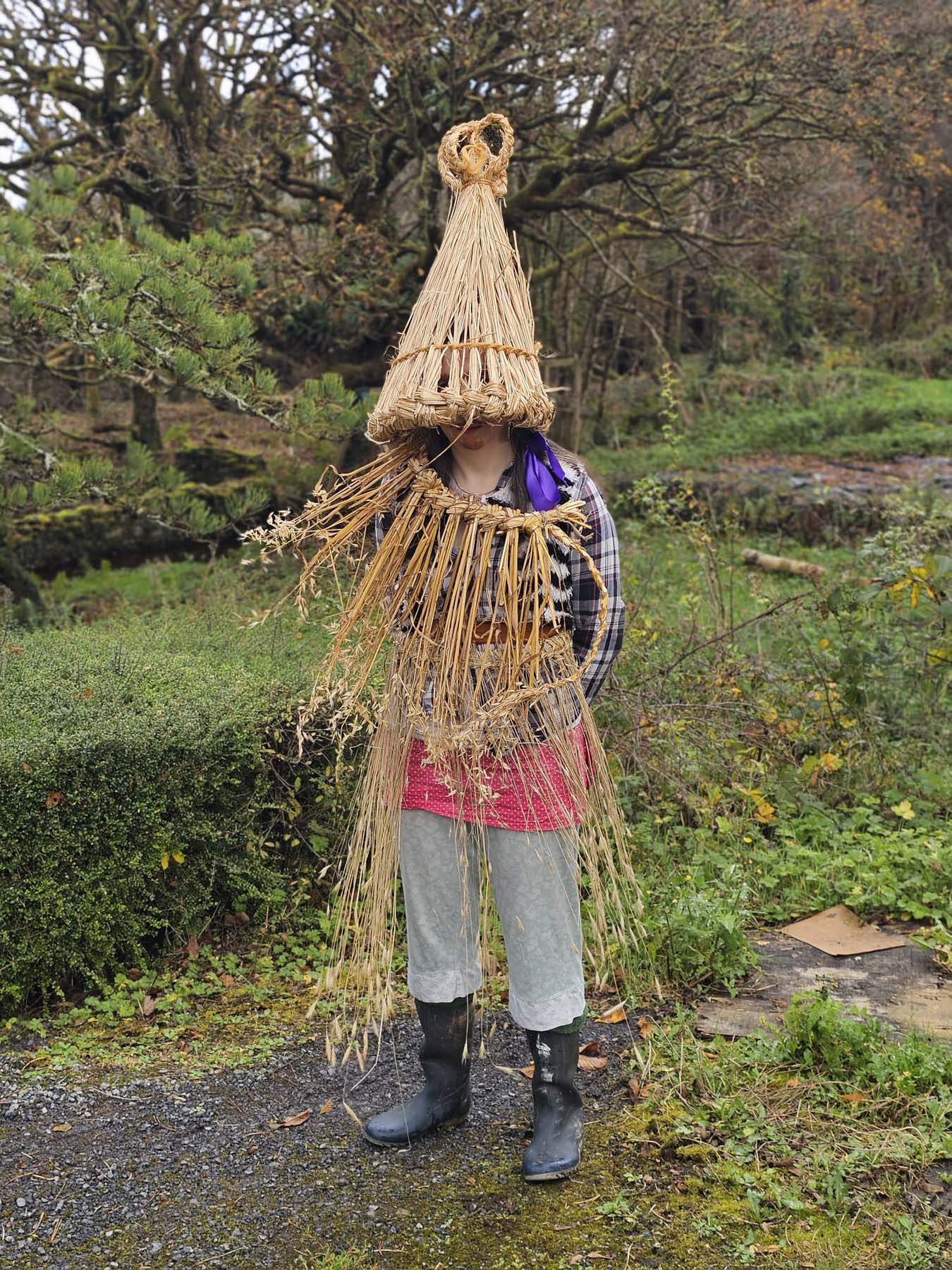
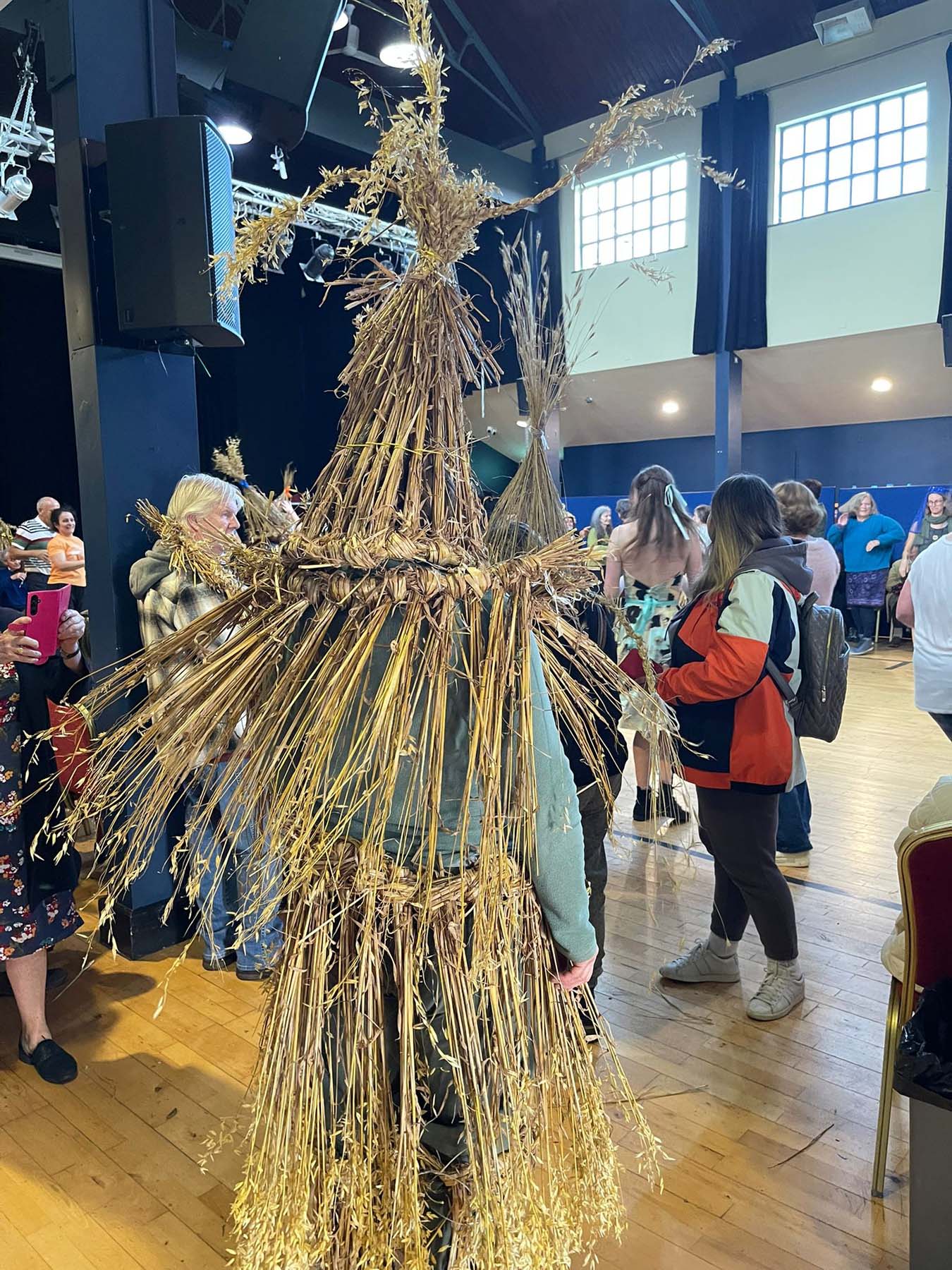
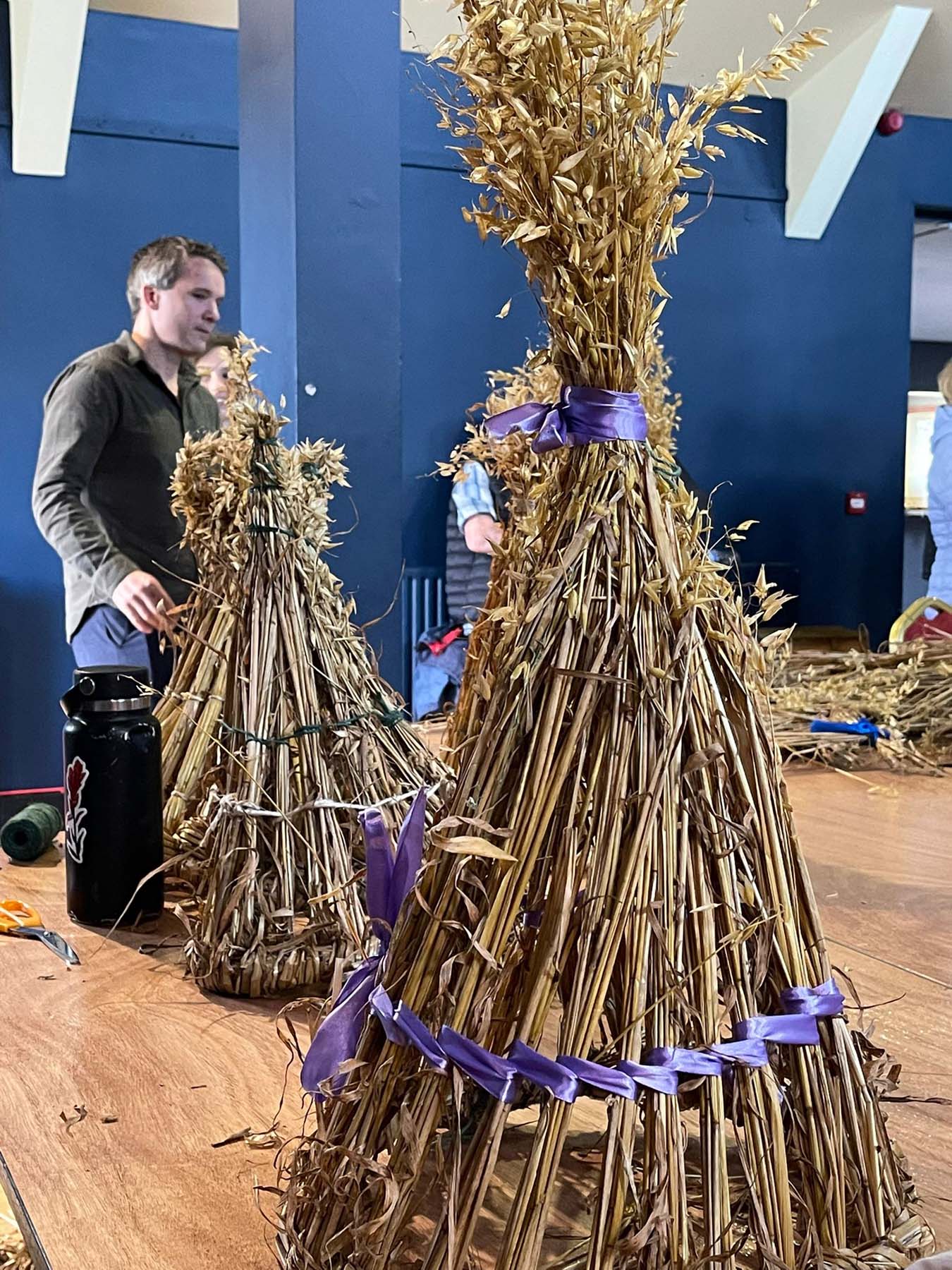
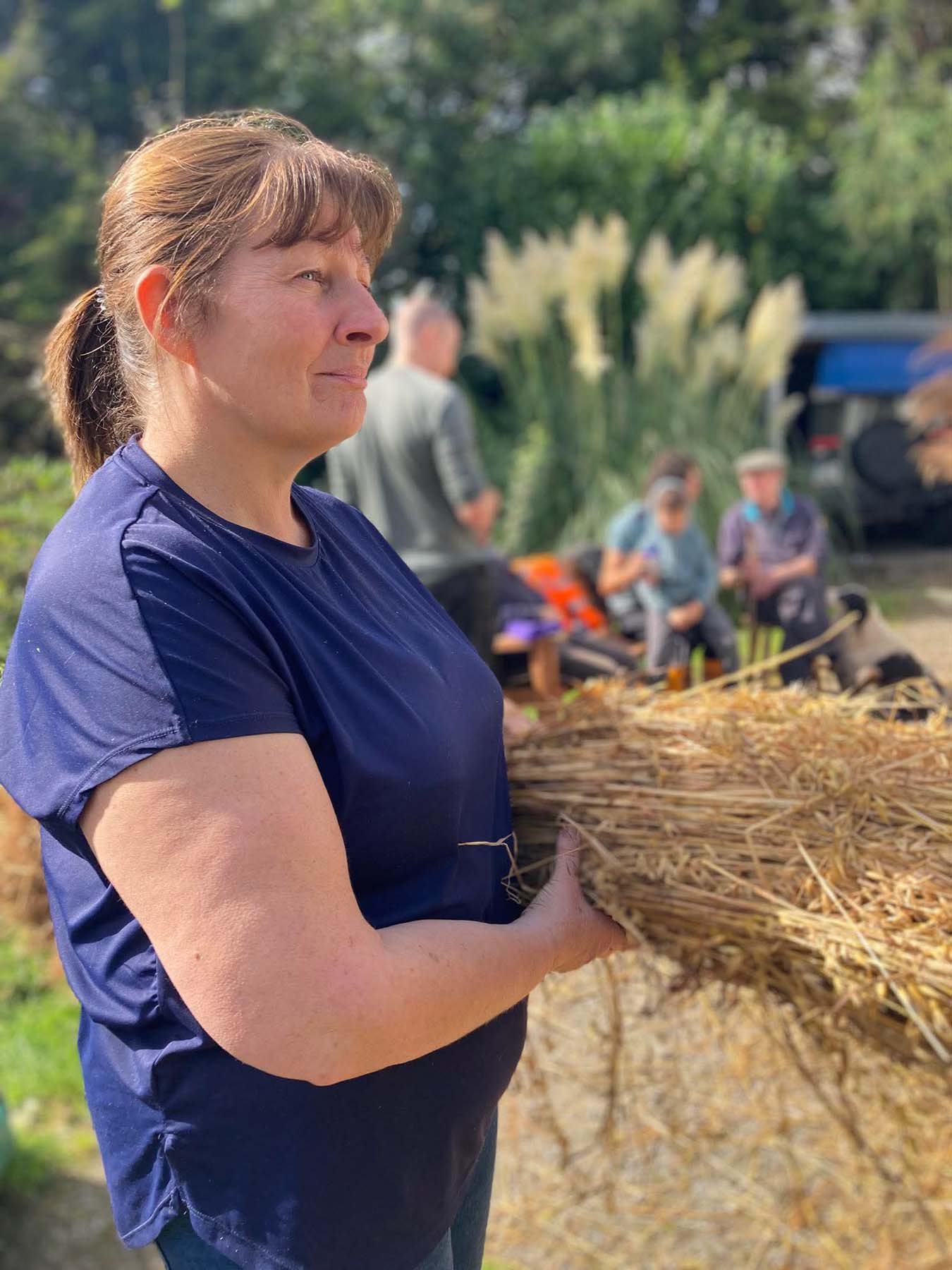
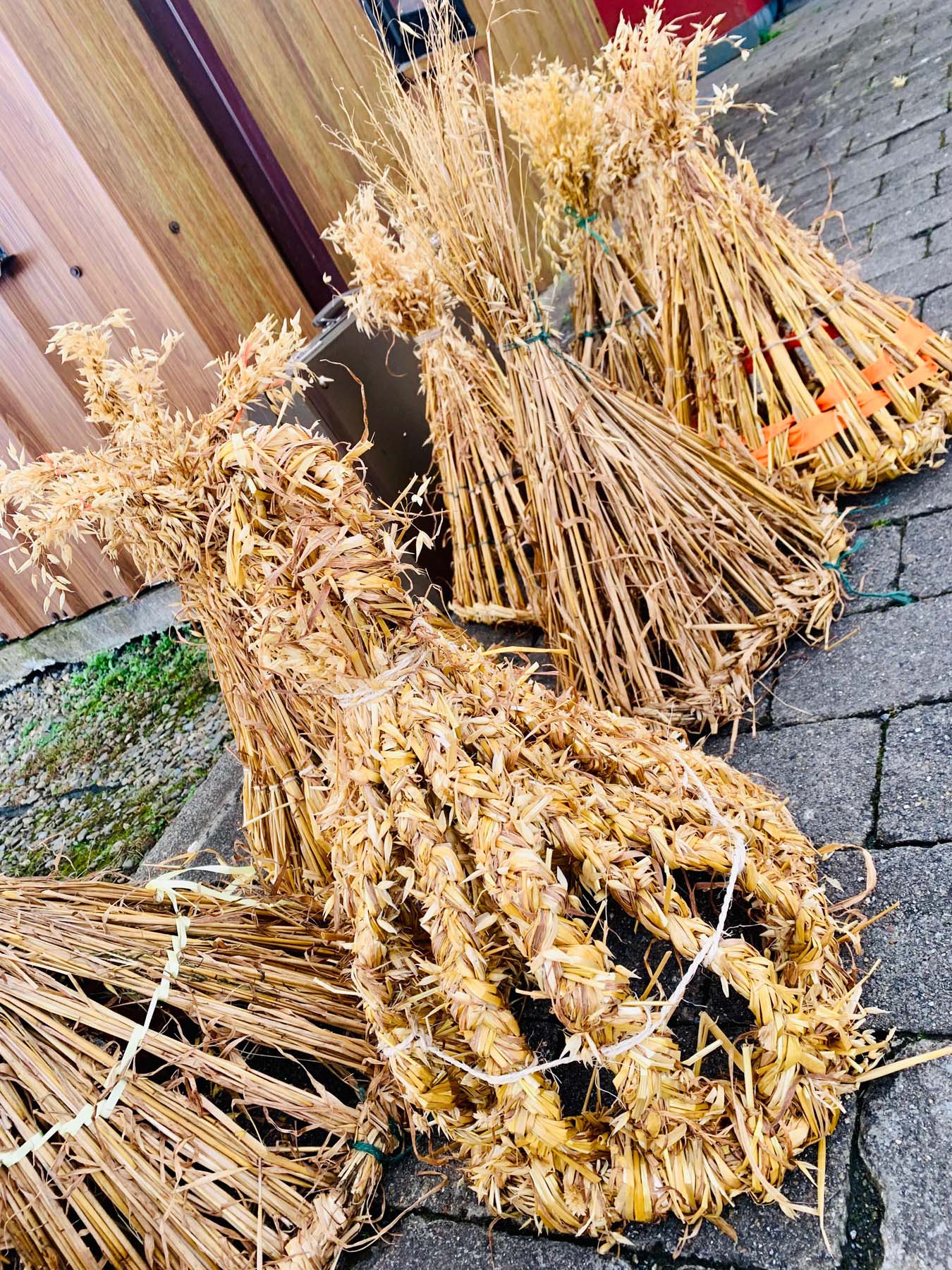
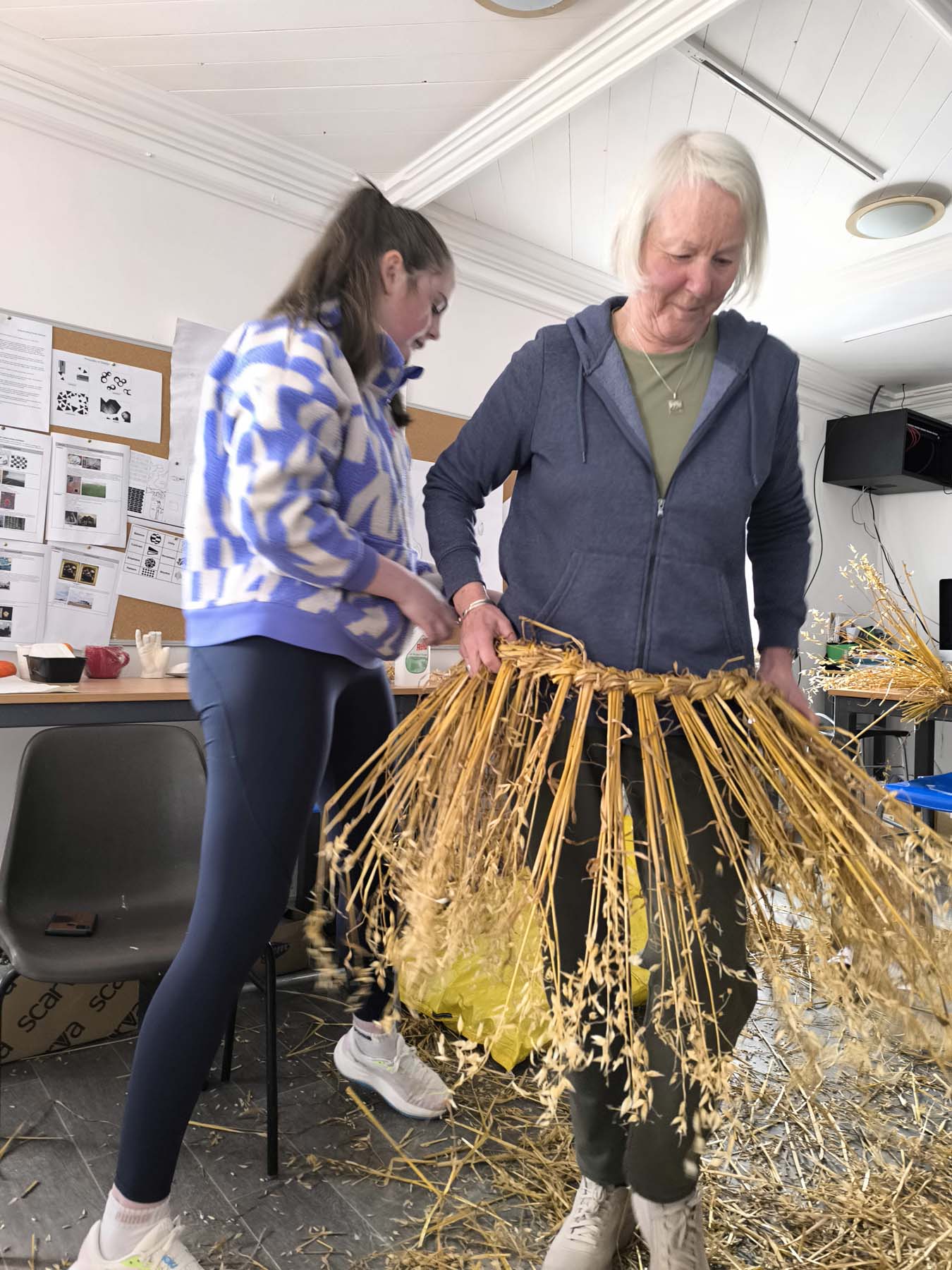
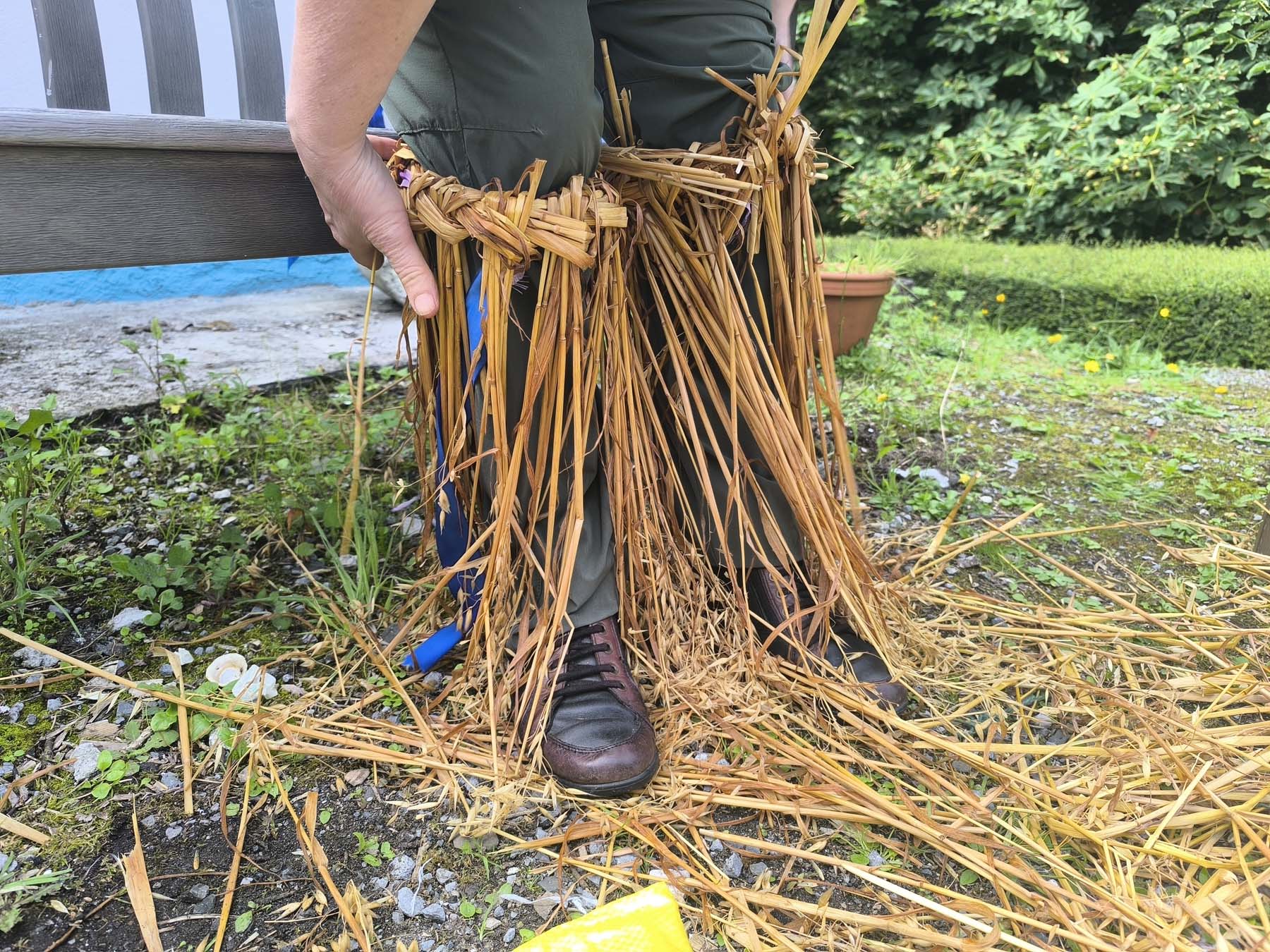
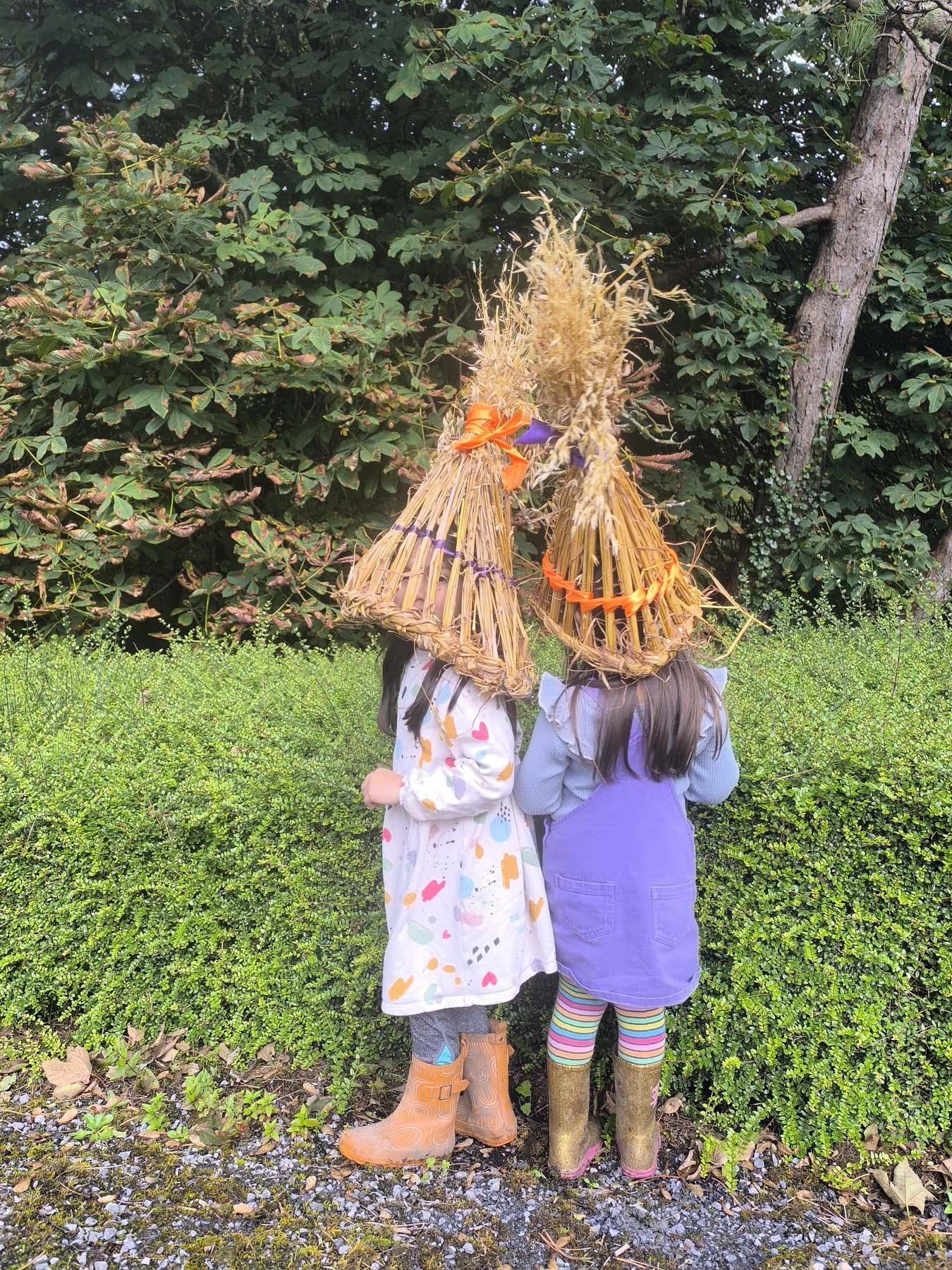
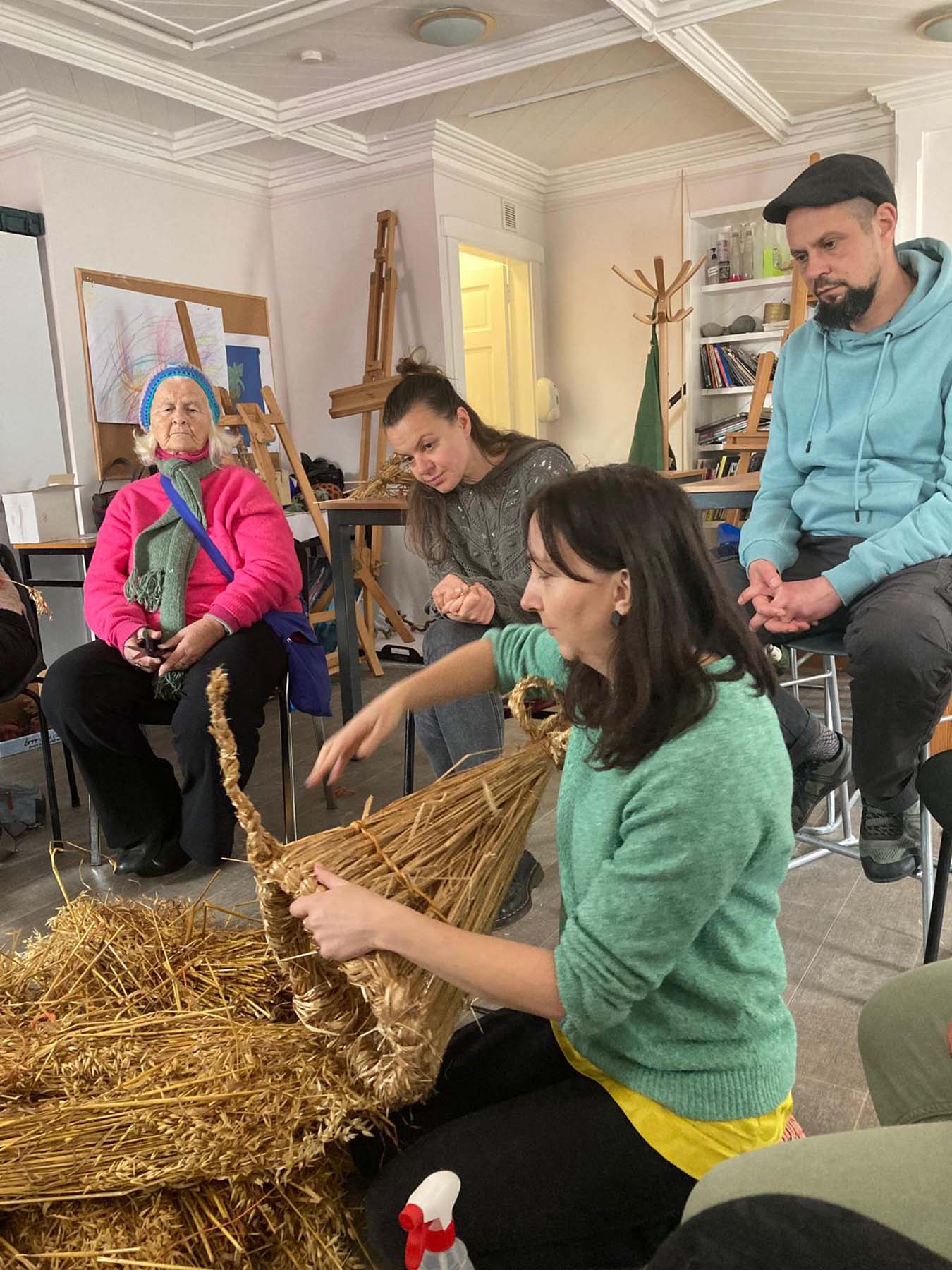
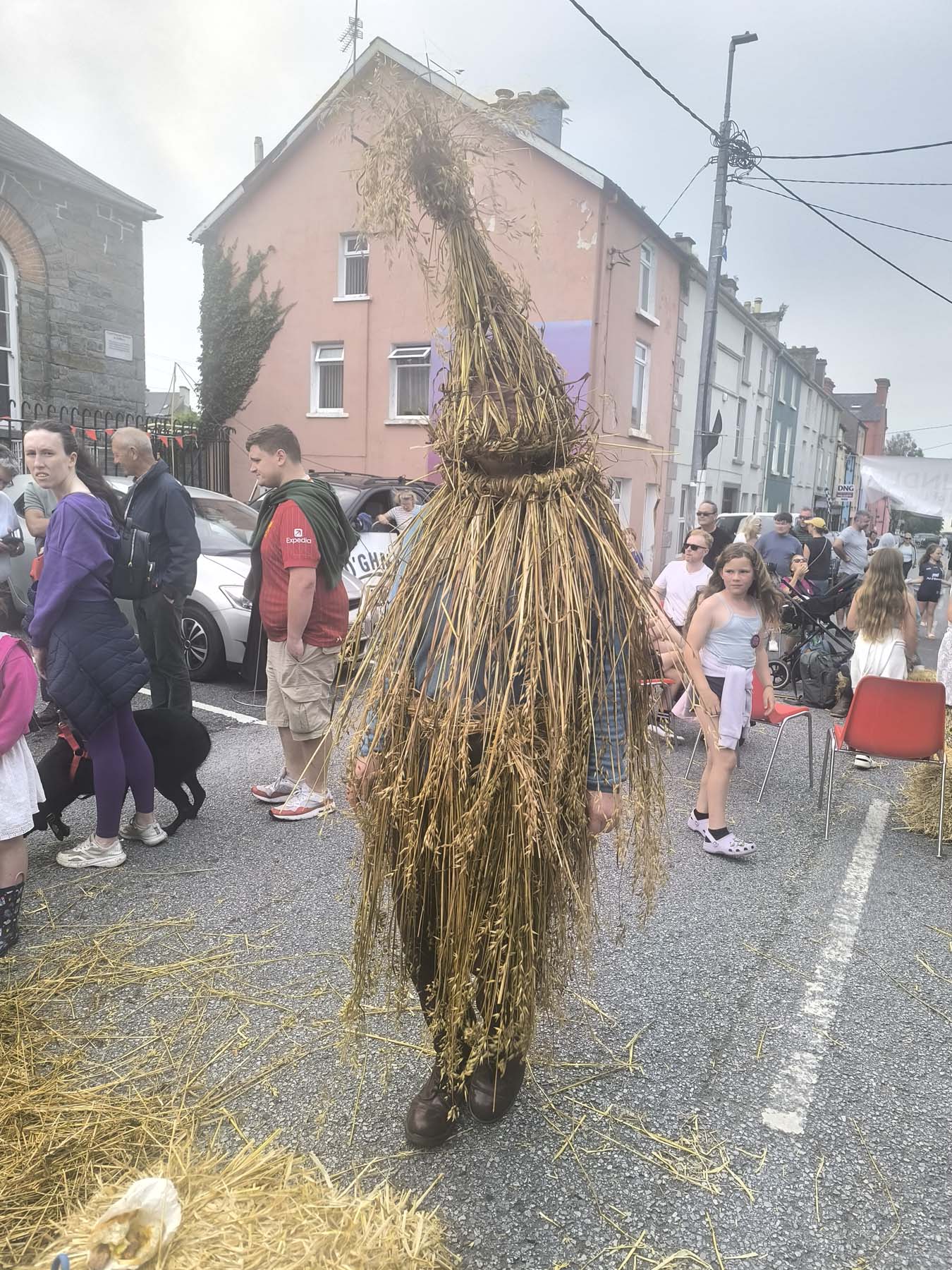
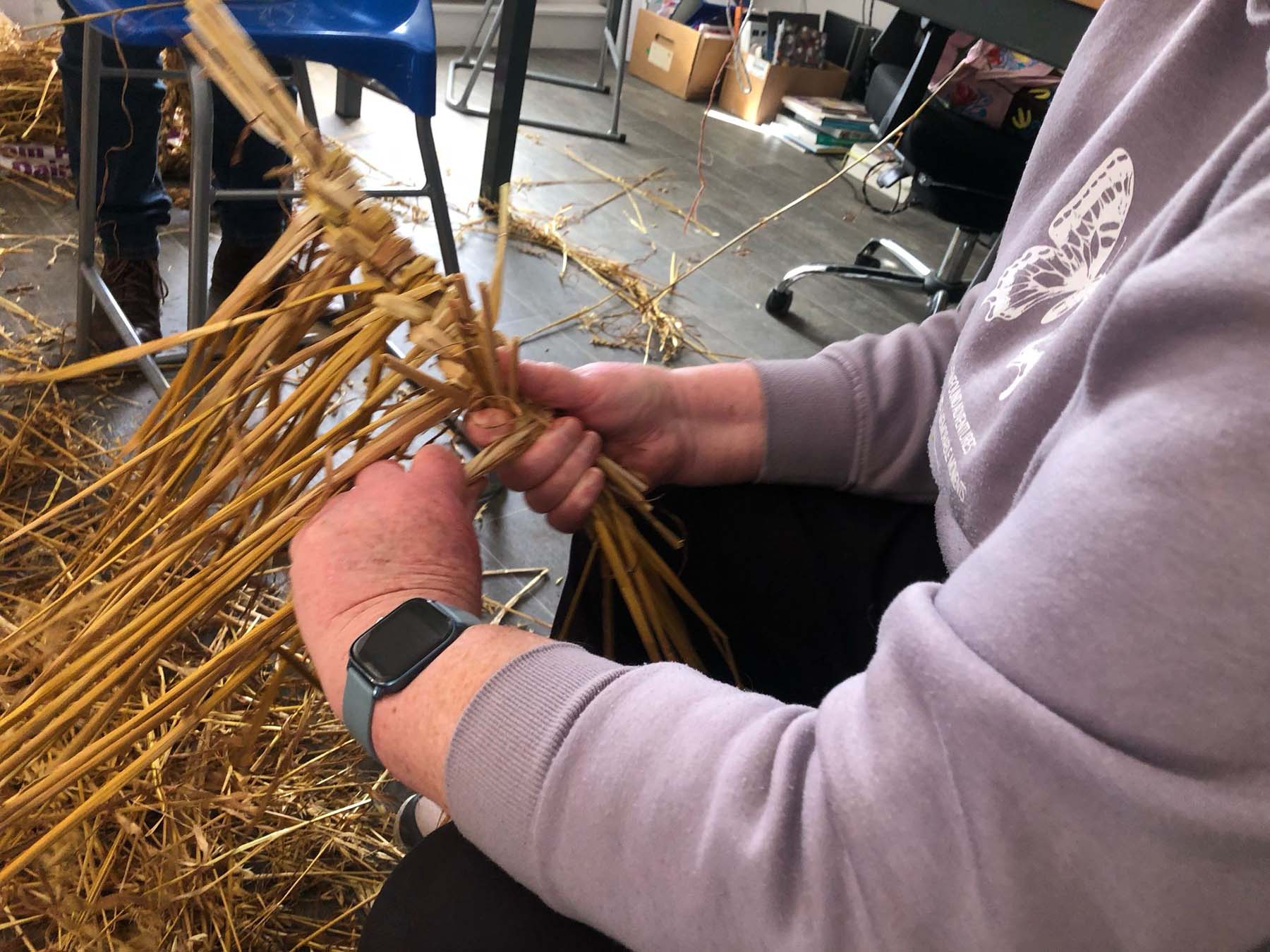
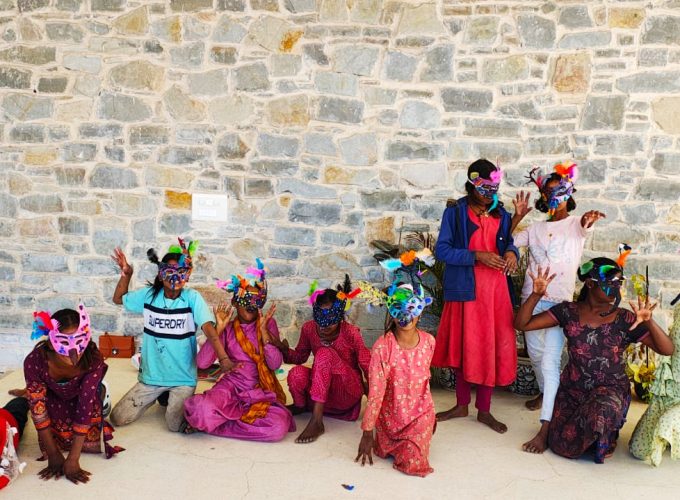
Workshops in straw hat making, harvest knots and mummer costumes transform fields and sheds into studios and hospitals into places of play. The work twists together the lightness of mischief with the weight of revival, as participants re-learn skills once nearly lost.

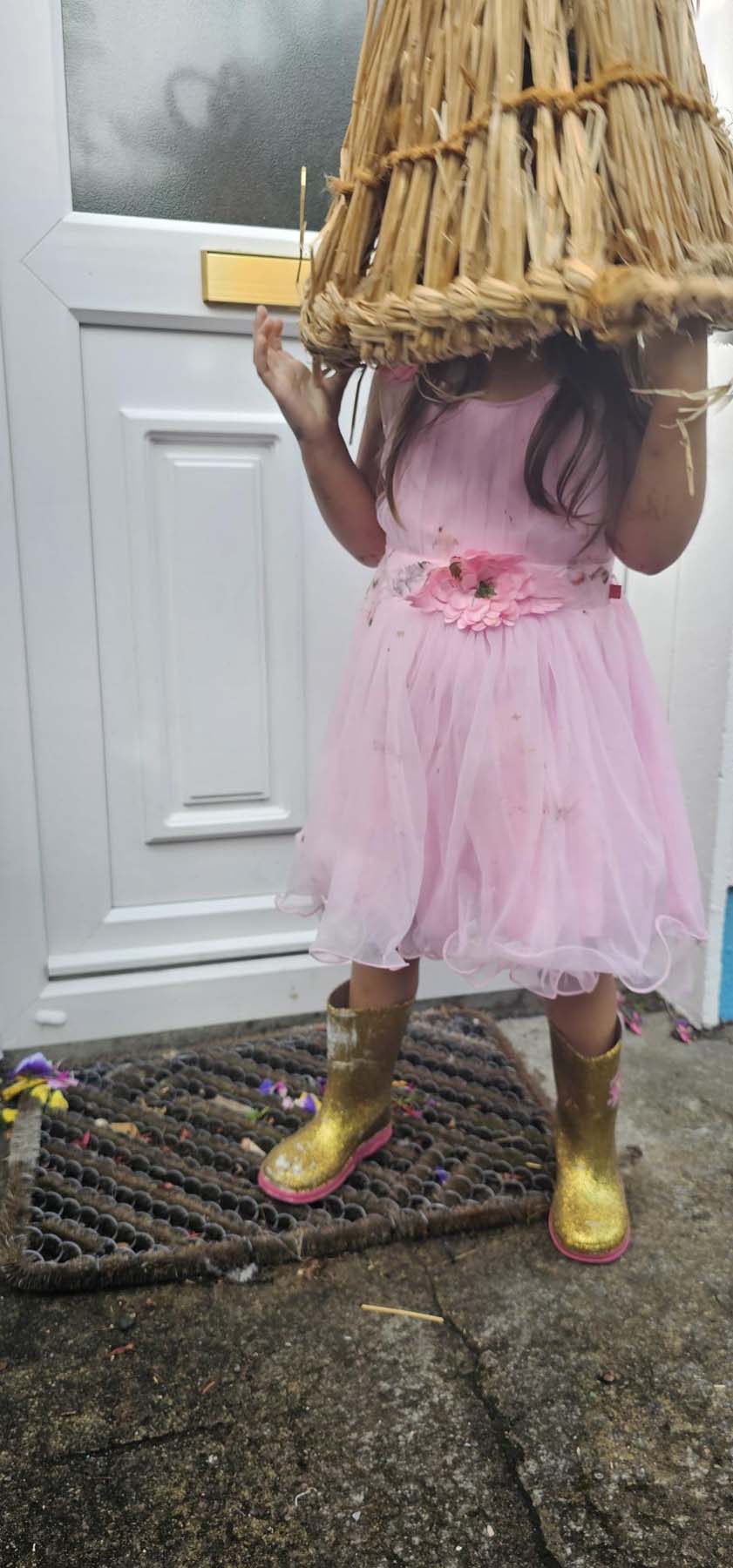
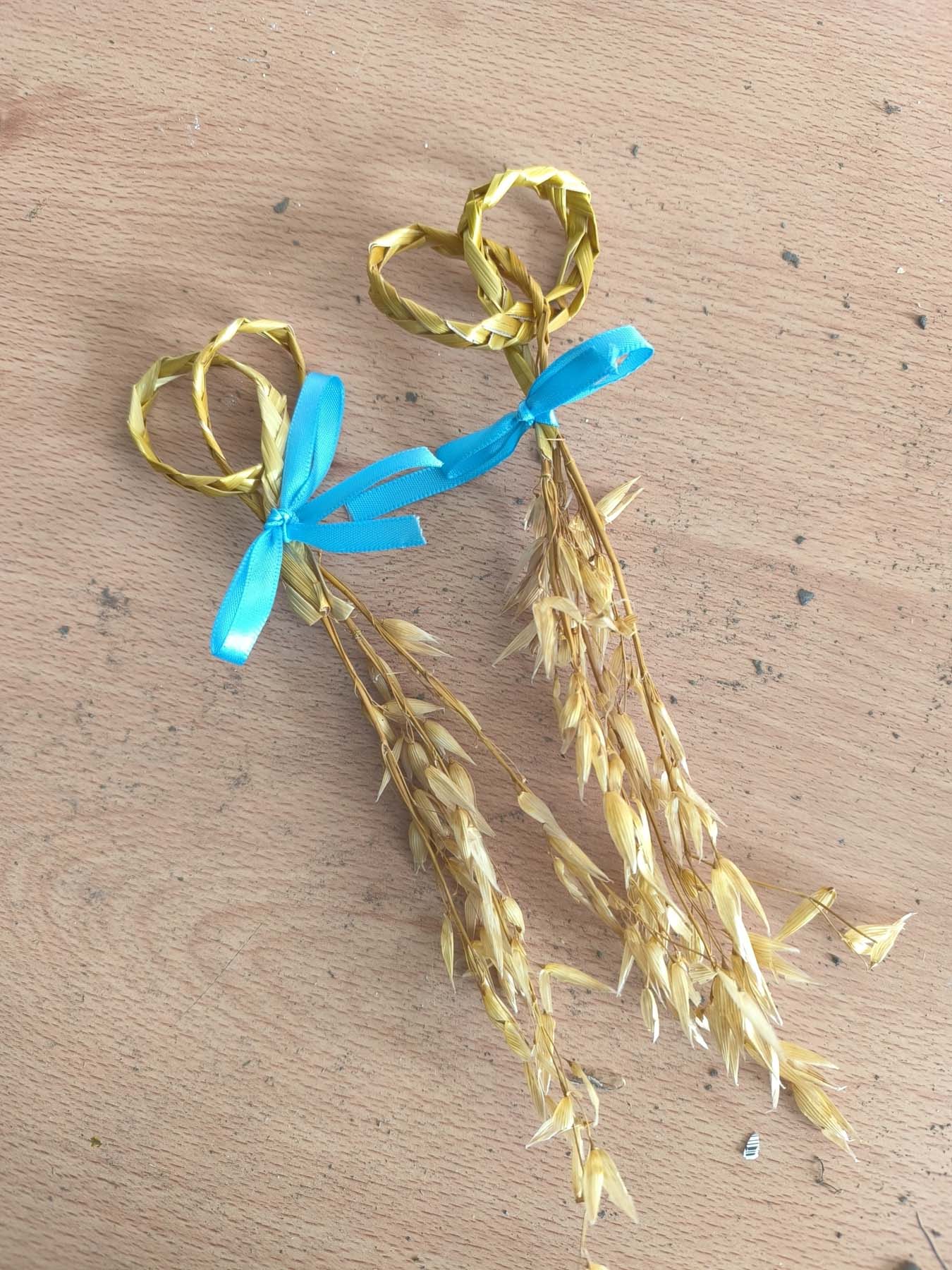
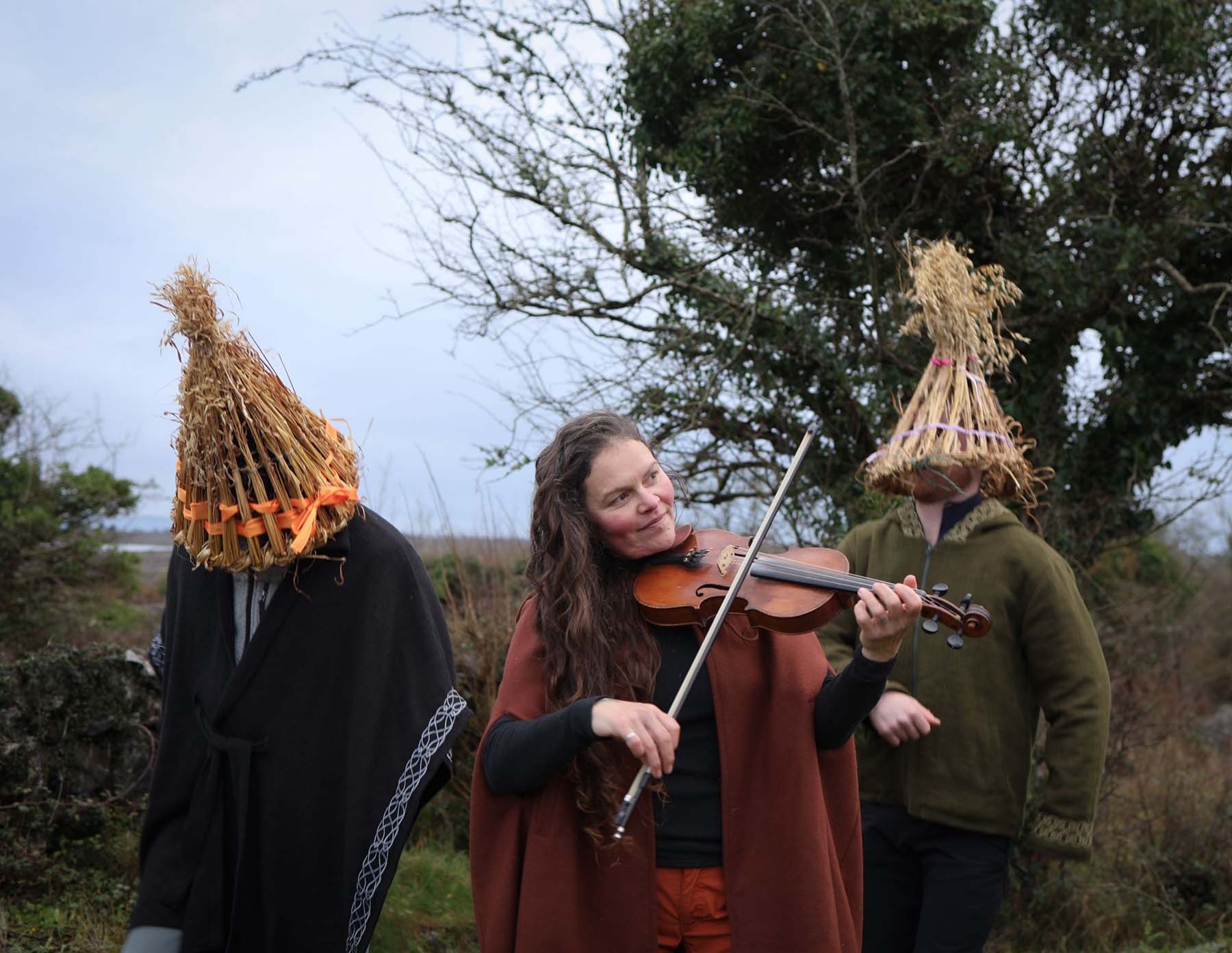
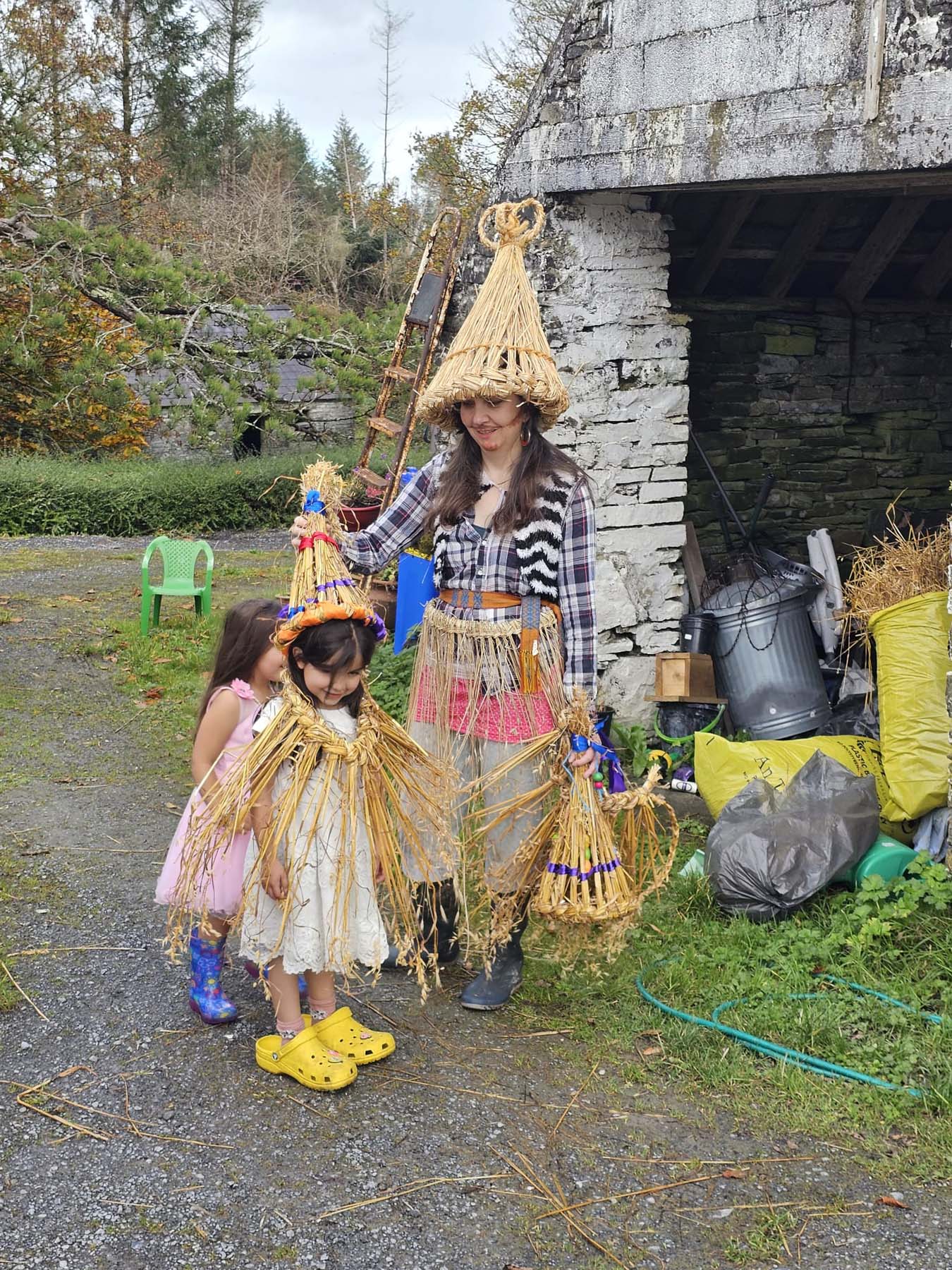
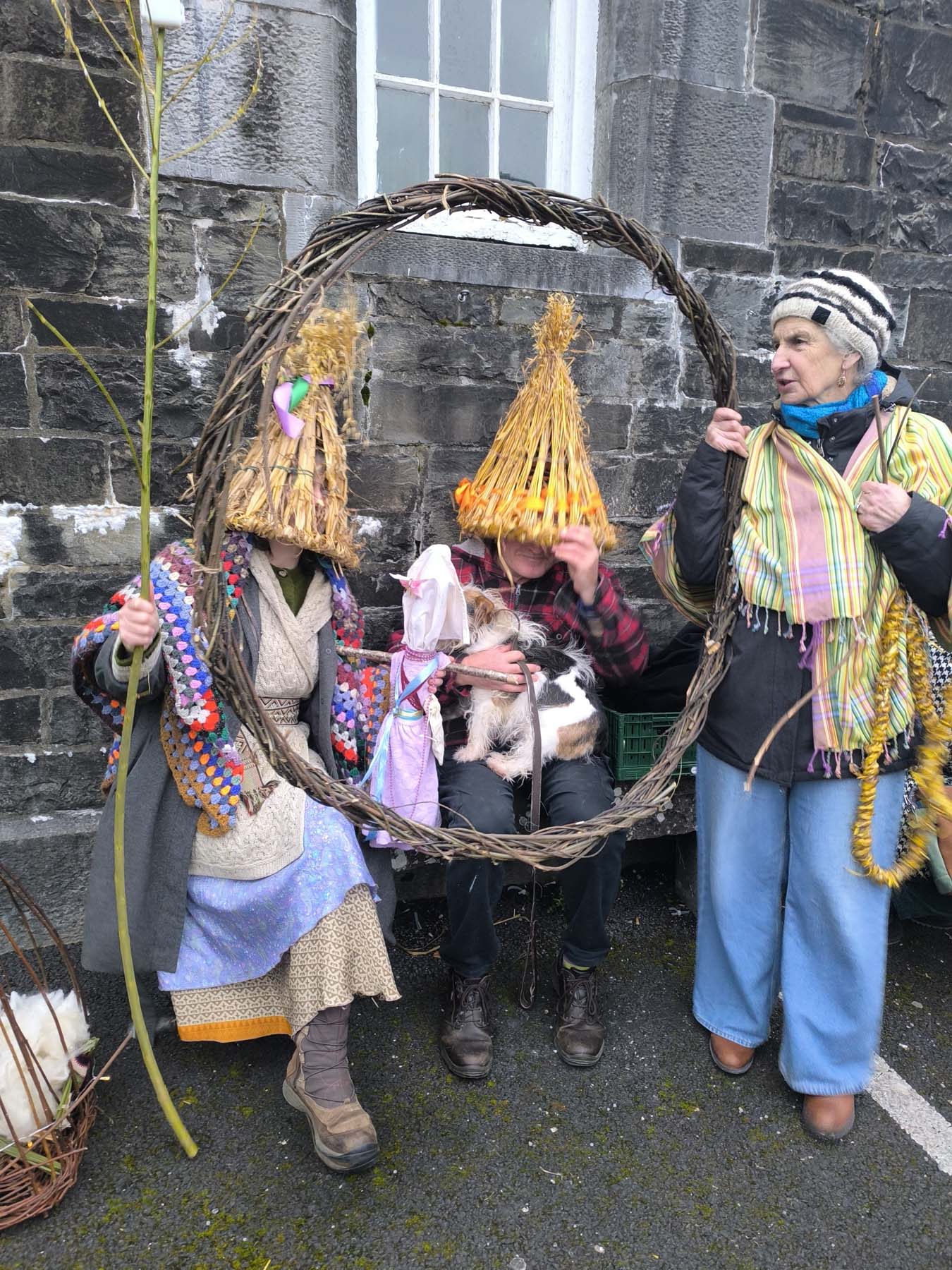
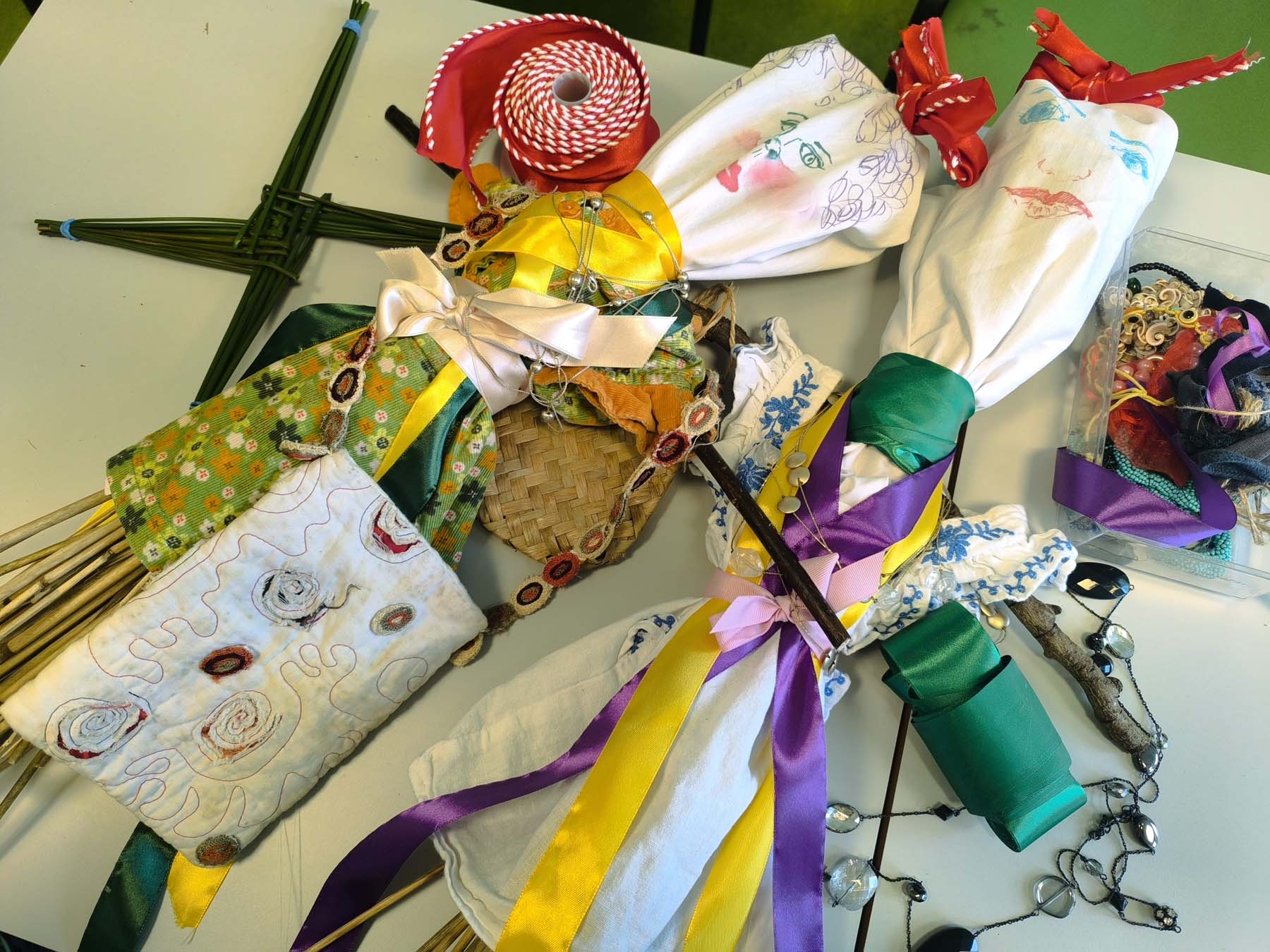
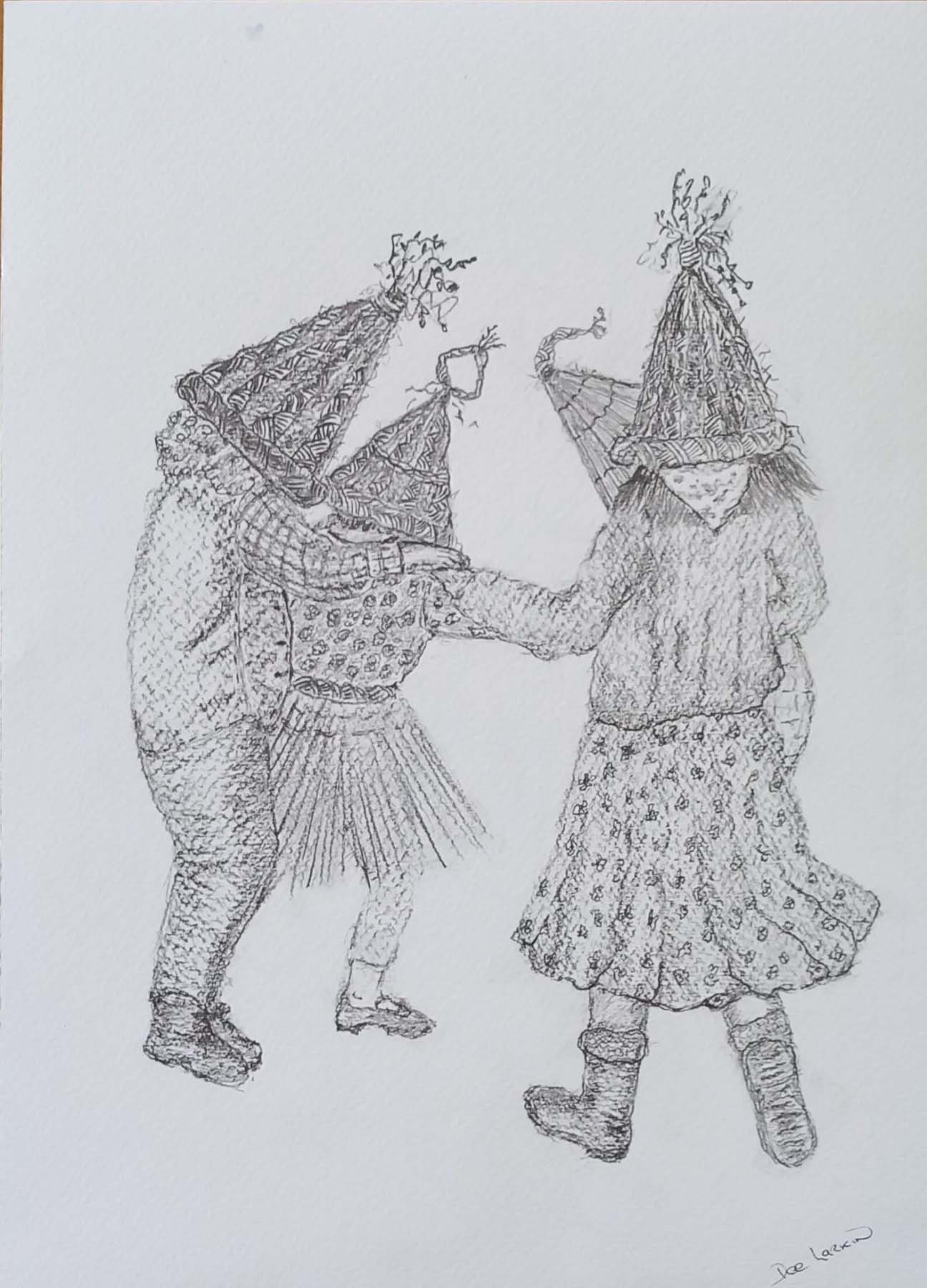
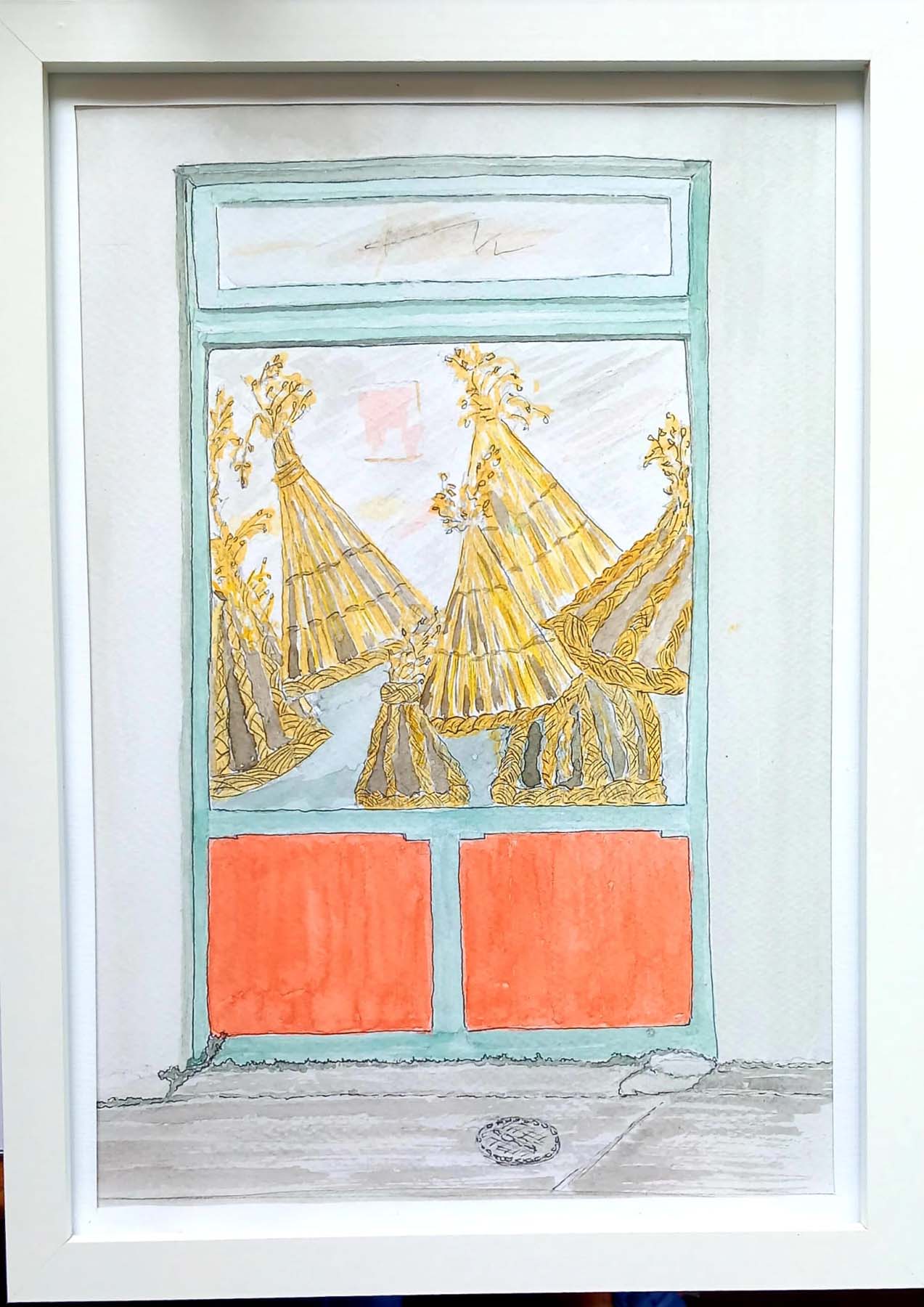
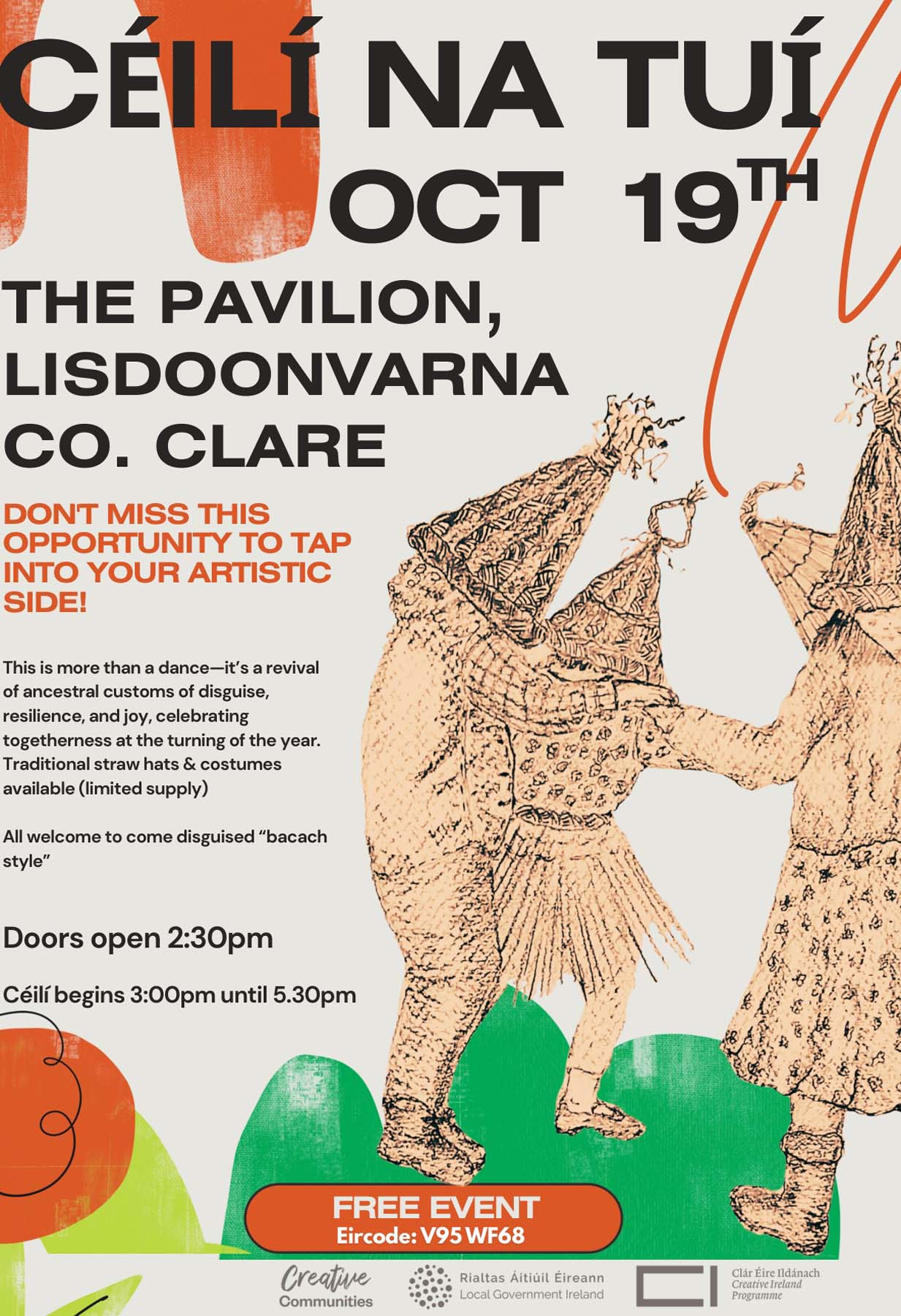
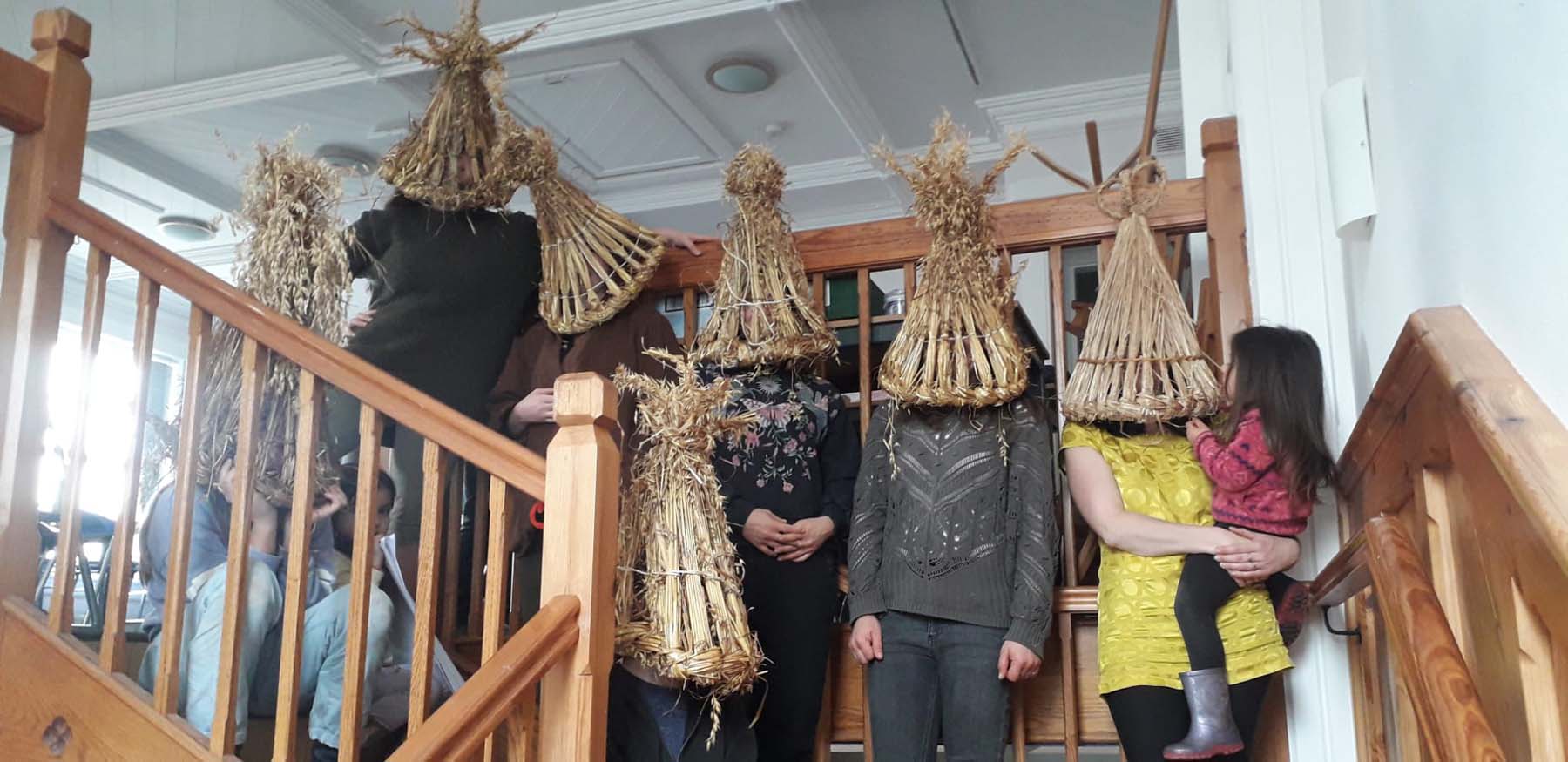
The Strawboy and girls’ hats themselves offer disguise, and the possibility of change and renewal. Shaped by hand, from living materials of the land: straw, willow, grasses, they are steeped in the rhythms of field and folklore. They carry with them the memory of older crafts and older ways of being. In keeping with the seasons, discarded cloth, lengths of ribbon, twisted baler twine, children’s wooden beads, sheep’s wool breathe new life to the weave.

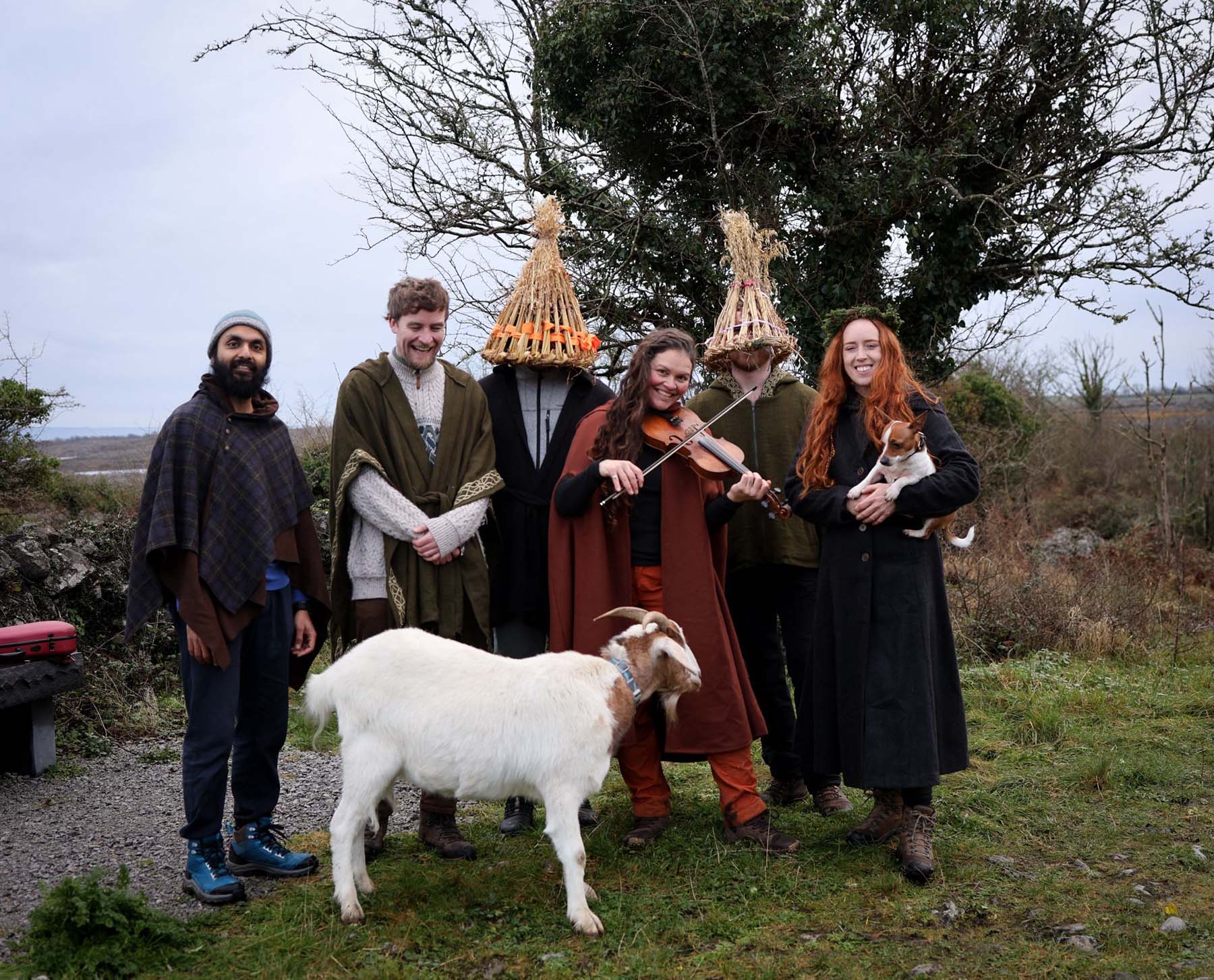
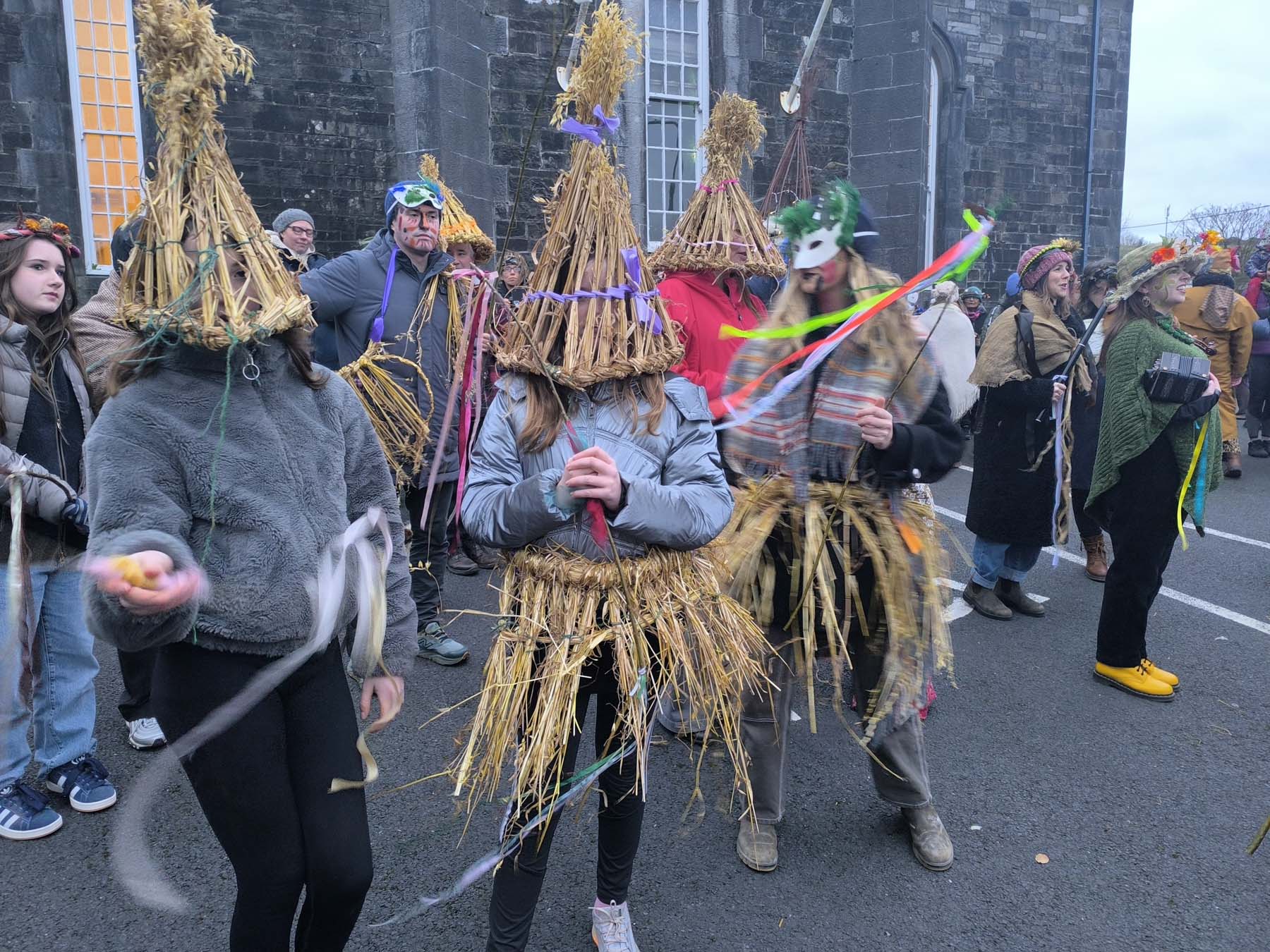
When a Bacach puts on the hat, a threshold is crossed into the mythic, the everyday gives way, and through the play of straw, movement and music, they become part of a living ritual that binds the personal to the communal, the performer to the land itself.

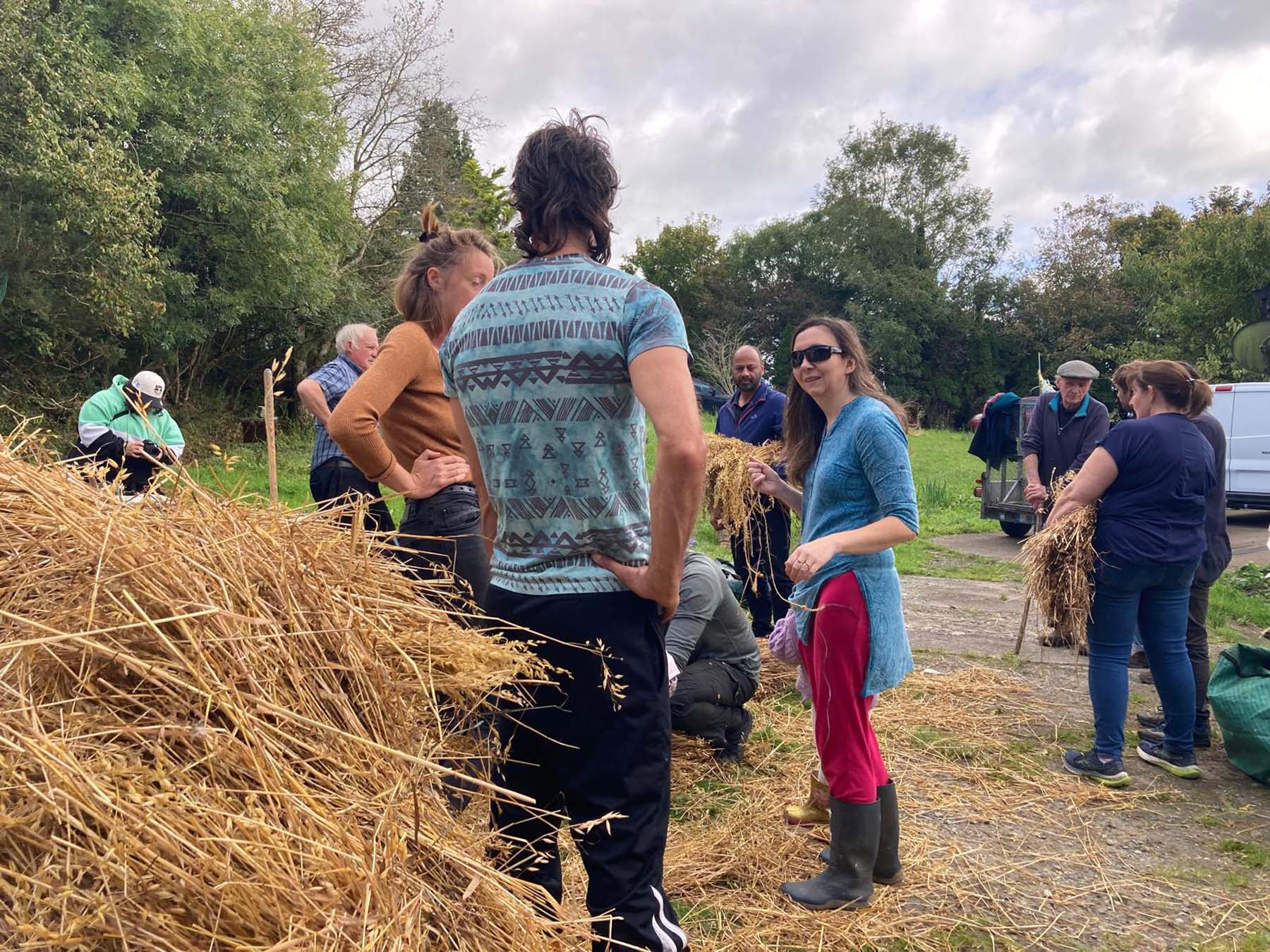
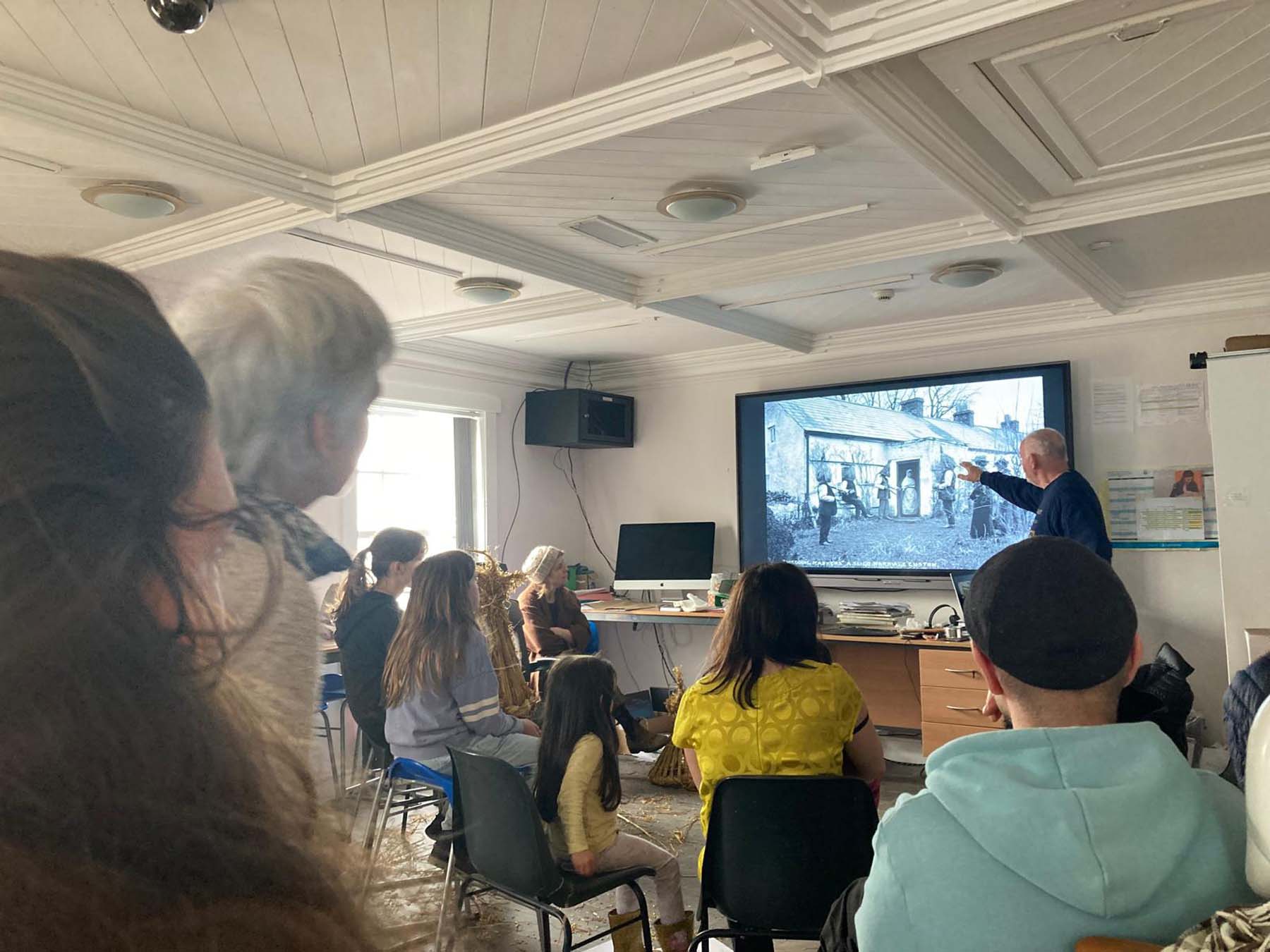
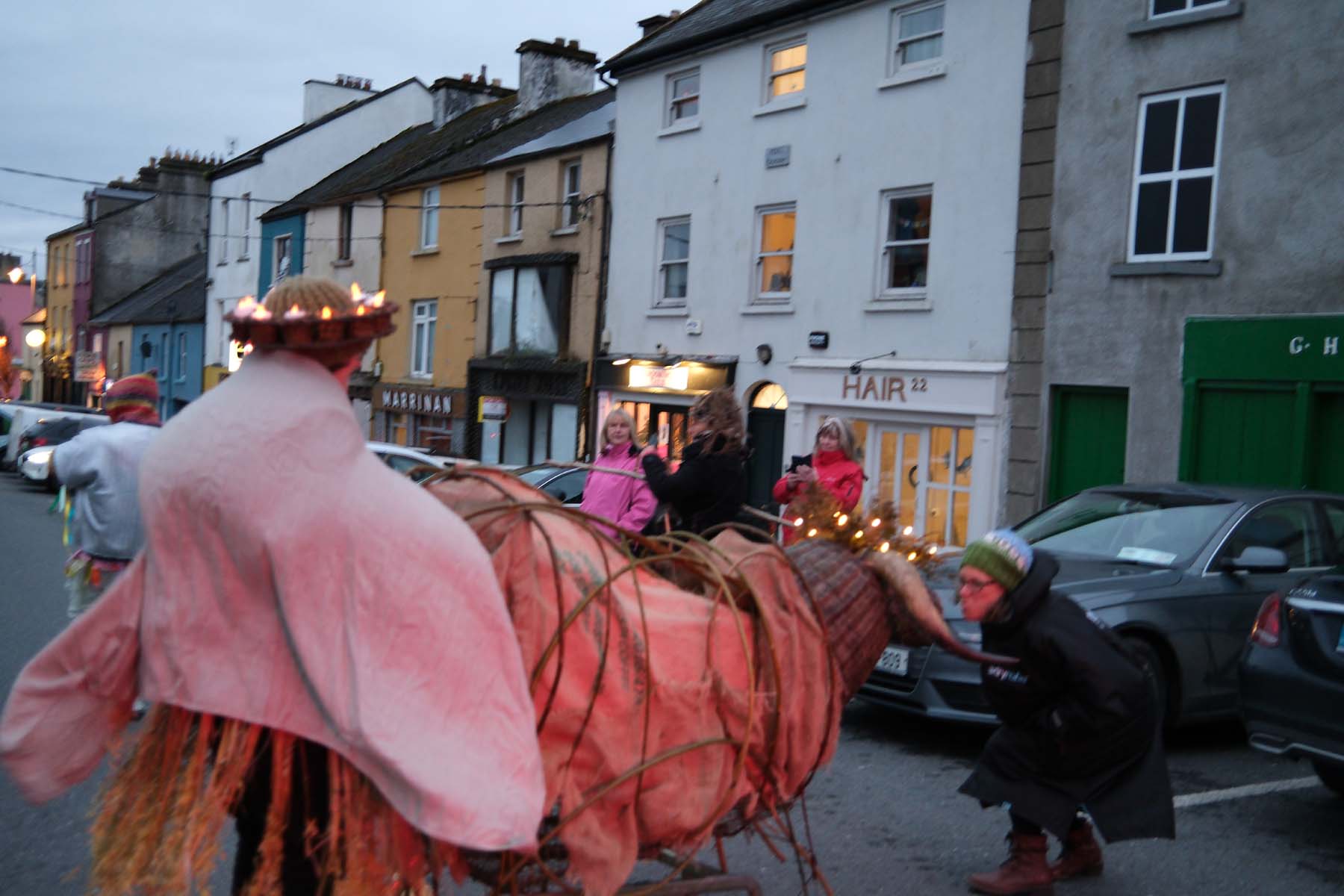
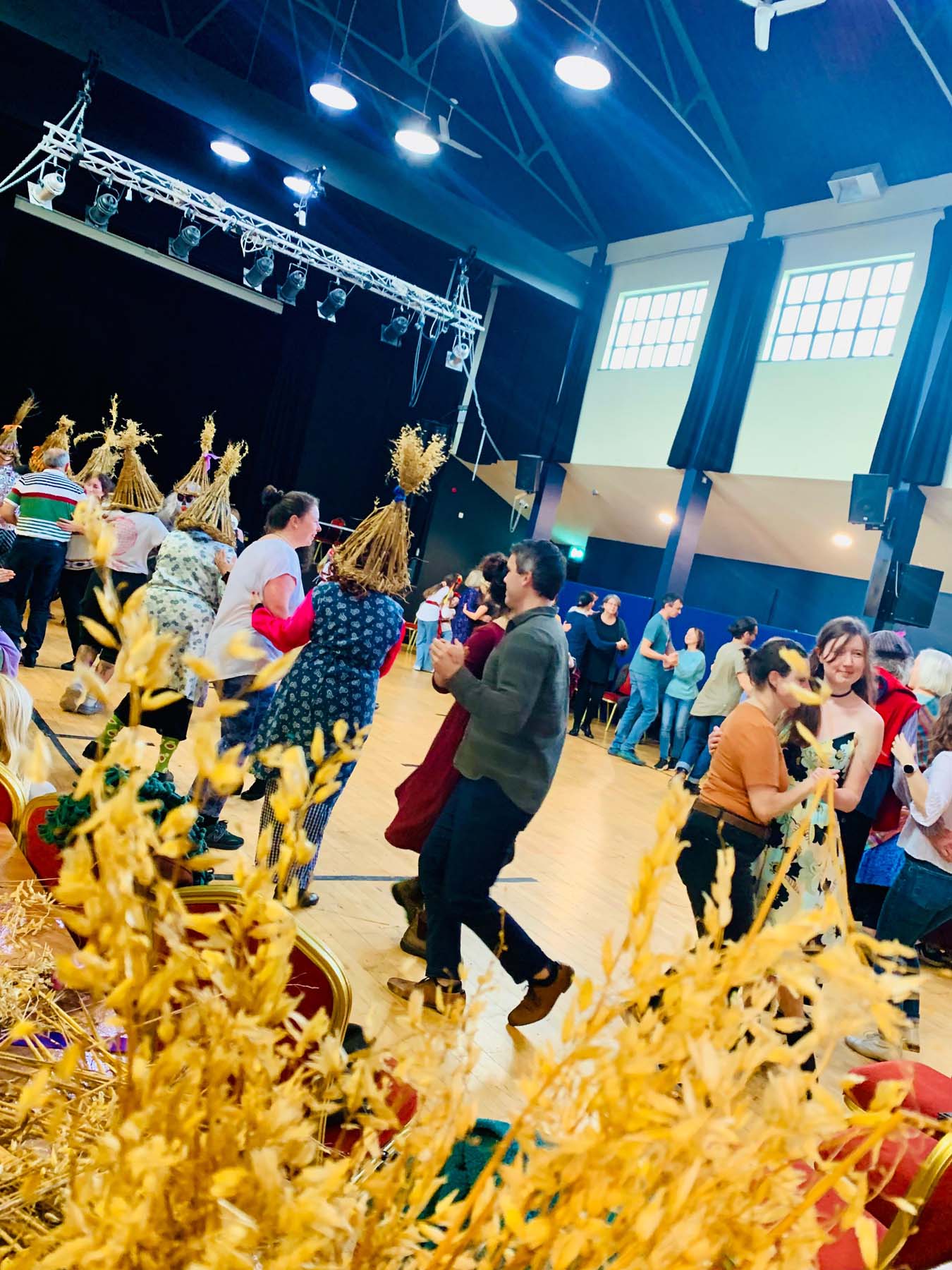
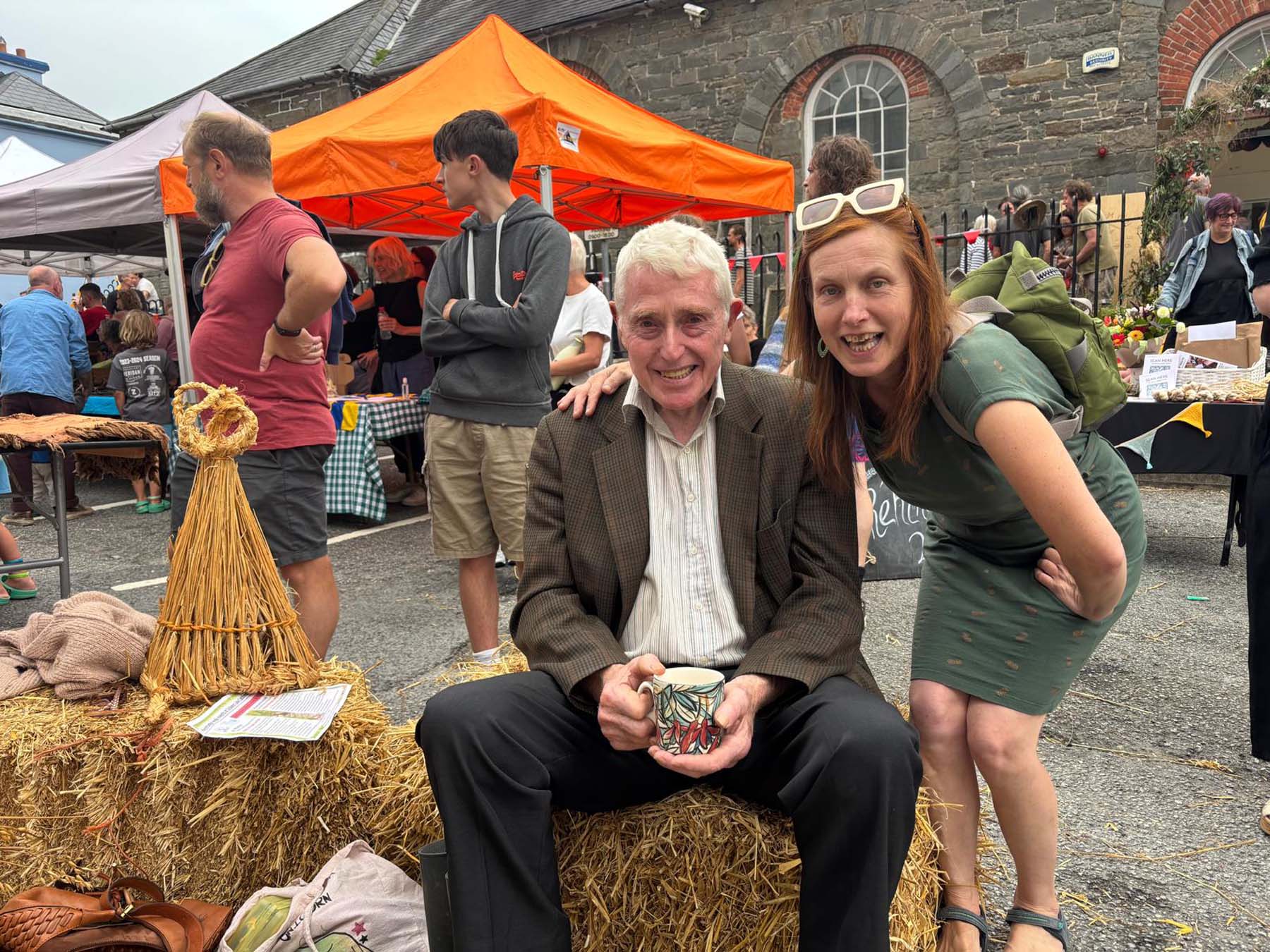
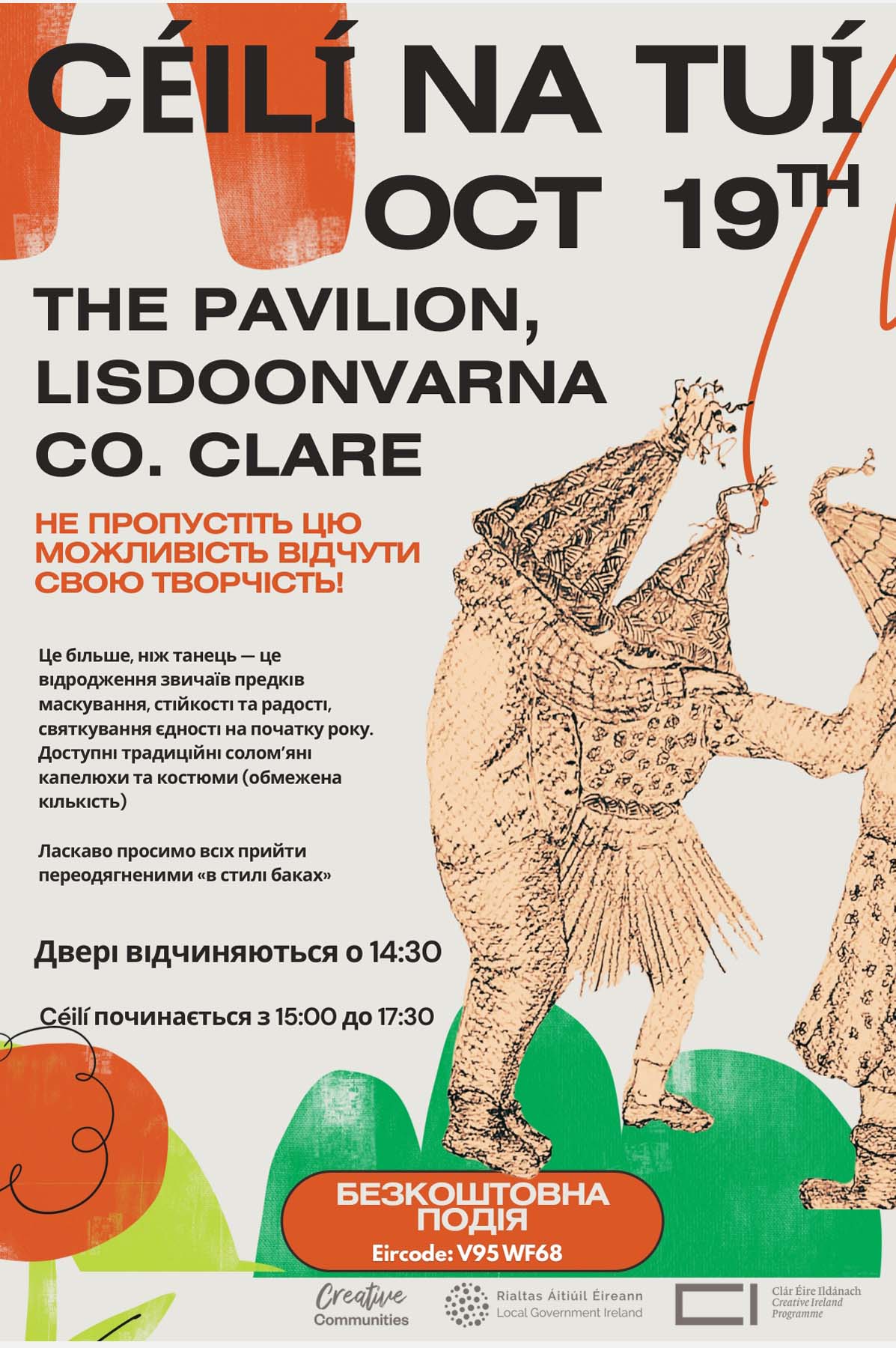
A growing “stash” of shared hats now lives within the project—borrowed, worn, and returned for weddings, festivals, and mumming events. Hats are also gifted to those who carry the tradition forward. Encounters with Polish, Ukrainian, and Irish diaspora communities have broadened the practice further, connecting cultures of straw making and performance. At turns of the year, straw céilí’s and ambulatory customs offer modern mummers and others of all ages a chance to step into the playful worlds of the Mummers and Strawboys, Wrens, Biddy Boys and Bacadhs. Fields of movement, sit beside an art therapist who hosted an open studio for reflection and conversation. Neighbours linger late, sharing braic, tea, tunes and chat.

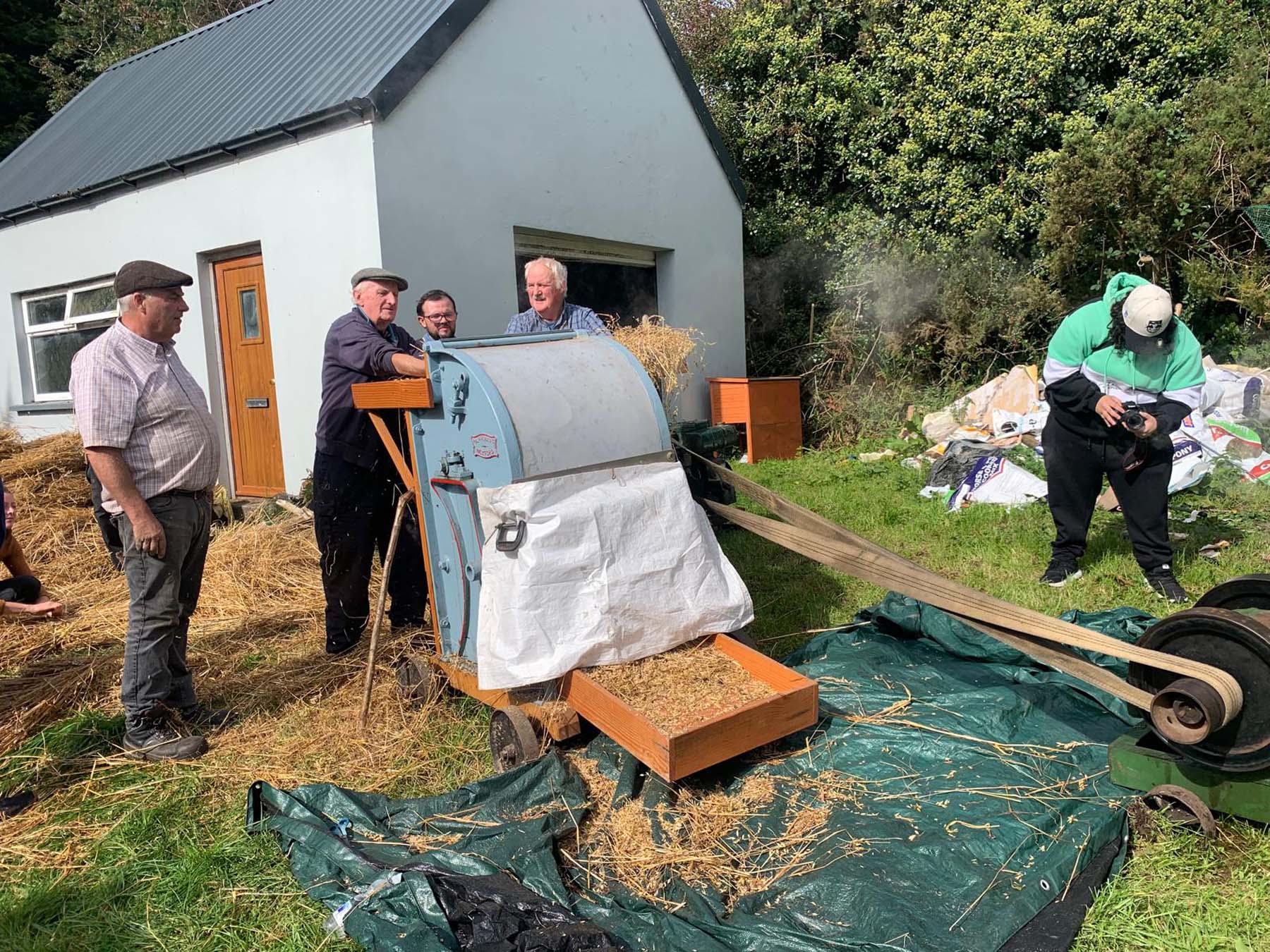
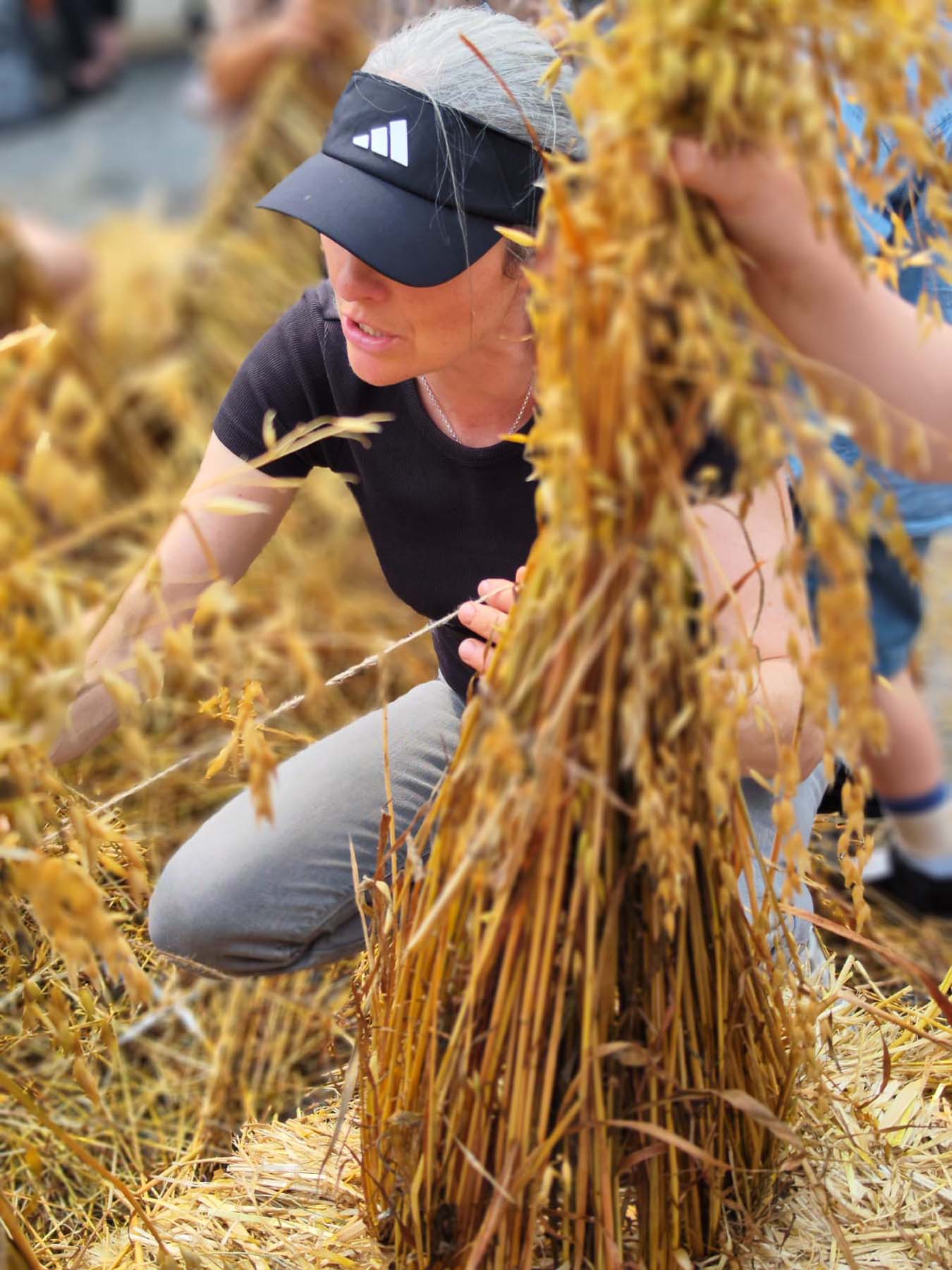
Participation inspires new growth, Mairéad recalls listening to ‘the wran’ coming on horseback all day long, going over the Connor Pass until they reached her door. It was her favorite day of the year. A man remembers as a boy his mother disguising her footsteps so no one would know it was her dancing. Interest in growing cereals for multiple purposes have led to meitheals for sowing, harvesting, winnowing, and milling. Older gardeners fill gaps of knowledge lost through migration, urban life, and the displacement of generations. A folk tincture distilled from oat milk, known to calm the nervous system, became both metaphor and medicine: a reminder that revival is also the work of restoration.

Through Bacach, straw making becomes a form of re-rooting, a poetic, political act of sensing and sense-making. It celebrates the pleasure of shared labour, the courage of disguise, and the joy of dancing together at the turning of the year.

  “Absolutely brilliant… fun and light-hearted but also reviving old traditions that we’d lose otherwise.”

“Thank you for this celebration where our girls could dance… It was great.” — Ukrainian dance leader Olena

Bachadh has been supported by The Down to Earth Collective, Inagh and Ennistymon Straw Boys Groups, Six Mile bridge Vintage Club, Straw from Liscannor Coursing club, Denise the Vet, Louise O’Connor caller and Dancer, Aidan Vaughan, Claire and Saoirse Frawley dancers, local musicians, Inisowey Polish revival group, Clare Museum, Creative Communities Project Awards and Clare Co Council. Eanna Byrth and The Ennistymon Historical Society, Pól Brannaigh on Inís Óirr for the rye. We remember Anne McCaw, a lady and a Strawgirl.

Details & Info

Bacach

 A living, evolving revivalist commons. Maeve Collins in collaboration with dancers, musicians, horticulturalists, vintage machinery enthusiasts and communities in Clare and beyond.

2024- ongoing

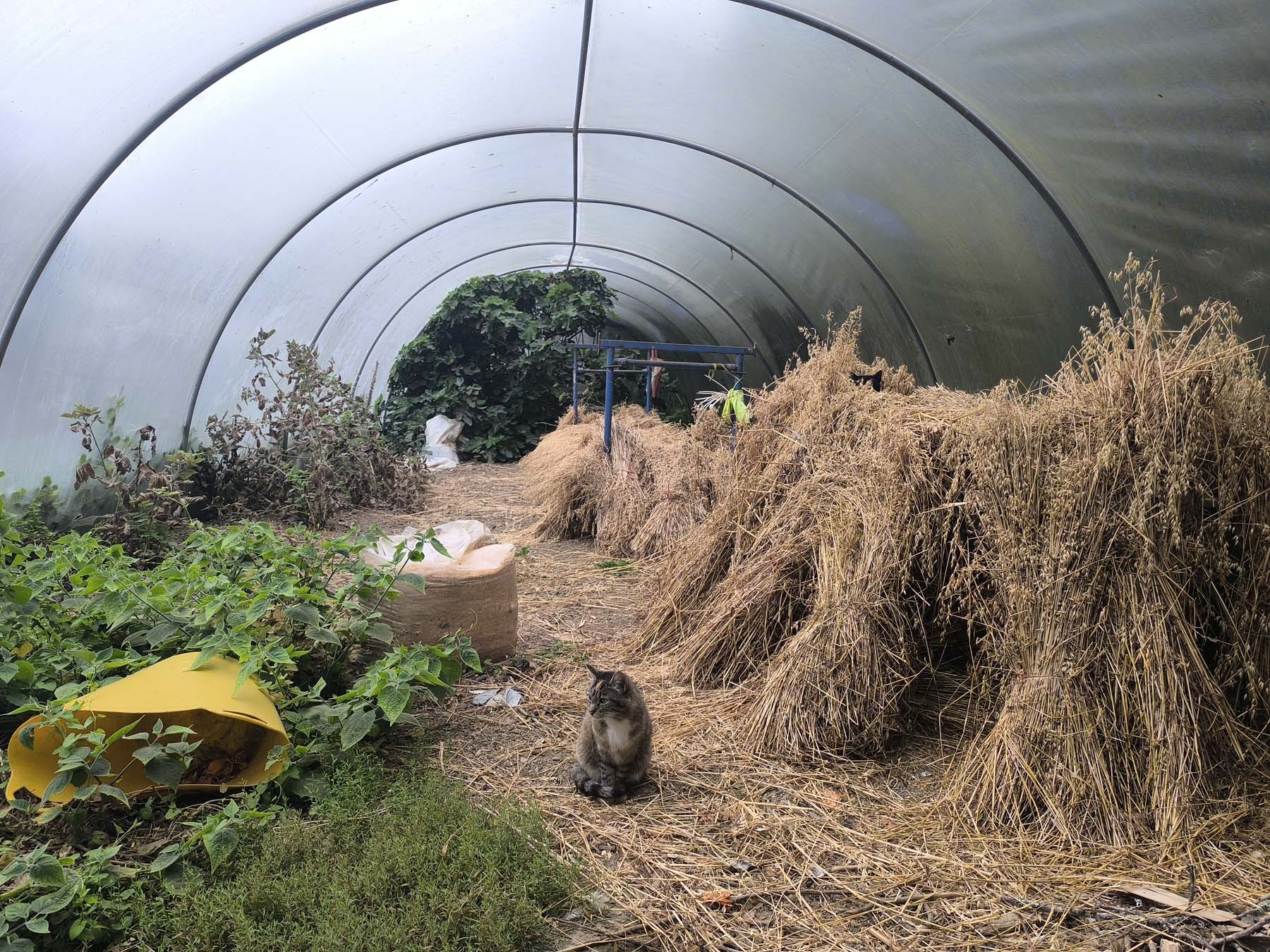
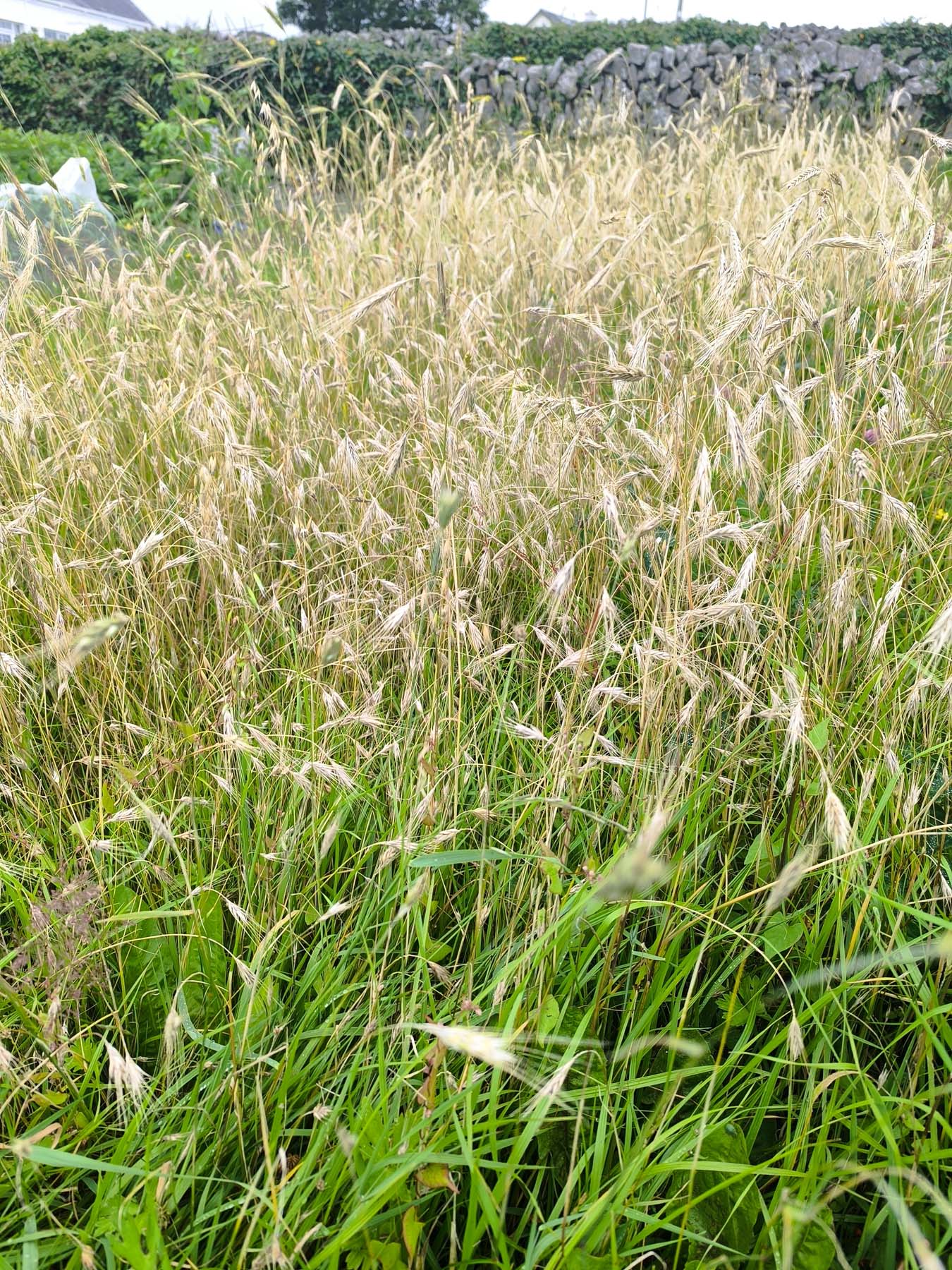
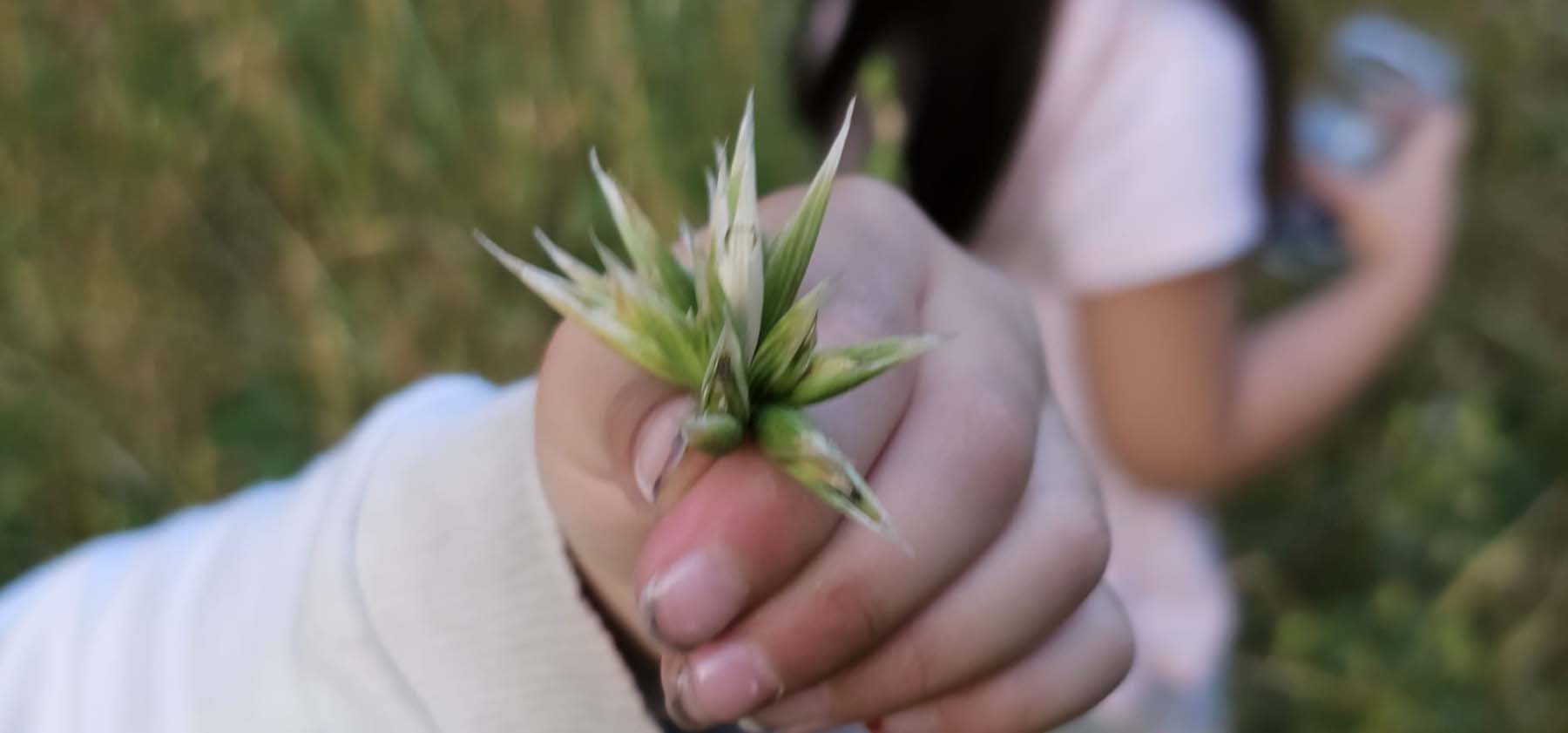
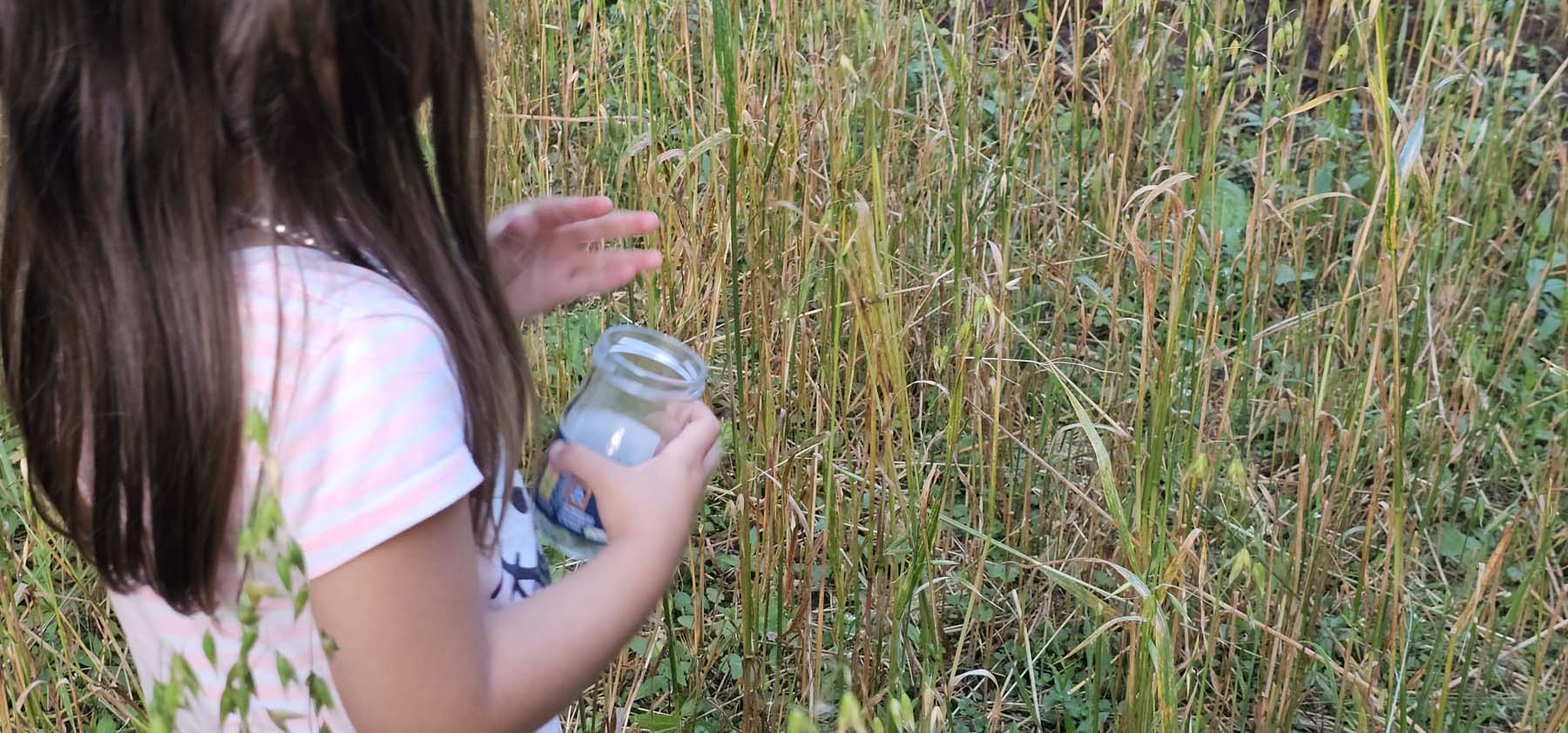
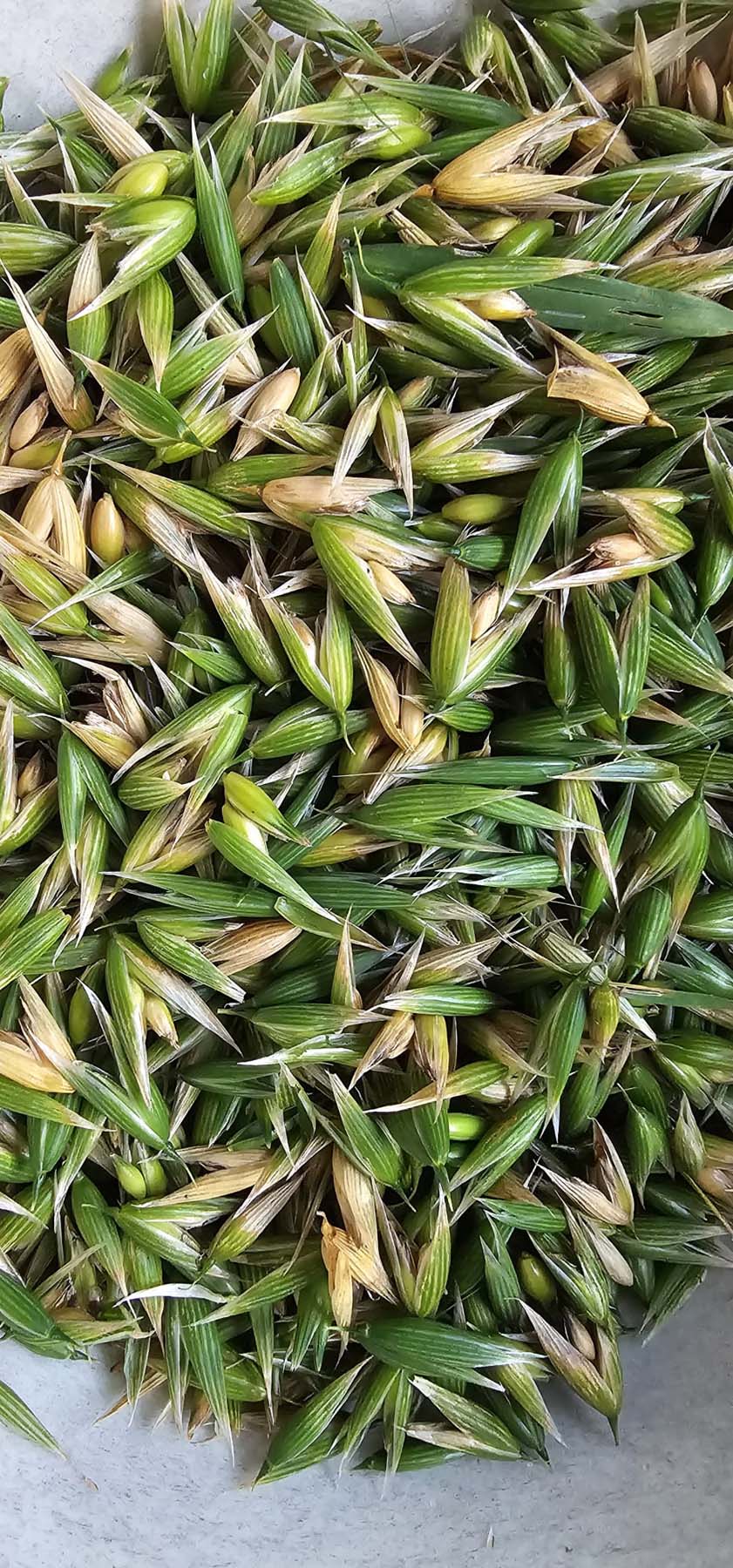
Bacach, is a living, evolving project that weaves together strawing traditions, horticulture, collective memory and folklore. Beginning in the field, seed sown is cut by scythes, winnowed and gathered and crafted in hands to later unfold through costume and acts of disguise, dance, and celebration. At its heart lies an exploration of how land is both poetic and political, how it lives through us as material, gesture, and lore.

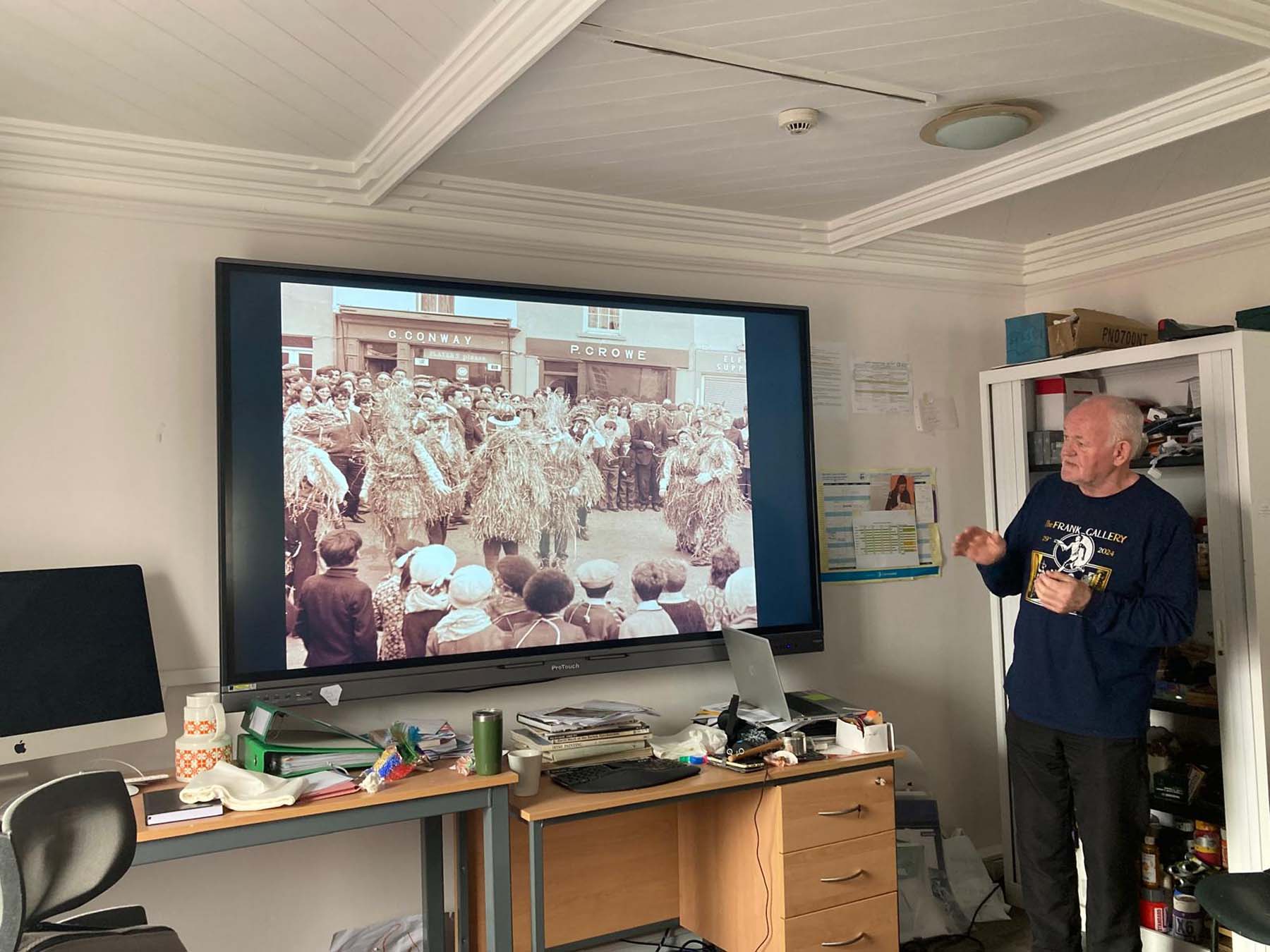
Rooted in the Strawboys and Mummers traditions, Bacach responds to a local desire in County Clare to keep these customs alive when the straw hats central to the practice had all but disappeared. The last local maker had died, cereal growing had almost vanished. Two sources gave the straw to start the revival and from these beginnings grows a living, sensory inquiry into making, masking, and coming together, shaped by the community itself.

Over time, the project has taken on a life of its own sustained by many hands and voices. It continues to gather new strands: Straw dances, preparations for Brigid’s Day festivals, a collaboration with ‘her story’ with a forest school and a rain forest community in Indonesia, workshops for straw/ bacadh groups, straw connect project with European cultures, collaborations with dancers, musicians, schools and community groups and new gatherings where straw is a language of connection.

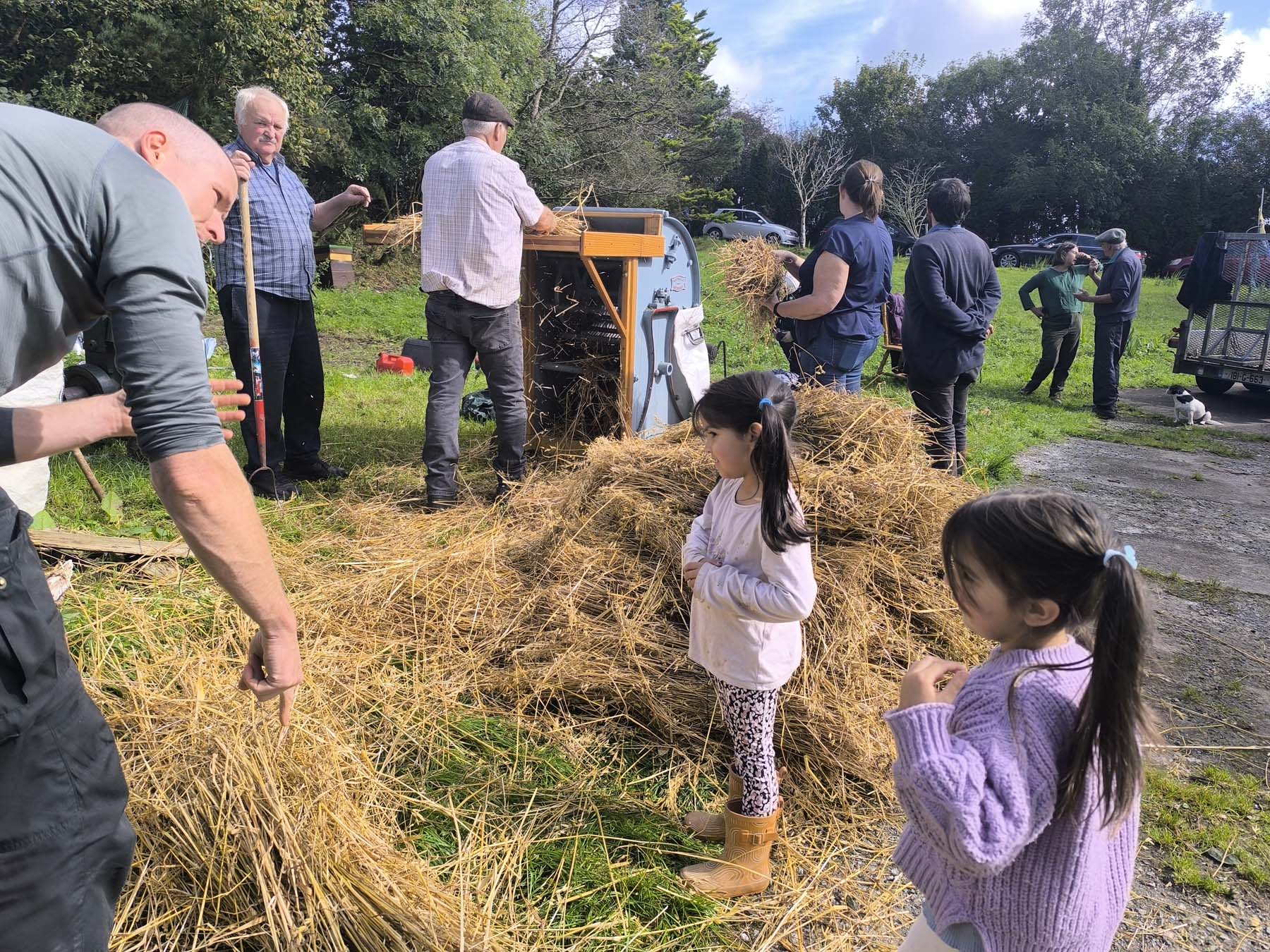
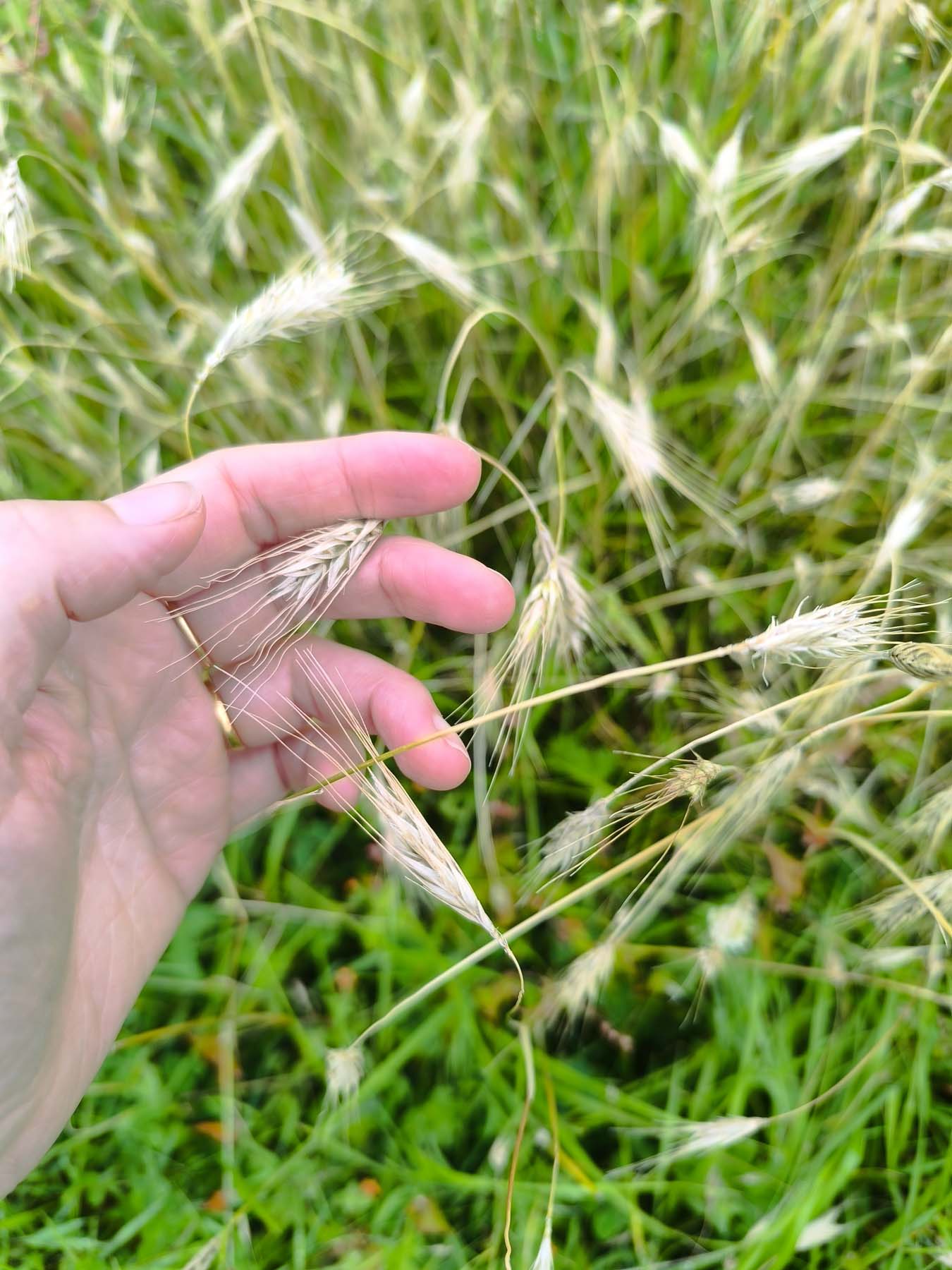
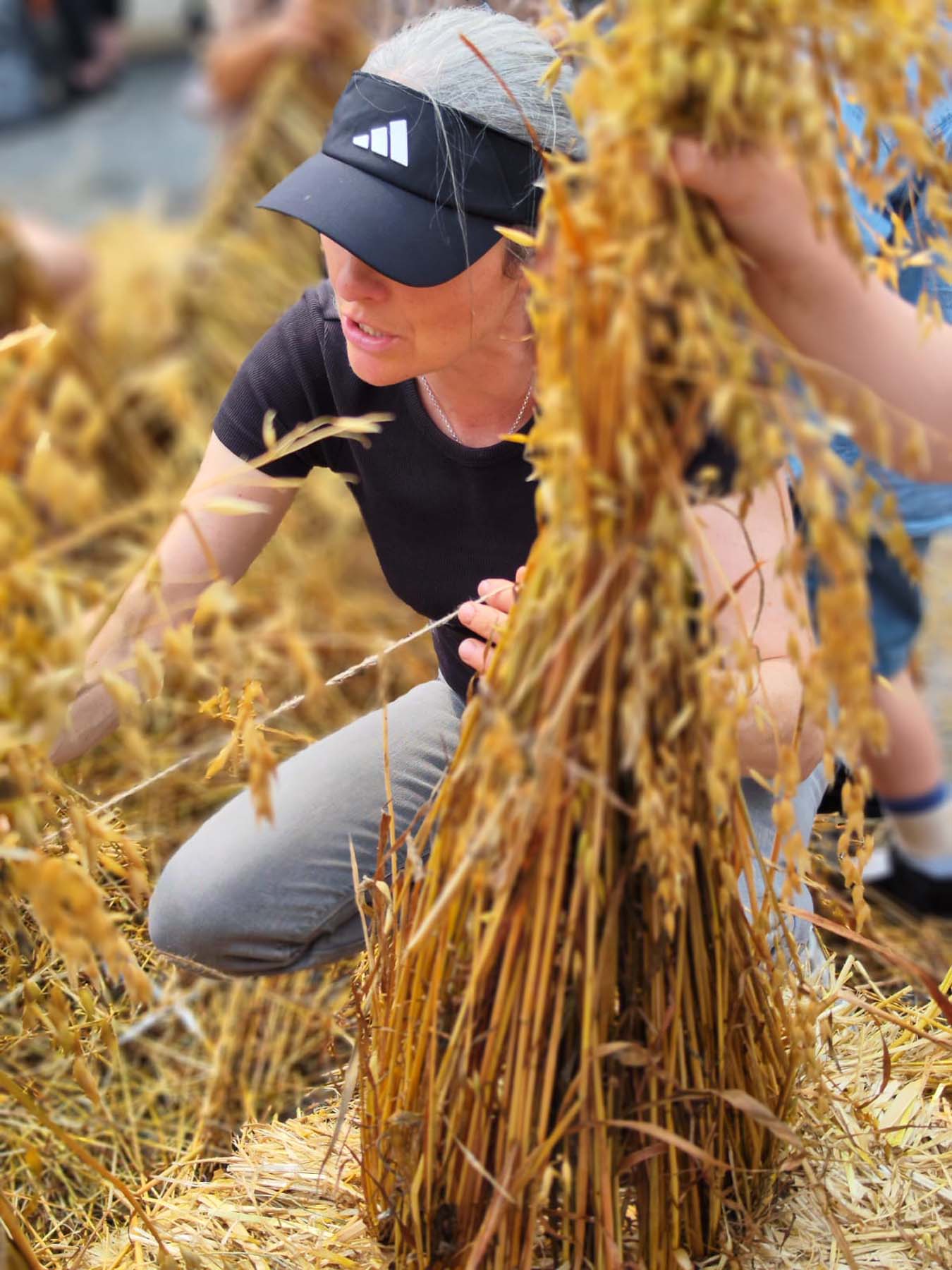
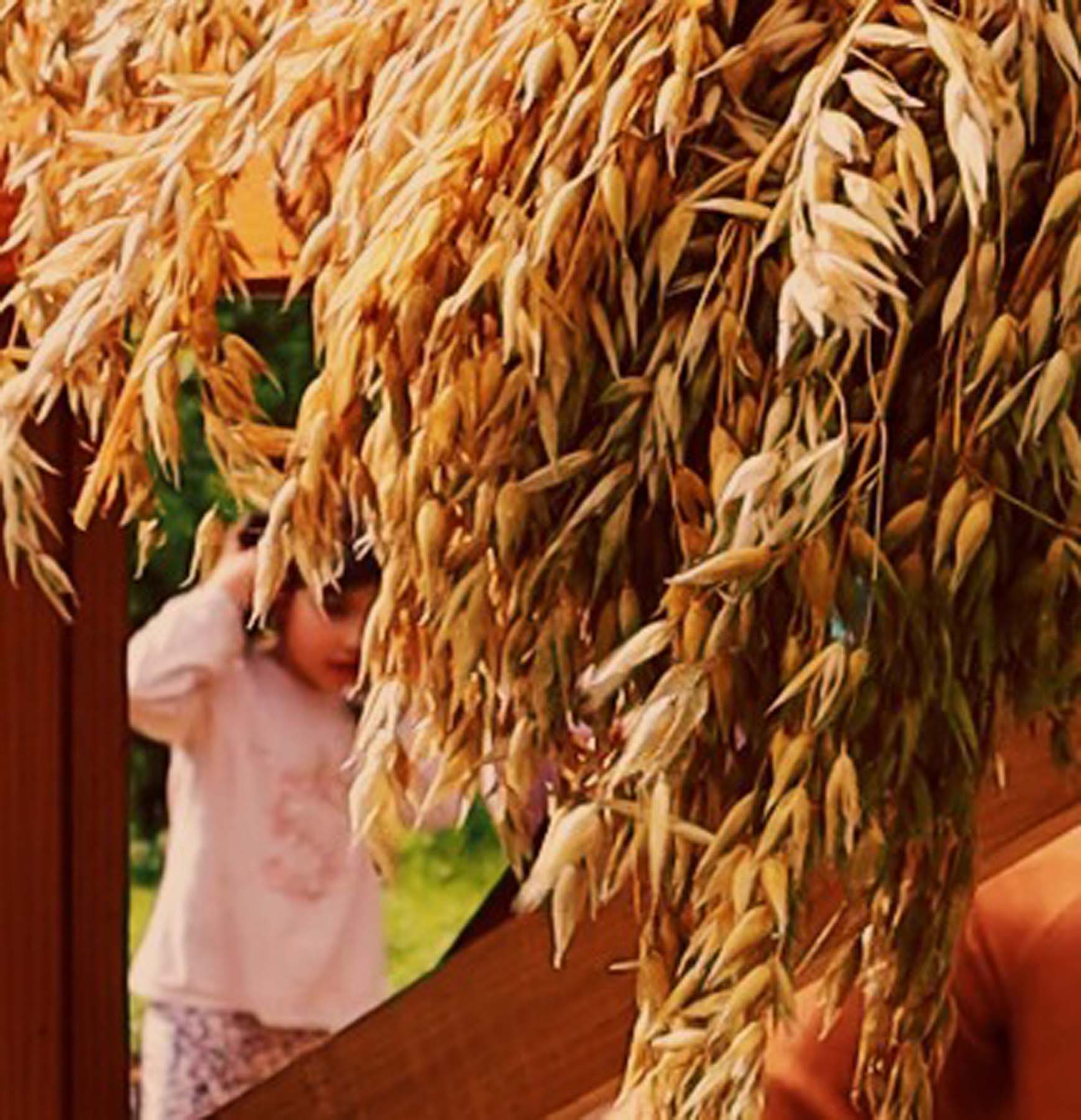
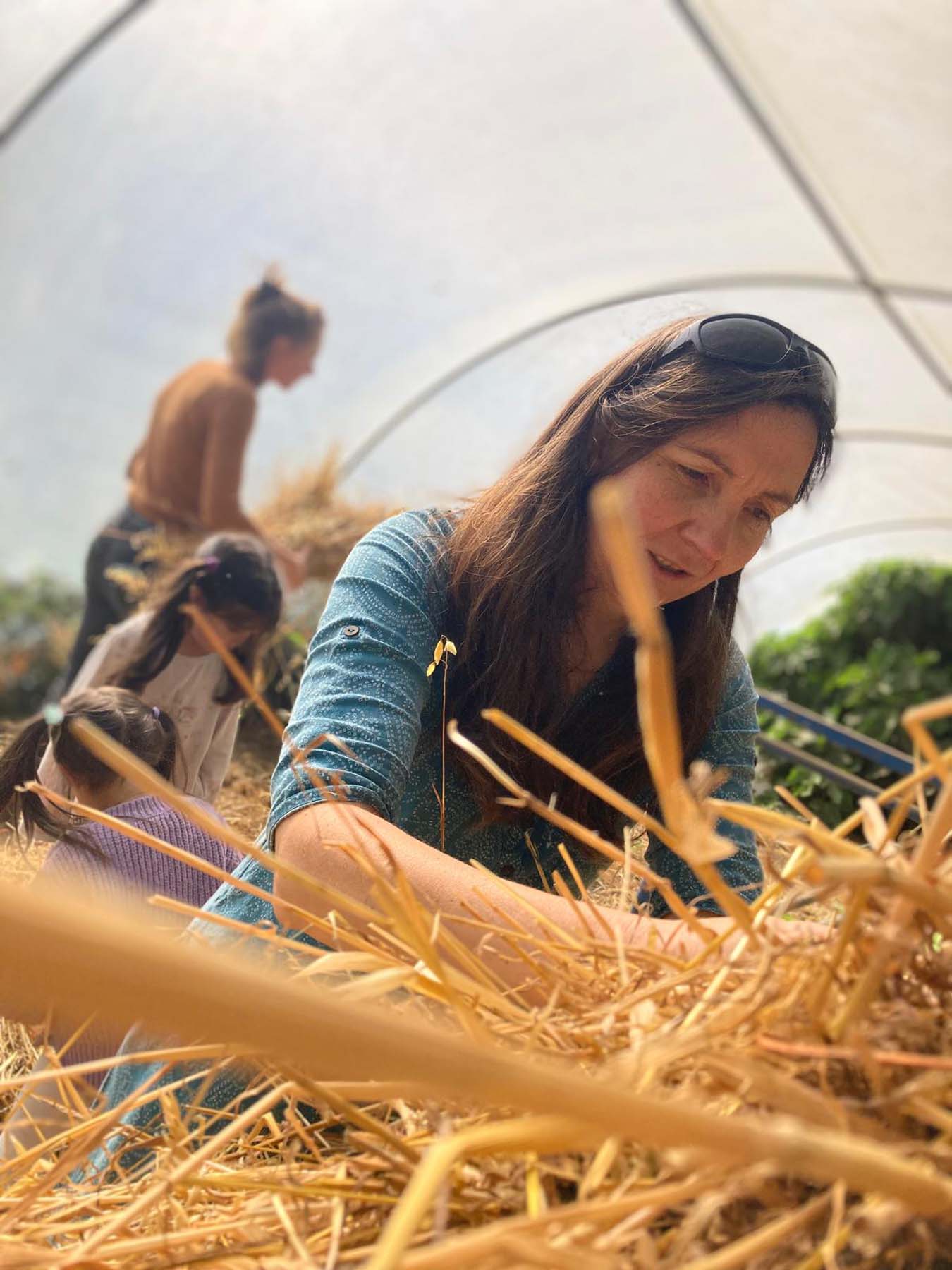
Through touch, smell, movement, and the labour of collective making, participants reconnect to land. Bacach is a practice of sensing that tunes the body to cycles of growth, harvest, and celebration. Working alongside neighbours and the Down to Earth Collective, communities sow, thresh, and winnow oats, this year adding rye and barley too. Other cereals are sought from, Tipperary and Wexford (giving the chaff a use). Acts of cultivation have a choreography: the rustle of straw, the rhythm of hands, the quiet politics of people coming together to grow what they or others will later wear, dance and consume.
  • Category
  • Date March 26, 2026