

4.04.2014 Intervention at Ennis District Court
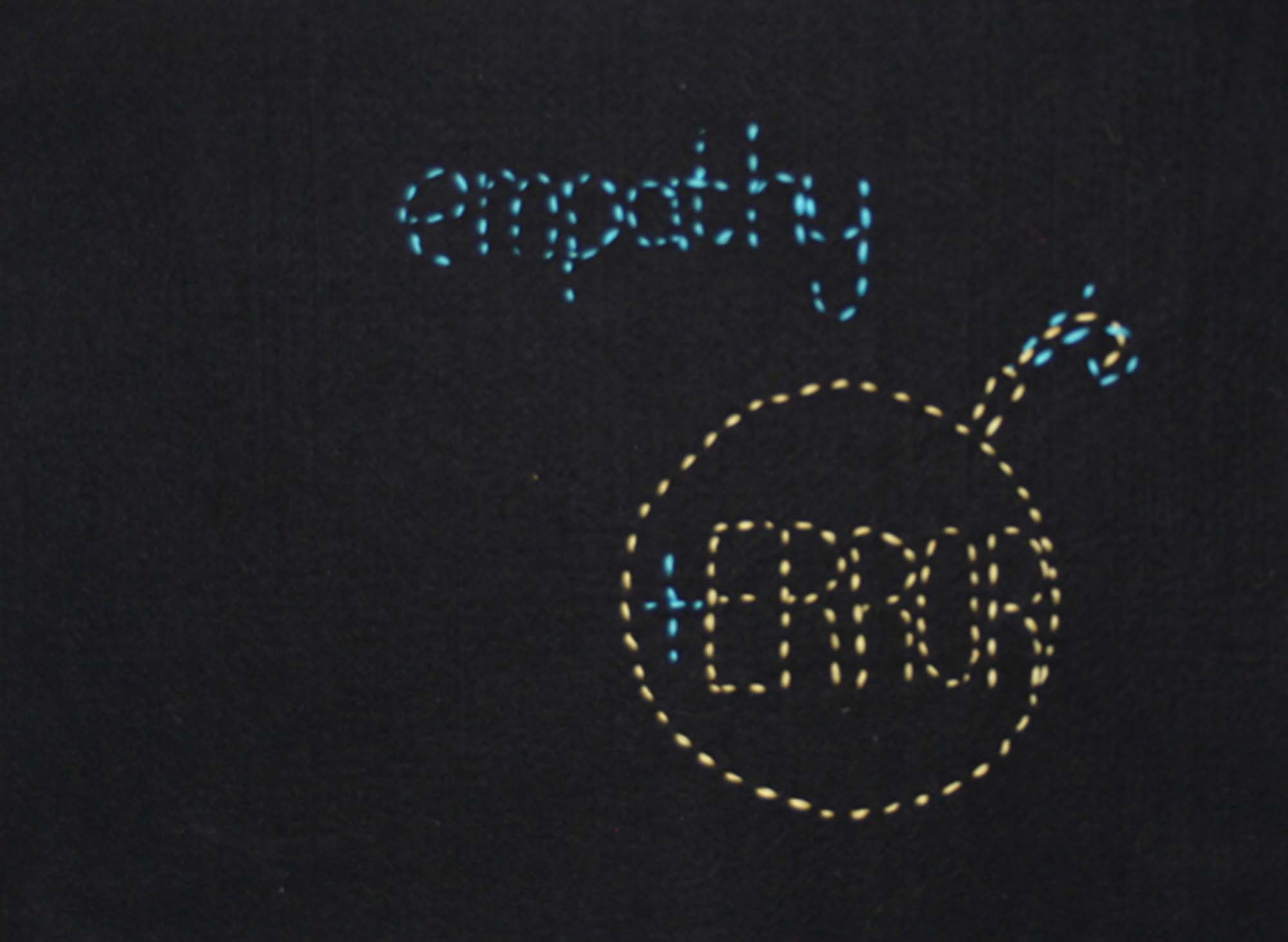
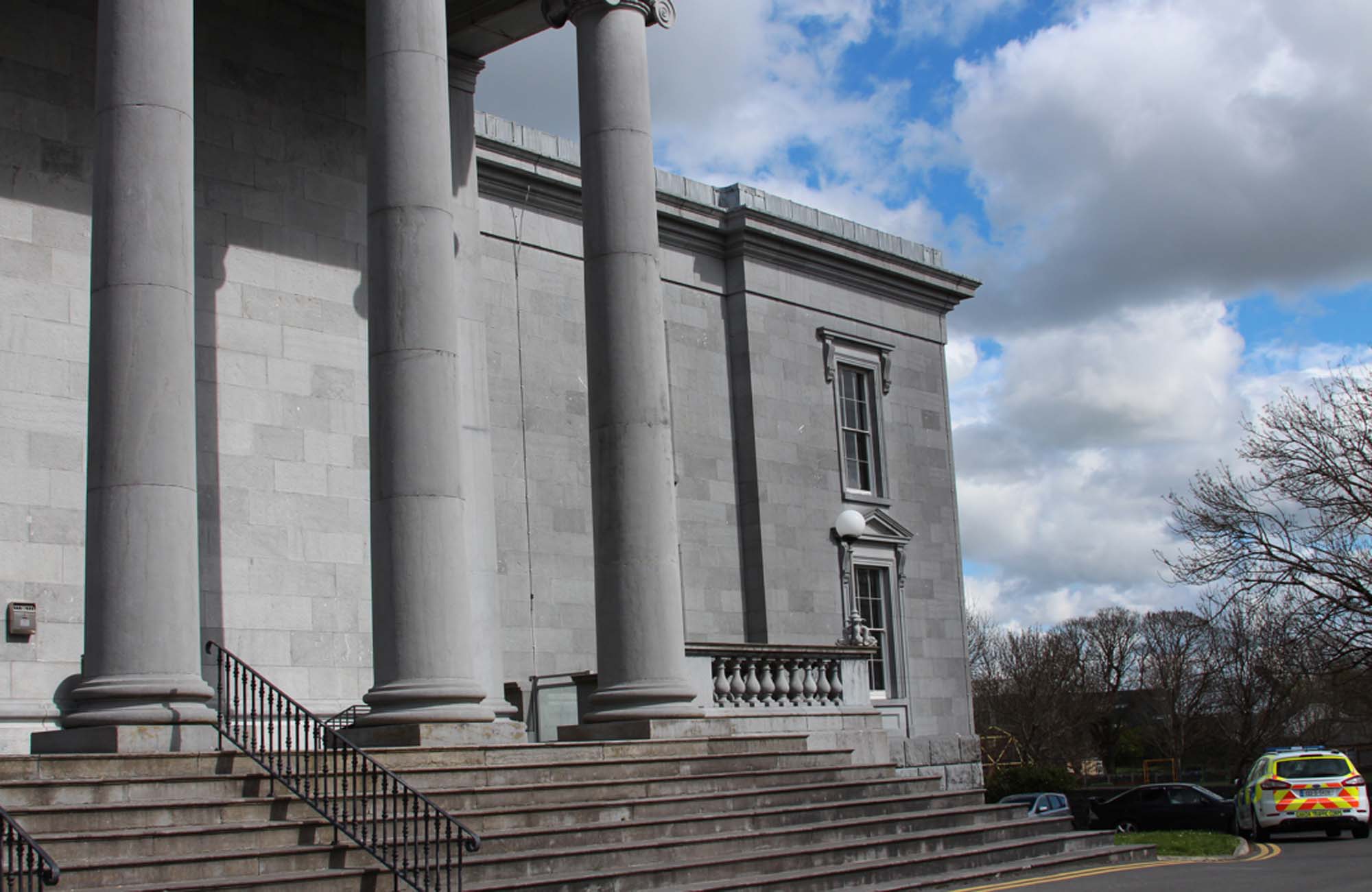
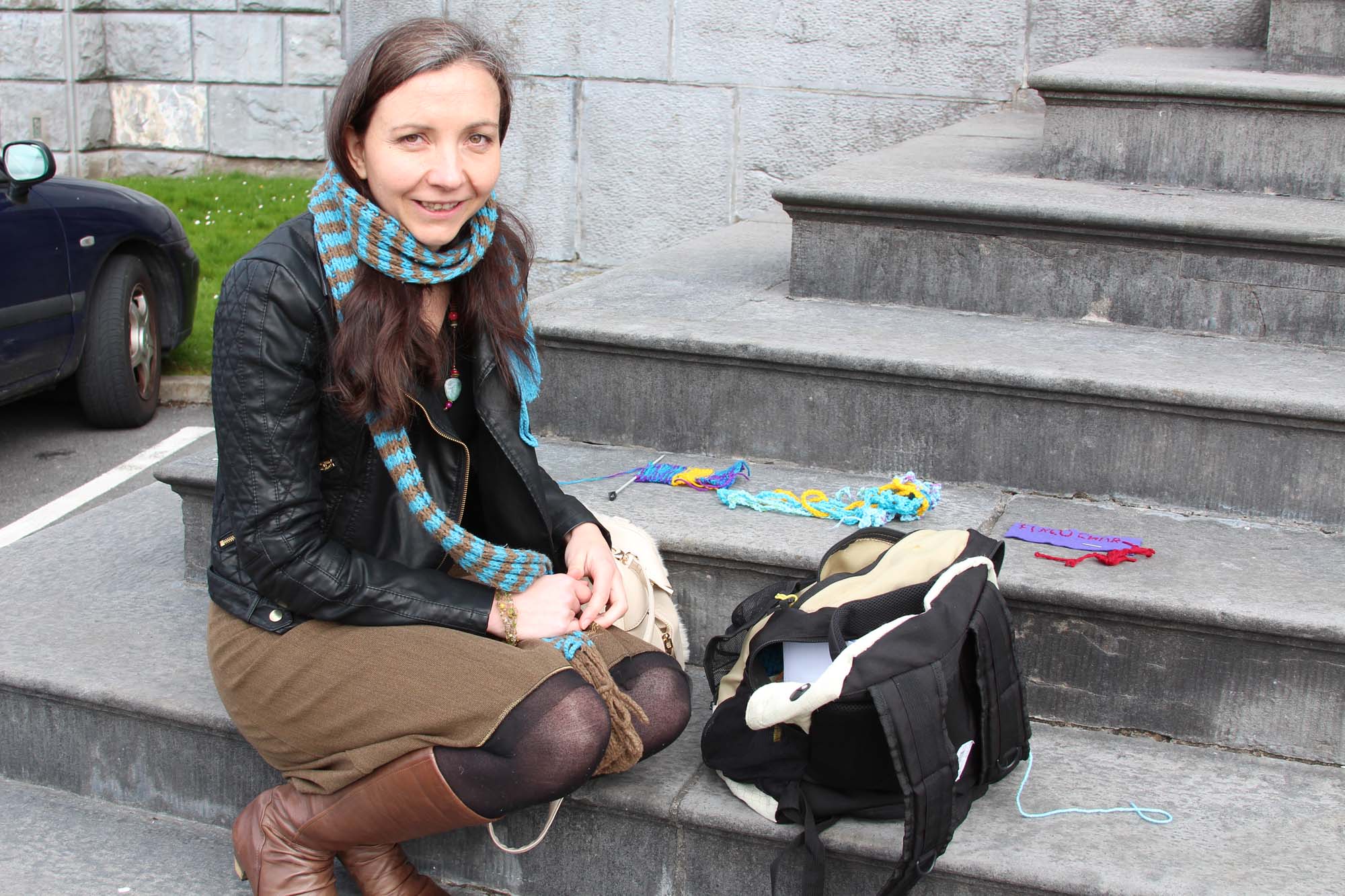
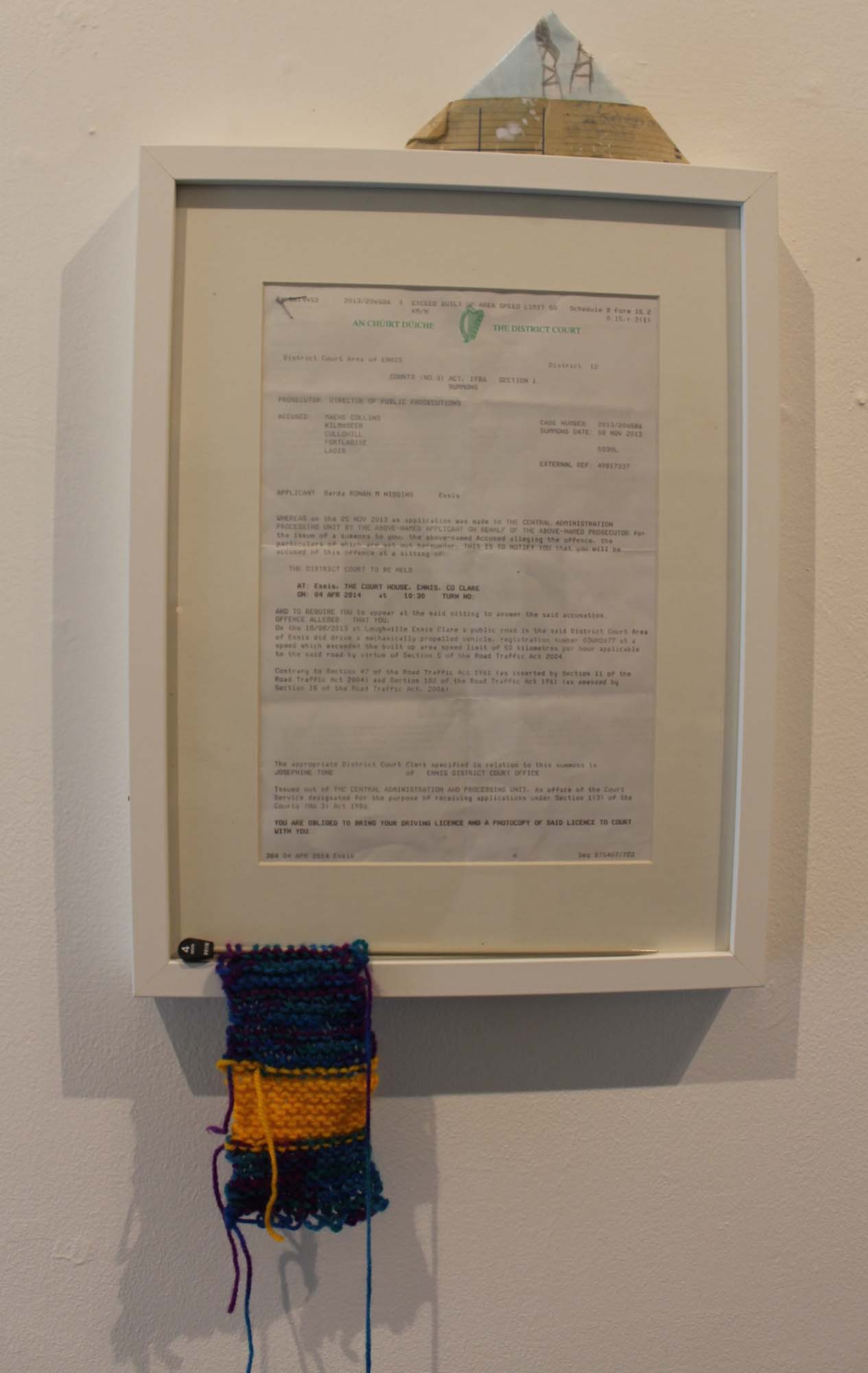
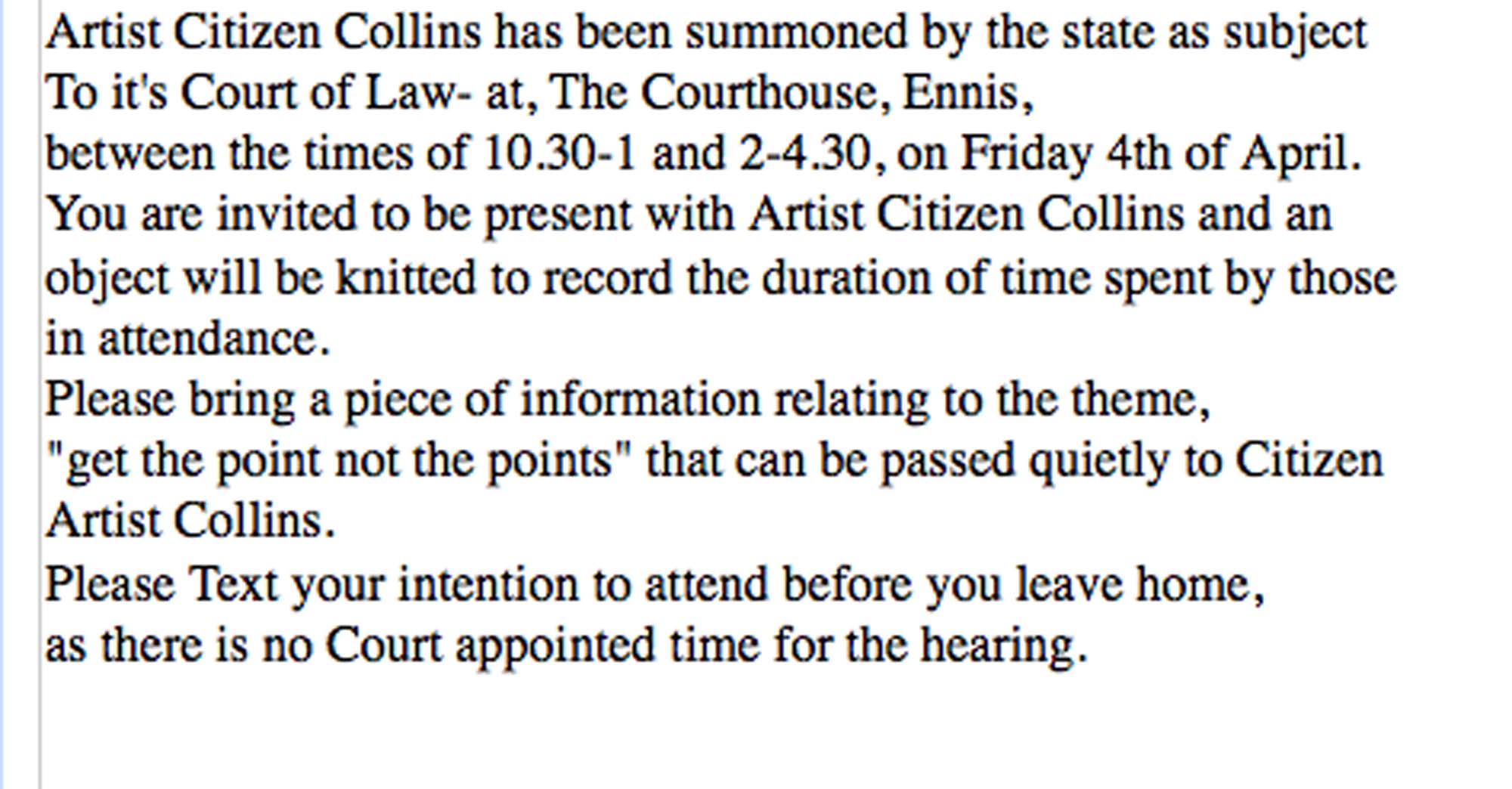
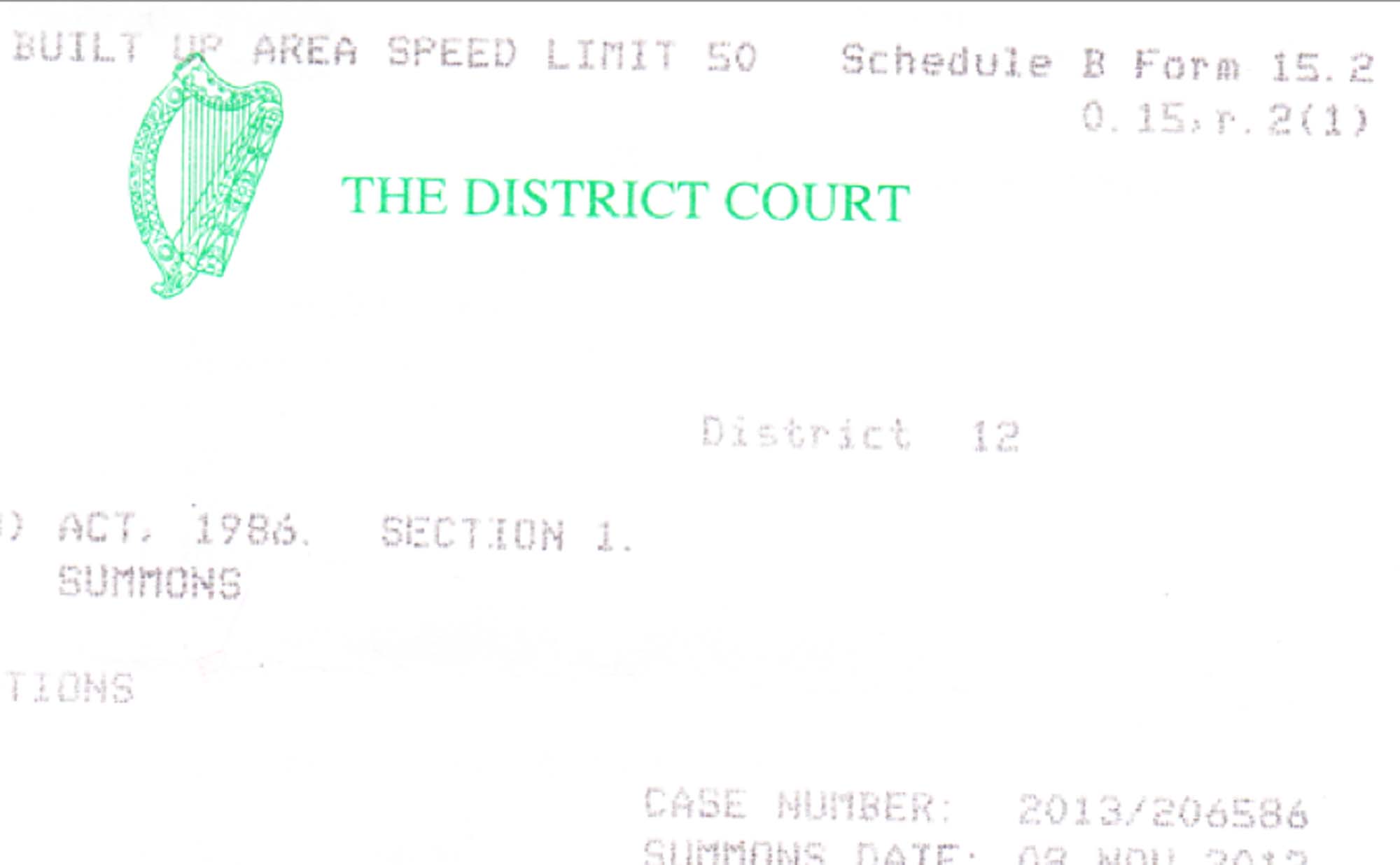
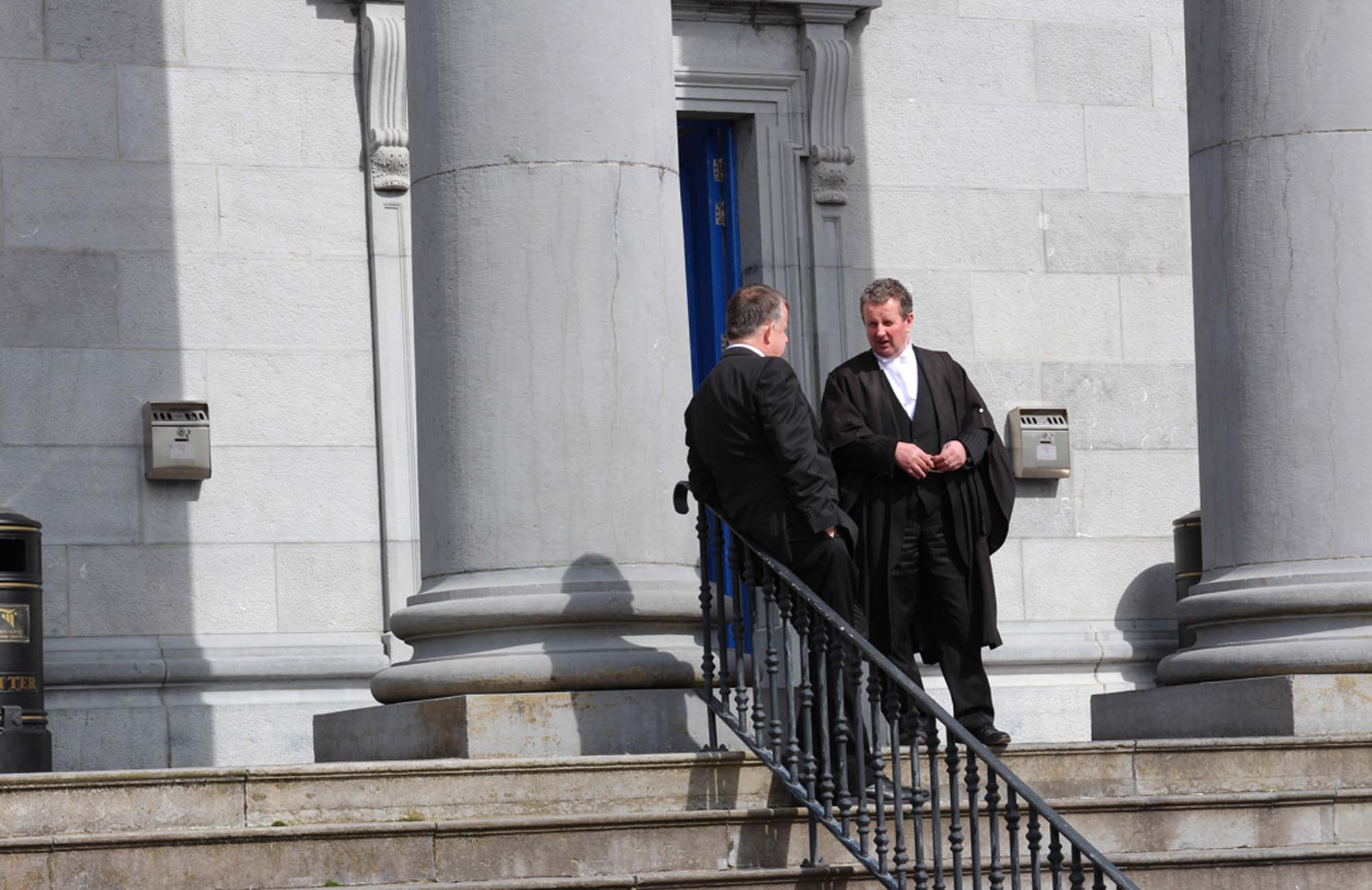
Empathy + Error began as an invitation to friends and acquaintances to join Maeve Collins, as ‘Citizen’ artist, in Ennis District Courthouse, where she was representing herself for an unpaid traffic fine. (Ironically, the notice had never reached me.)
The invitation asked two things:
• To be present with Collins in the courtroom.
• To respond to the slogan “get the point, not the points.”
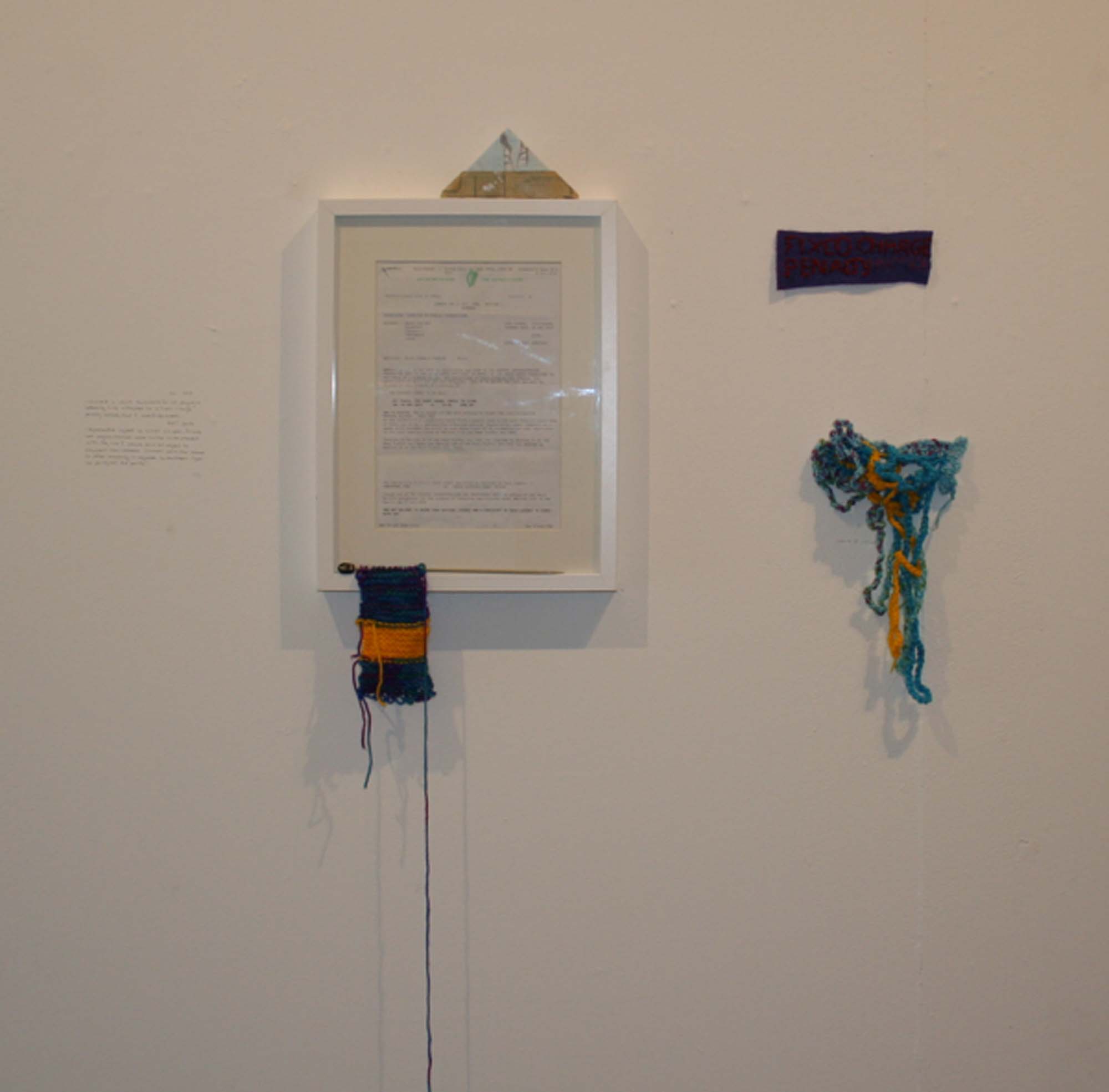
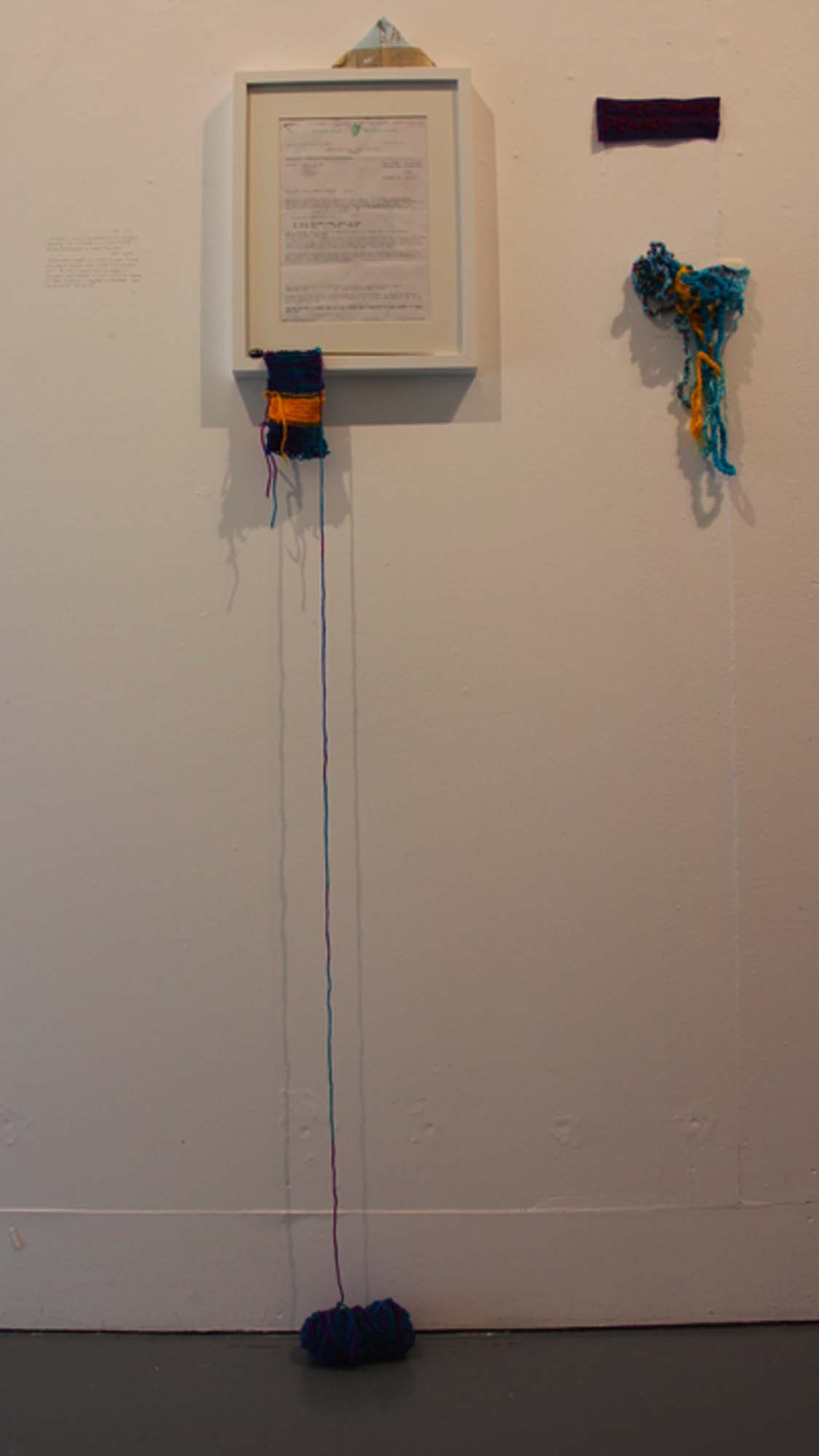
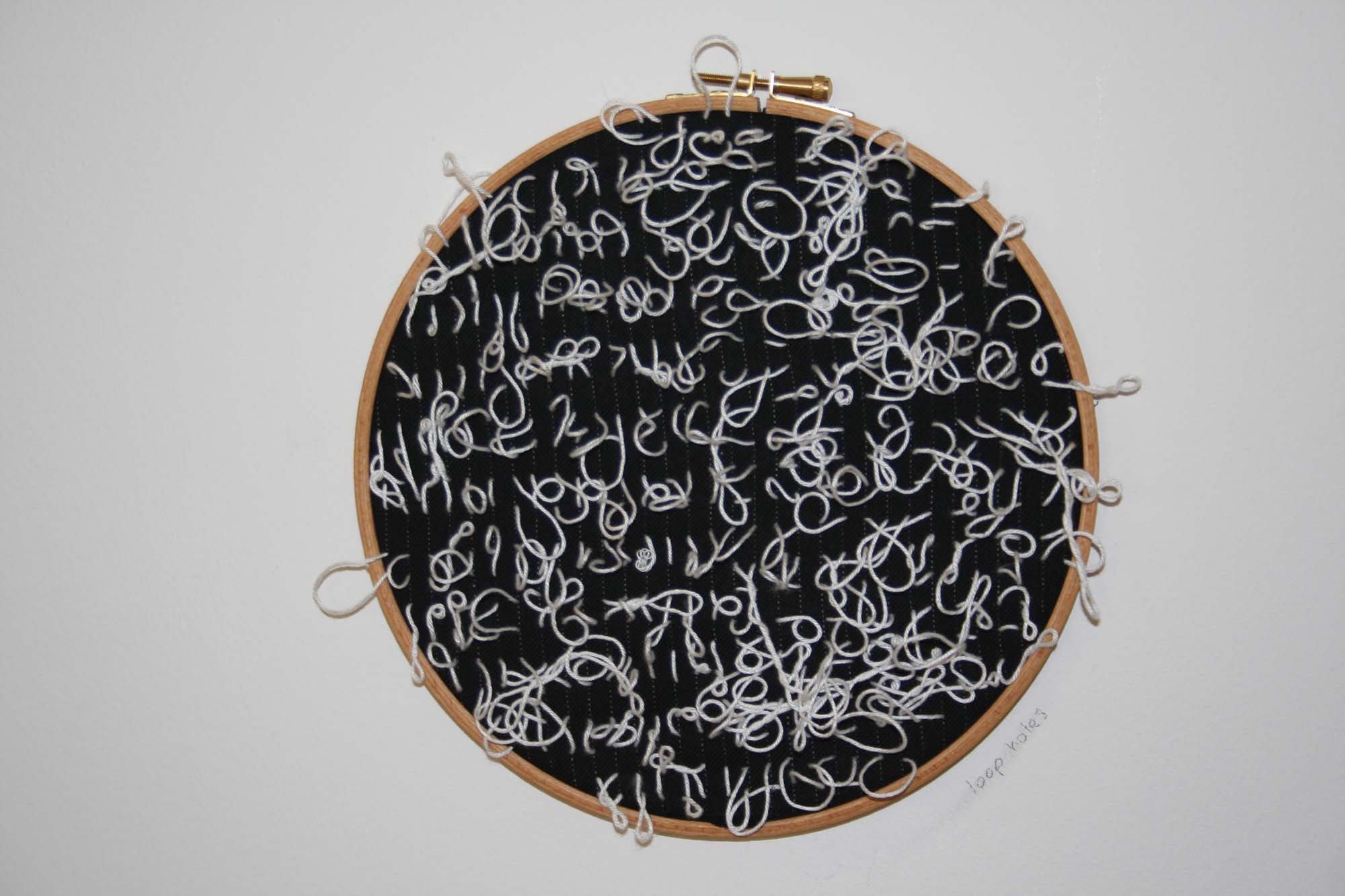
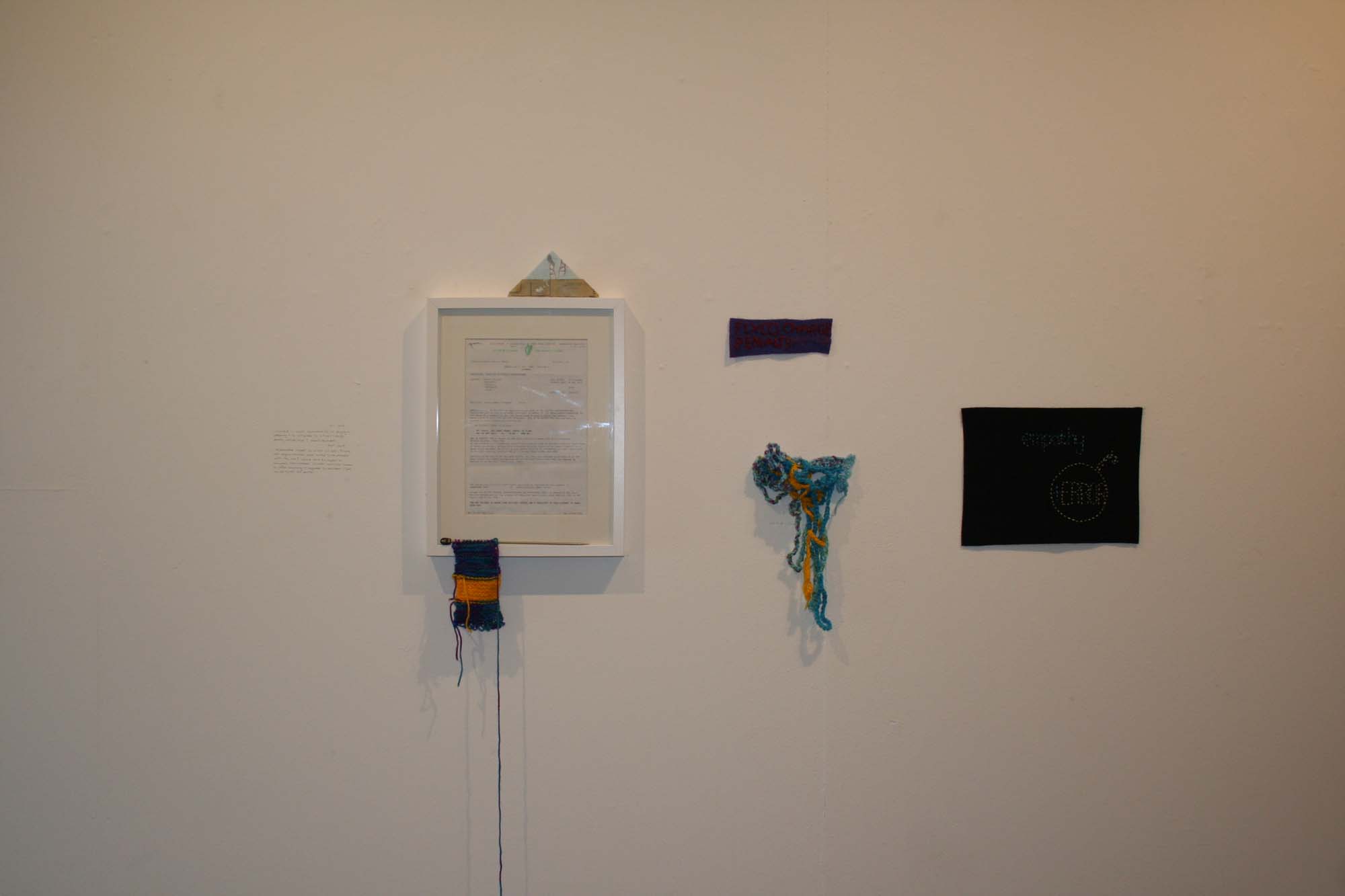
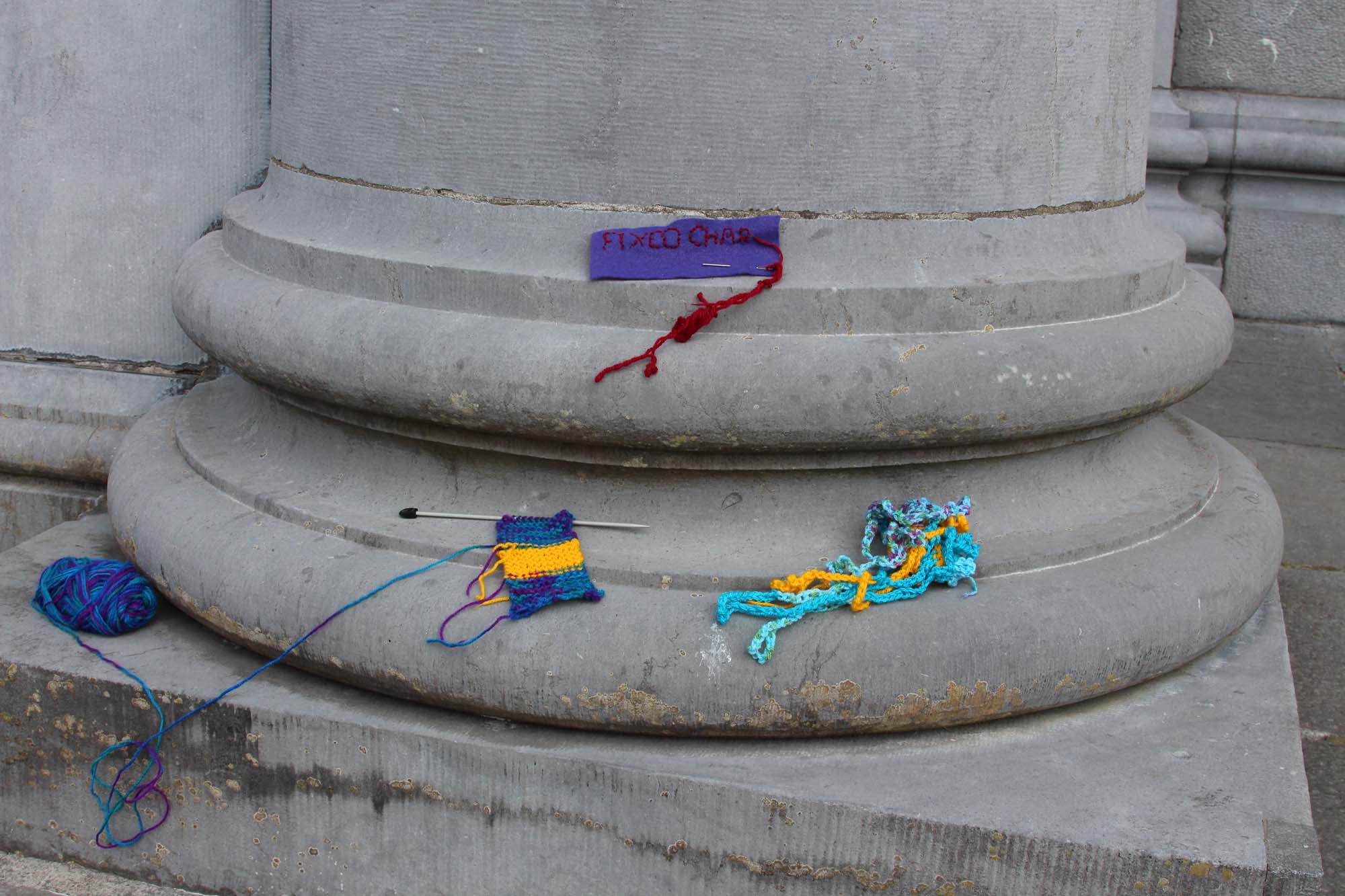
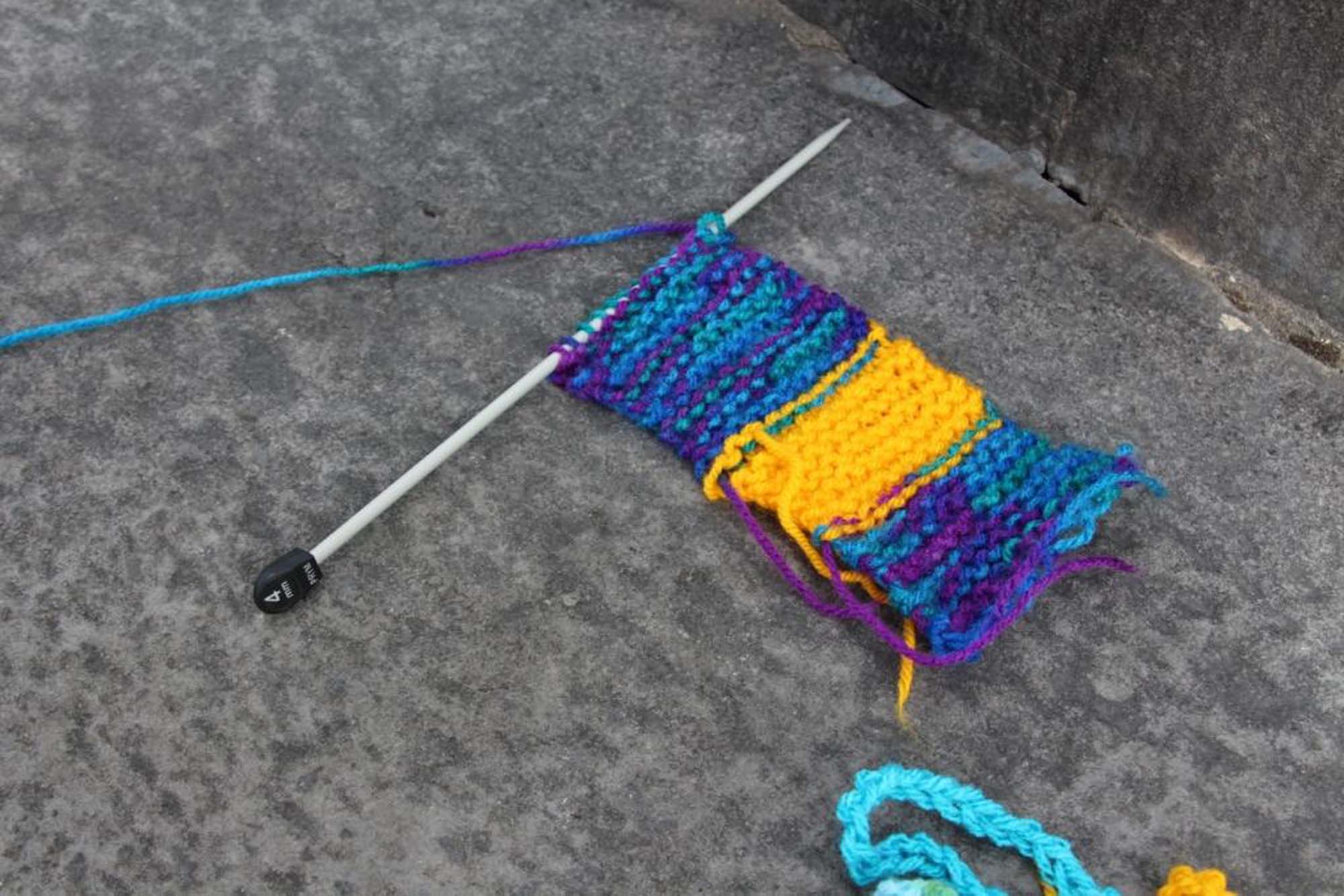
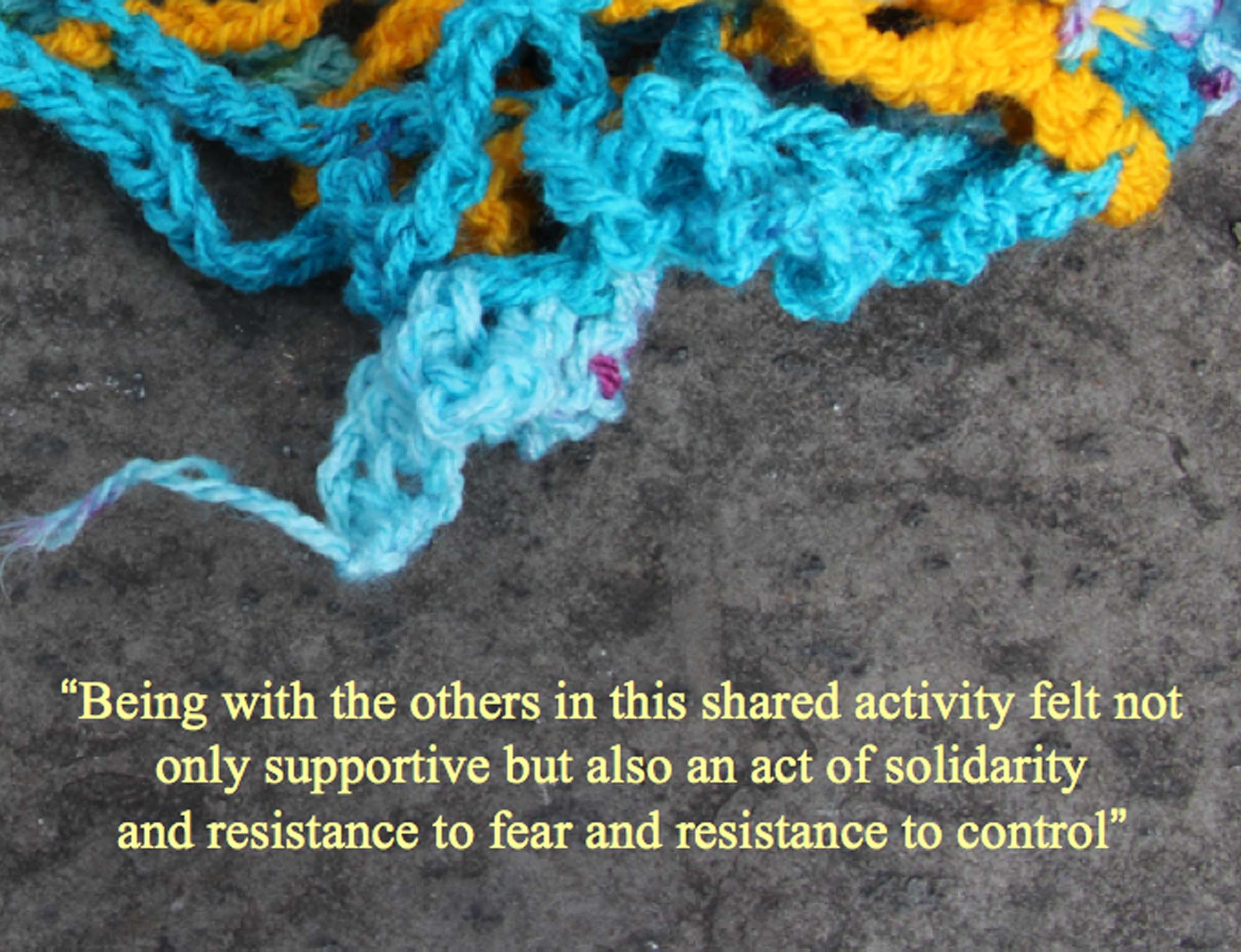
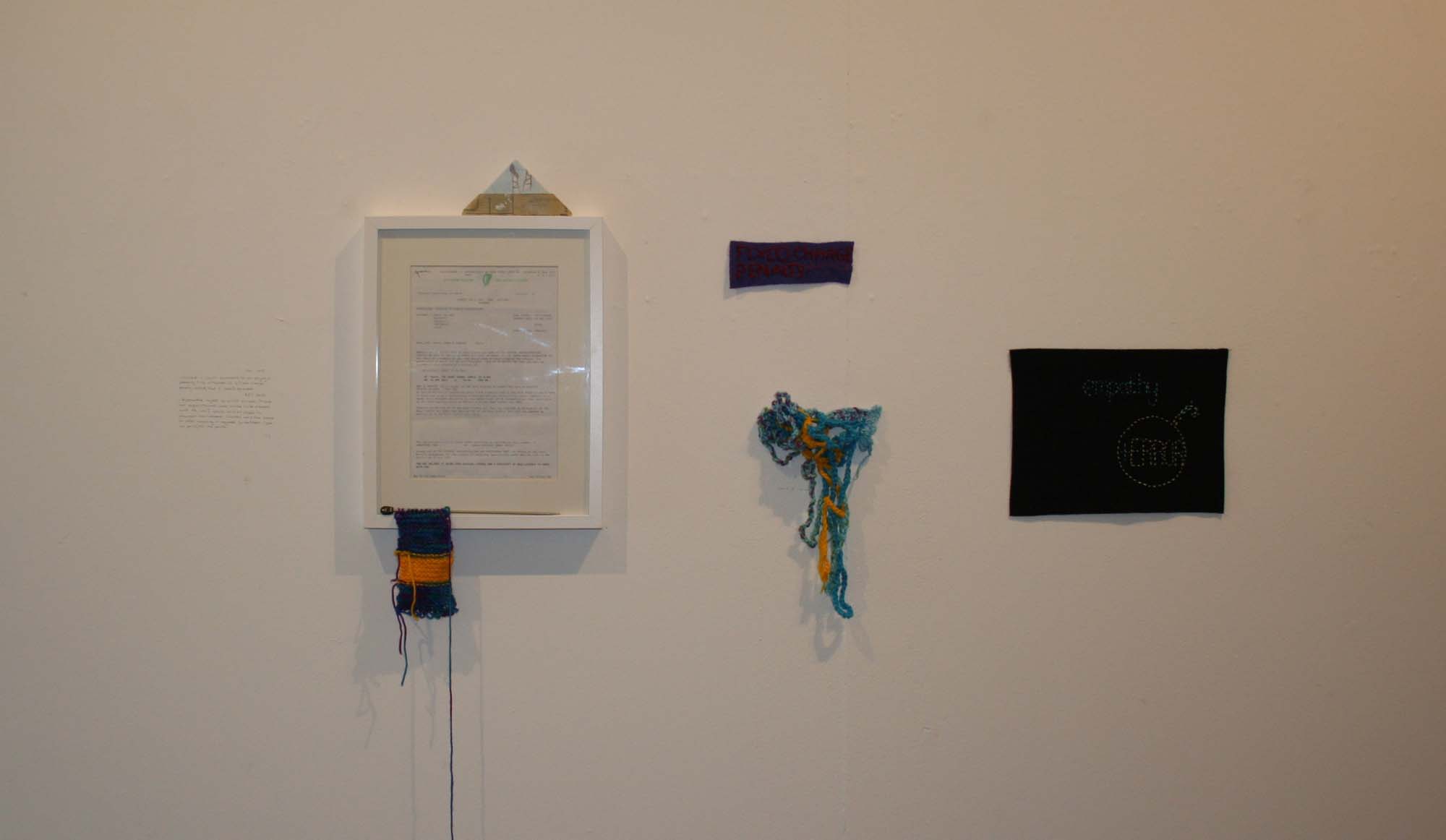
The intervention used knitting as a way to hold presence. Each row recorded the duration of companionship, shifting threads and colours marked the comings and goings of those who stood with me. An object grew in real time from collective attention and care.
This act served as a gentle but insistent intervention into a rigid, highly controlled environment. Through solidarity, empathy, and making, a new kind of “document” emerged.
Knitting as Communicative Surface
Knitting introduced an unexpected, tactile surface into the smooth order and authority of the court. It created a conversational space within a system marked by control and absoluteness.
As Maeve waited for the hearing, she began to knit. The first rows were loose, but quickly found rhythm. With each stitch, the empathy of others sat alongside the sense of error — both personal and systemic.
The matter was eventually struck out, yet the real outcome was collective: refusing worry, choosing honesty, and making space for presence. Together, a subtle new thread was knitted into the court system.
Offerings and Responses
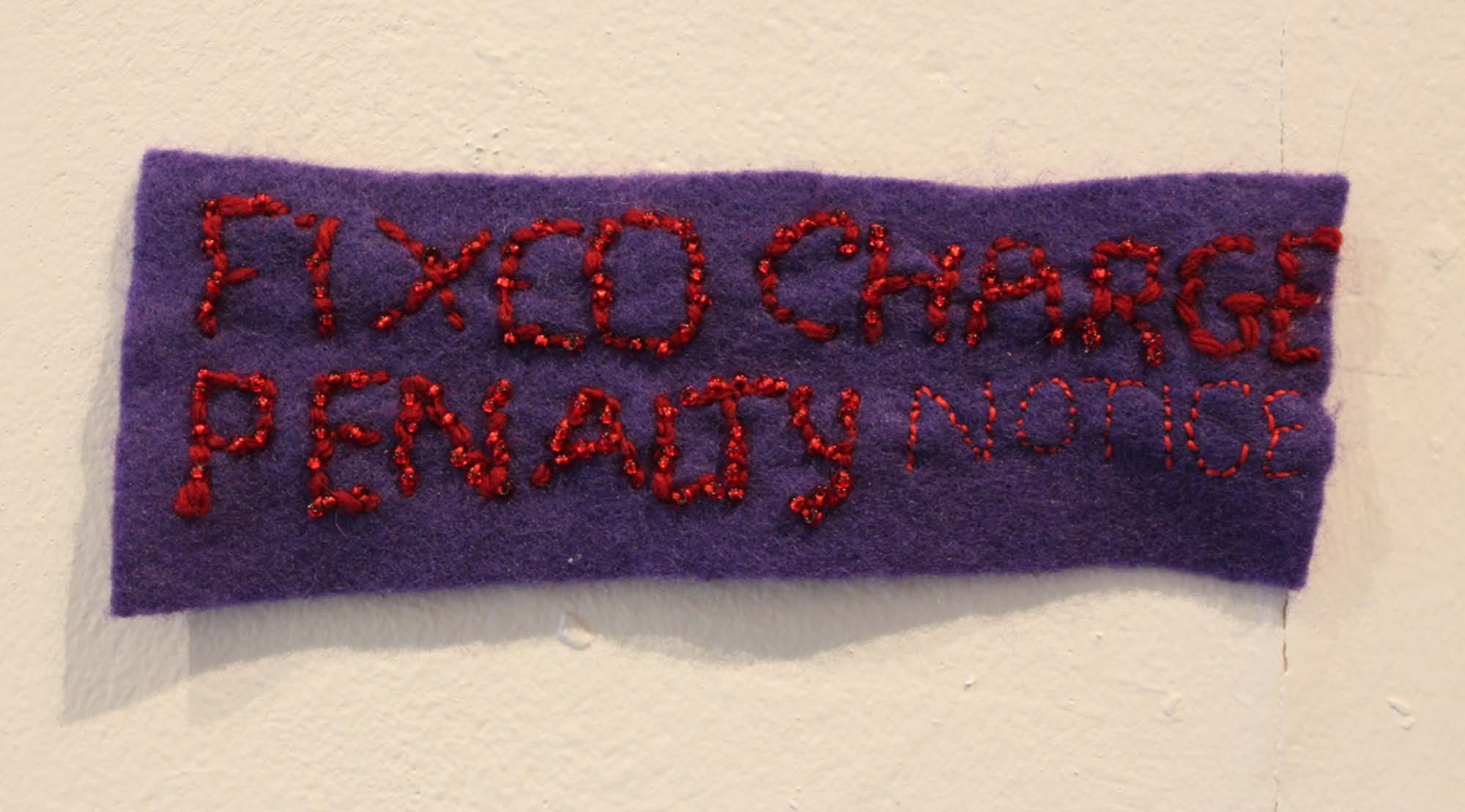
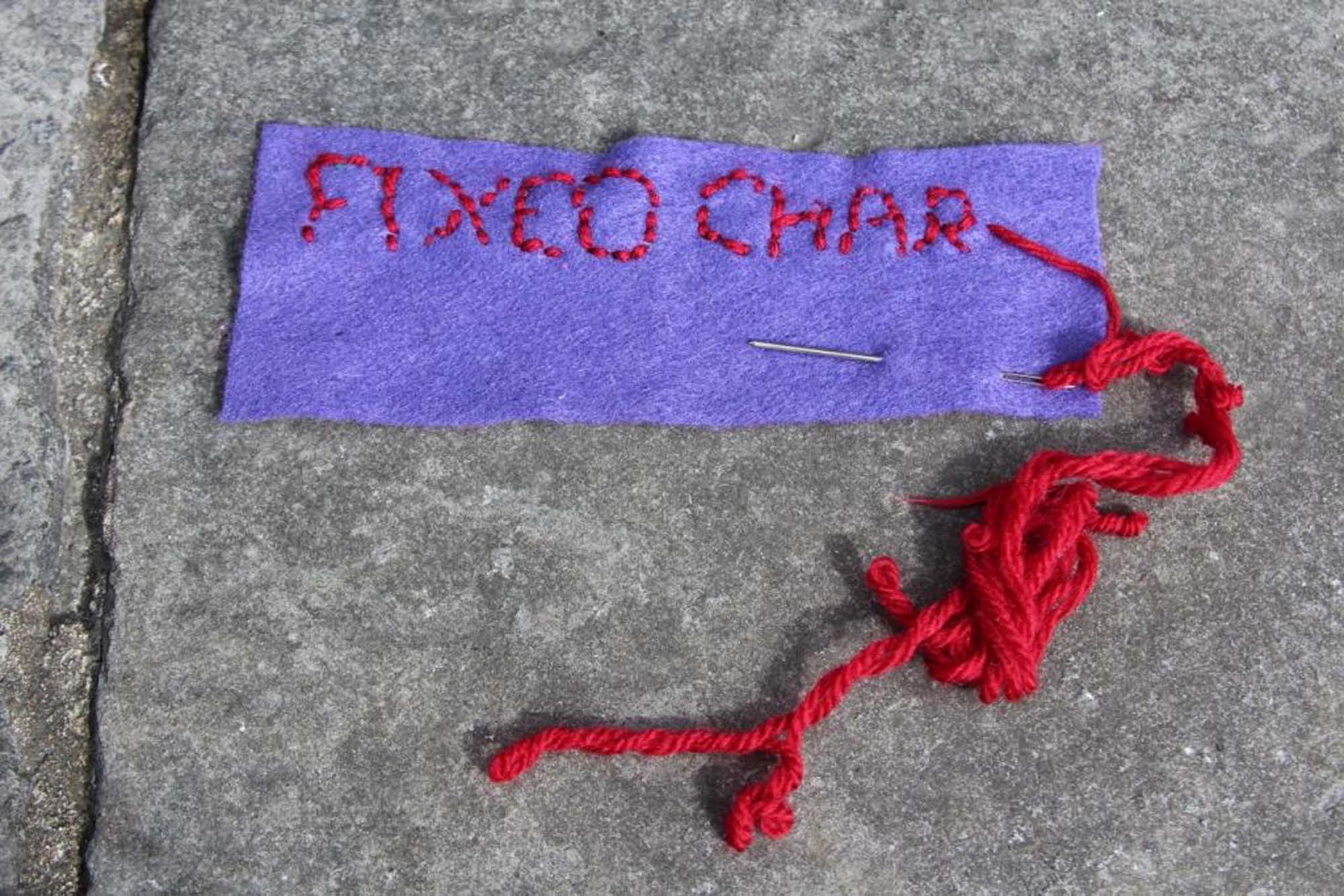
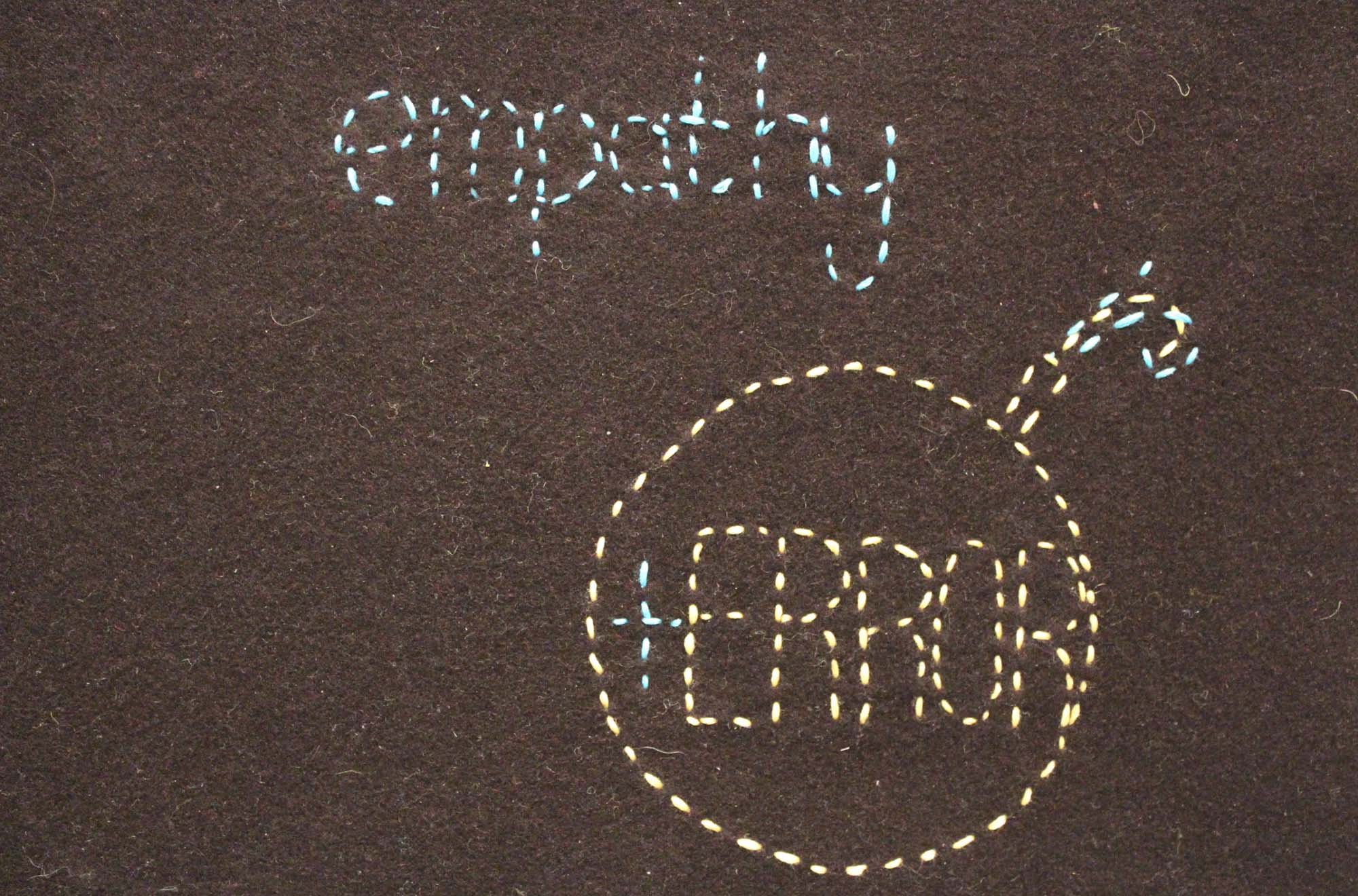
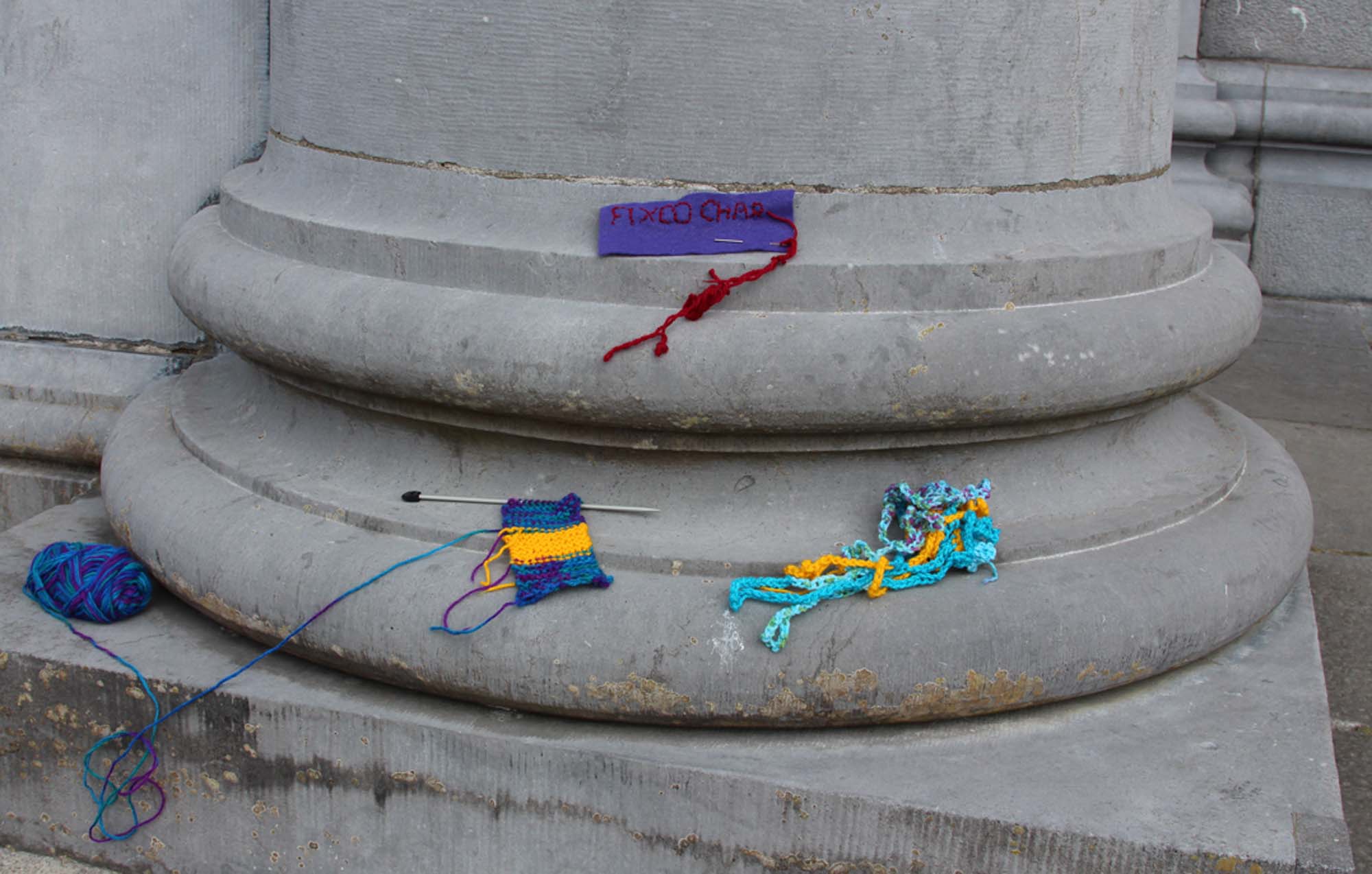
- Fiona brought an envelope marked “get the point not the points.” Inside was felt, a darning needle, and thread. She joined in stitching the phrase “fixed charge penalty notice,” reframing bureaucratic language through making.
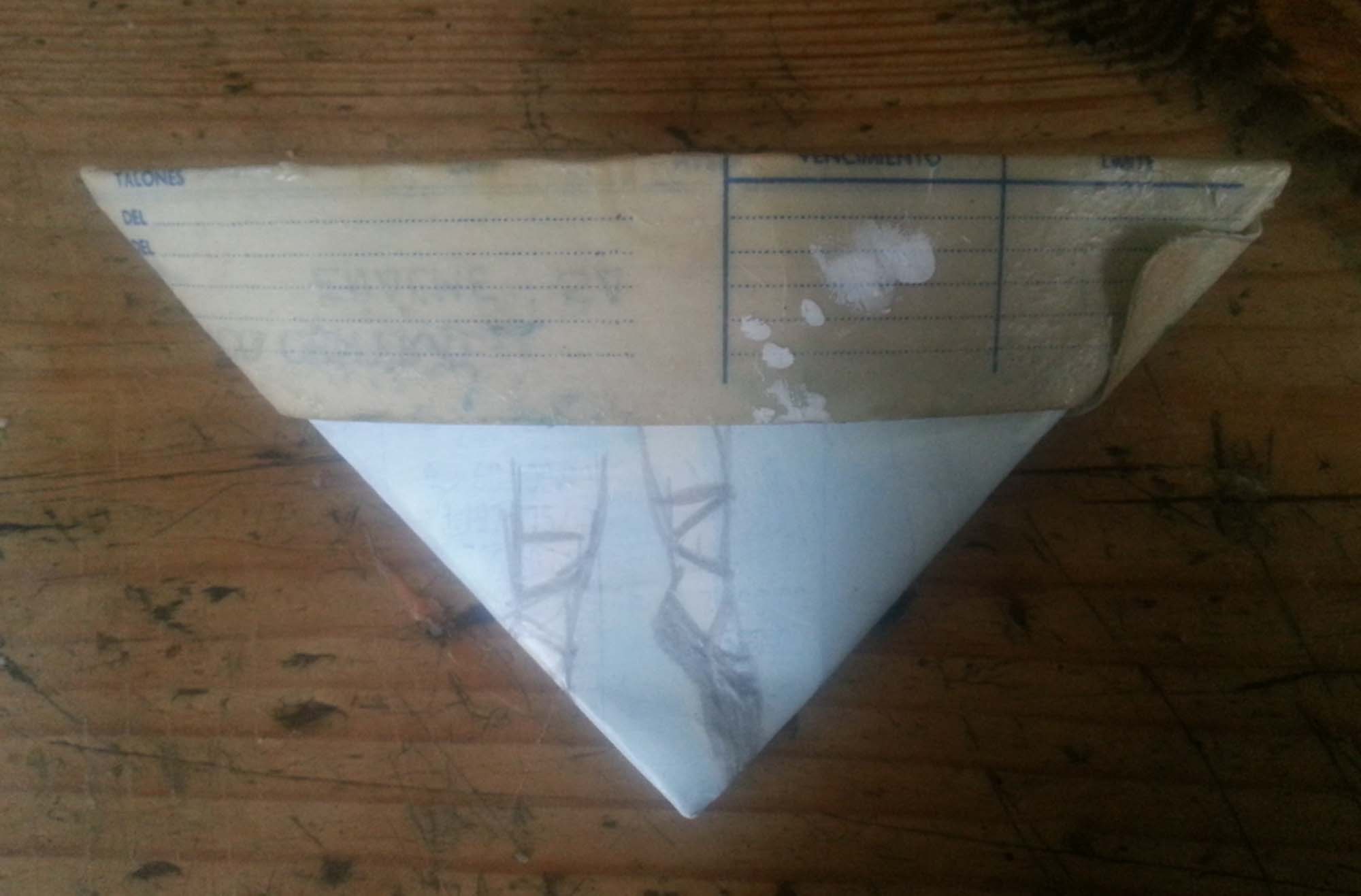
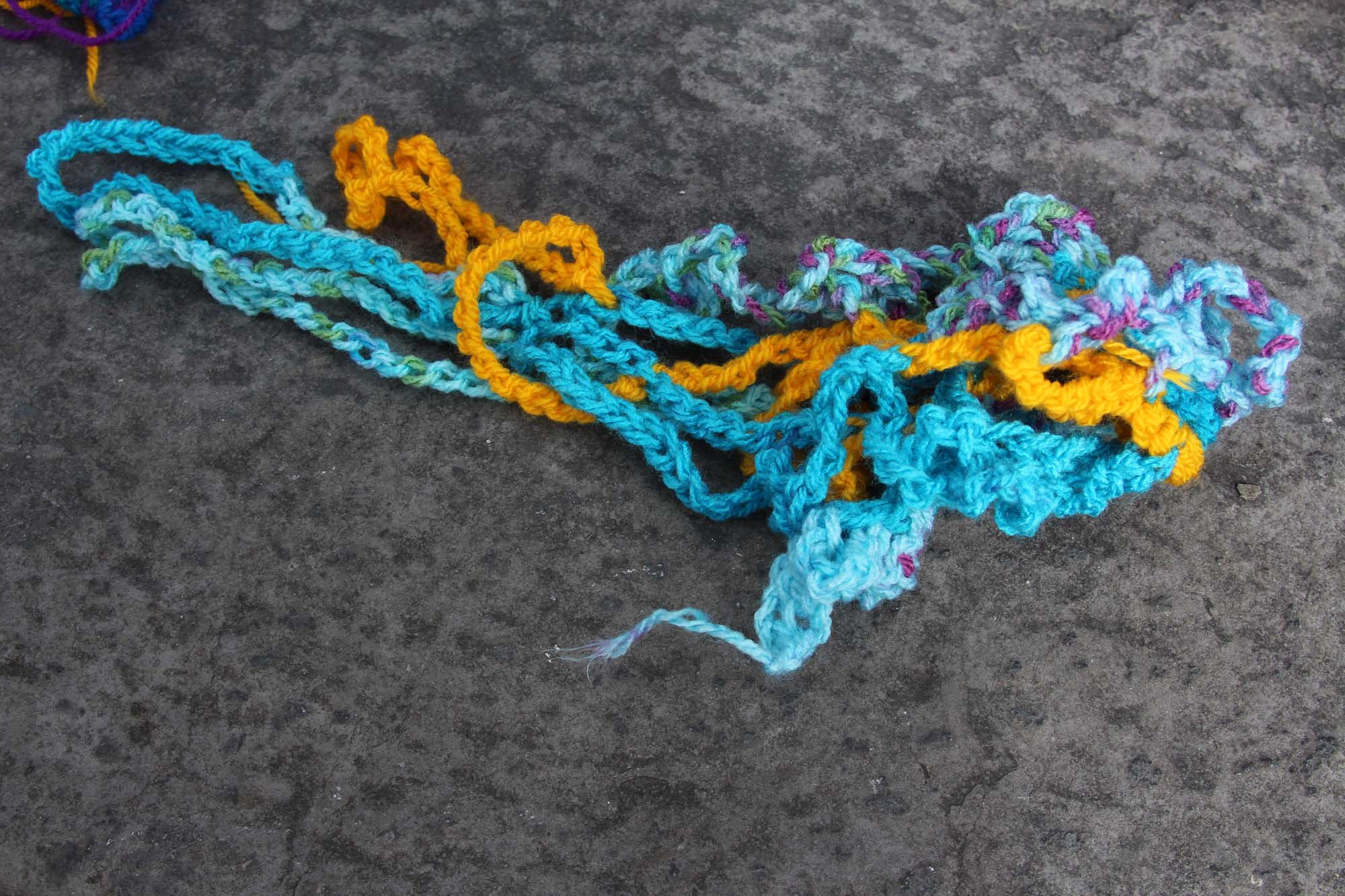
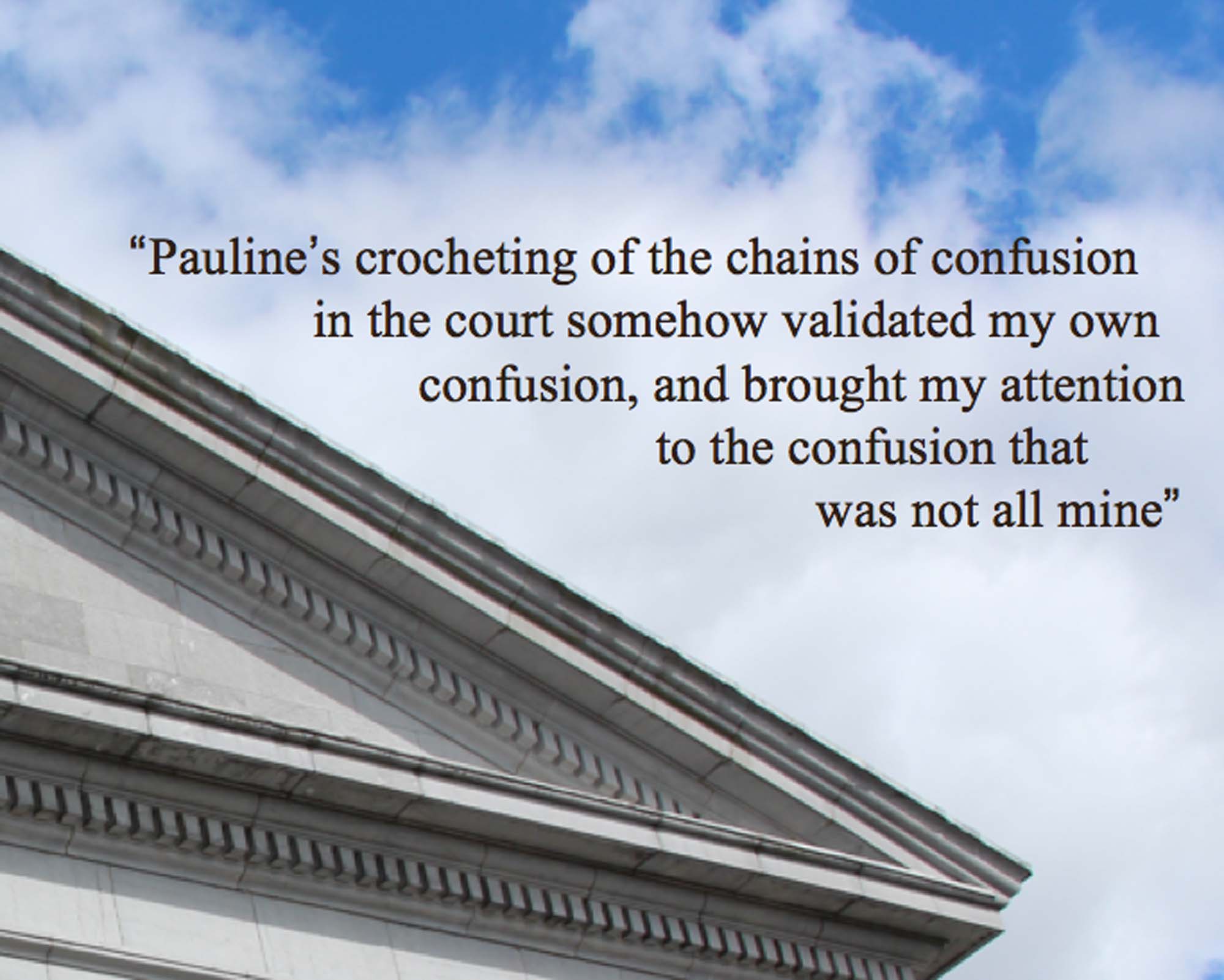
• Marianne offered a funnel made from banknotes and a drawing of a dancer’s feet — connecting economics and movement in counterpoint to the courtroom’s rigidity. - Pauline crocheted the chains of confusion she felt in the courthouse.
Others joined with their own gestures, strengthening the dialogue of threads, presence, and solidarity.
Felt Experiences
Participants reflected on how the intervention shifted the atmosphere:
“The activity contributed something positive in the super-controlled environment and created a space of freedom — a space of possibility.”
“When the three of us were sitting together making, I felt something strong, not confrontational, but a feminine strength in the midst of an extremely patriarchal situation.”
Overlapping rhythms became noticeable, not only of knitting, but of the judge’s ballpoint pen scratching continuously as he spoke or listened. These gestures revealed the textures of power, repetition, and quiet resistance.
Judicial Context
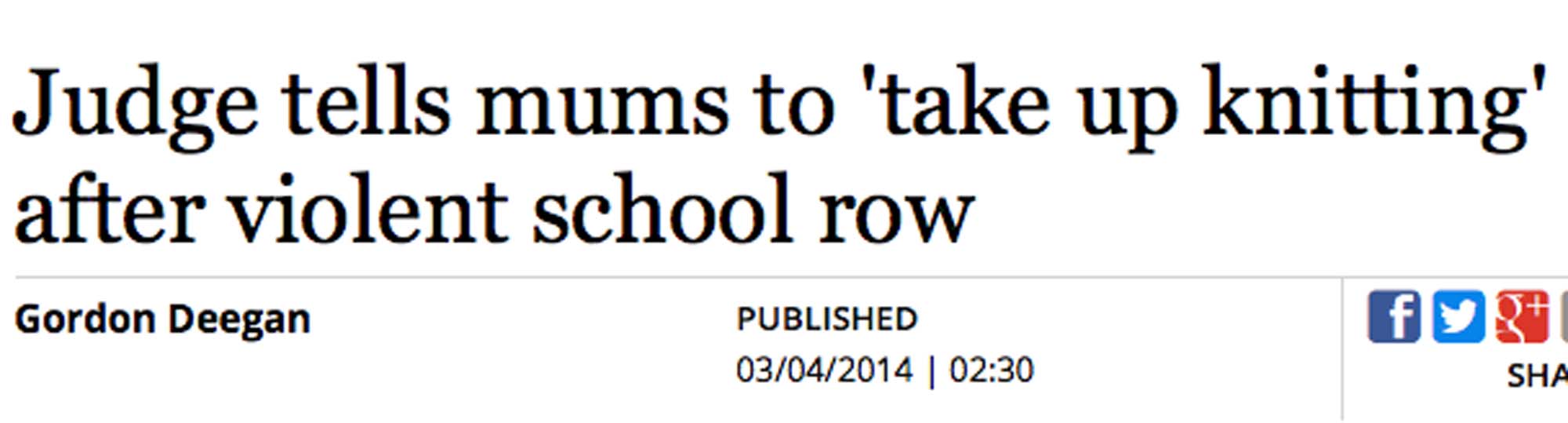
A week prior, the judge had remarked that a woman before him should take up knitting as a deterrent from crime, positioning it as trivial. Empathy + Error reclaimed knitting as a methodology of communication, reflection, and witness, transforming the cold courtroom into a site of warmth, dialogue, and care.
Outcome of Intervention
The case was struck out on the courthouse steps, but Empathy + Error lived on through knitted documents and further public interventions.
Knitting proved the right form: intimate, dialogical, and historically coded as a women’s practice. Its presence counterbalanced the hierarchy of the court, setting softness, strength, and solidarity against the sharpness of law.
The strands of yarn echoed the strands of dialogue, forming not only an object, but a lived document of shared experience within a controlled public space.
Empathy + Error — Extended Project
2015–2017 Court Accompaniment & Textile Sutras
Locations: Ennis District Courts & Laois Domestic Abuse Services
Collins trained and worked as a court accompaniment worker with Clare Haven, practising quiet presence in waiting rooms and courtrooms. Textile became a means of softening procedural and bureaucratic spaces , a tool to pattern experience and connect participants in environments marked by alienation and fear.
“Portlaoise Court had given no thought to a potential waiting room because it had no intercom, imagining sutras to connect people was transformative.” Marna
2016–2017 A Midnight Court Sitting
Locations: Abbeyleix and Stradbally
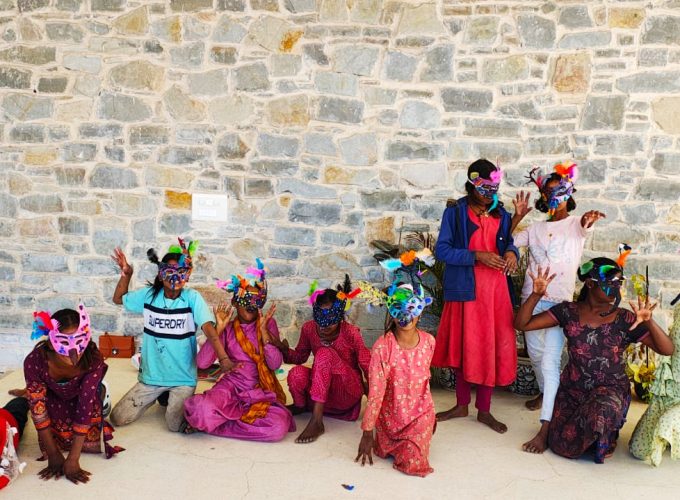
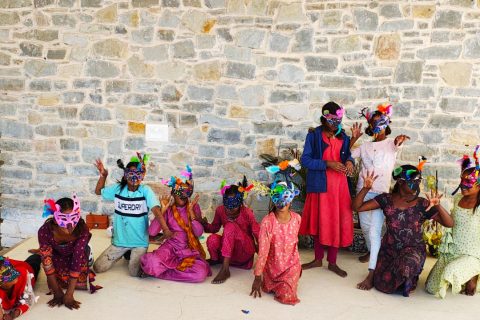
Inspired by Brian Merriman’s Cúirt an Mheán Oíche, these alternative courtroom performances explored dialogue, testimony, and role-play across gendered boundaries. The hard edges of legal procedure met the tactile and carnivalesque — wigs, masks, collective stitching, and play.
- Abbeyleix: A closed sitting held with Laois Domestic Abuse Services, staff, ex-clients, and solicitors as participants.
• Stradbally: Issues raised were brought to a public hearing where participants read each other’s testimonies in call-and-response.
2017 Care + Control: The Kitchen Quilters
Location: Rathdowney, Co. Laois
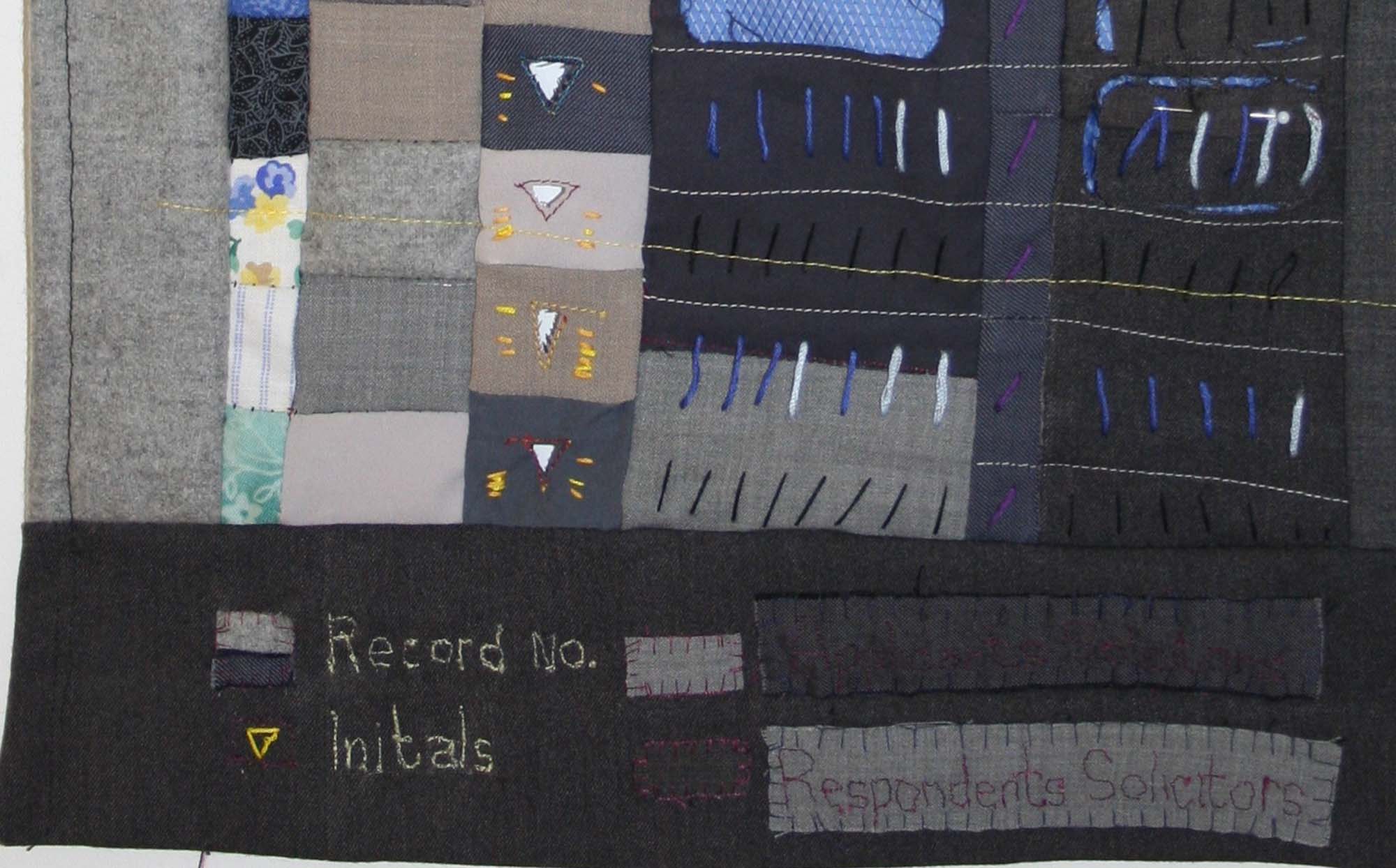
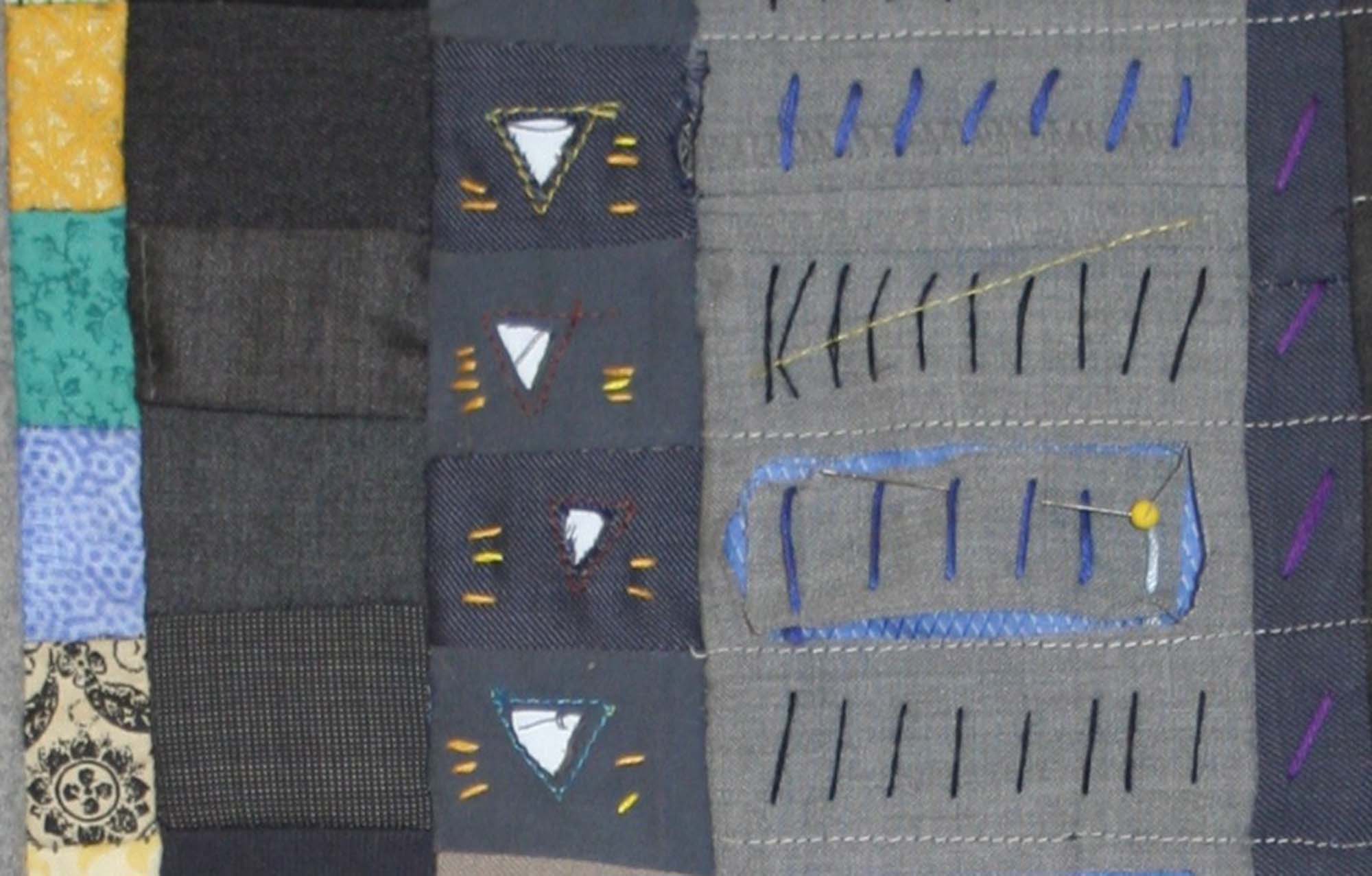
A collaboration with the Kitchen Quilters focused on skill exchange, shared making, and translating social and legal experiences into cloth.
“We had never thought about using stitch work as a way to pattern current social happenings on cloth, this would be a new turn for us.” Kitchen Quilter
Here, small acts of stitching softened and intervened in institutional structures, revealing the relationship between care and control.
6.03.2026 — Collective Wisdom: Workshop
Location: Abbeyleix Library, Co. Laois
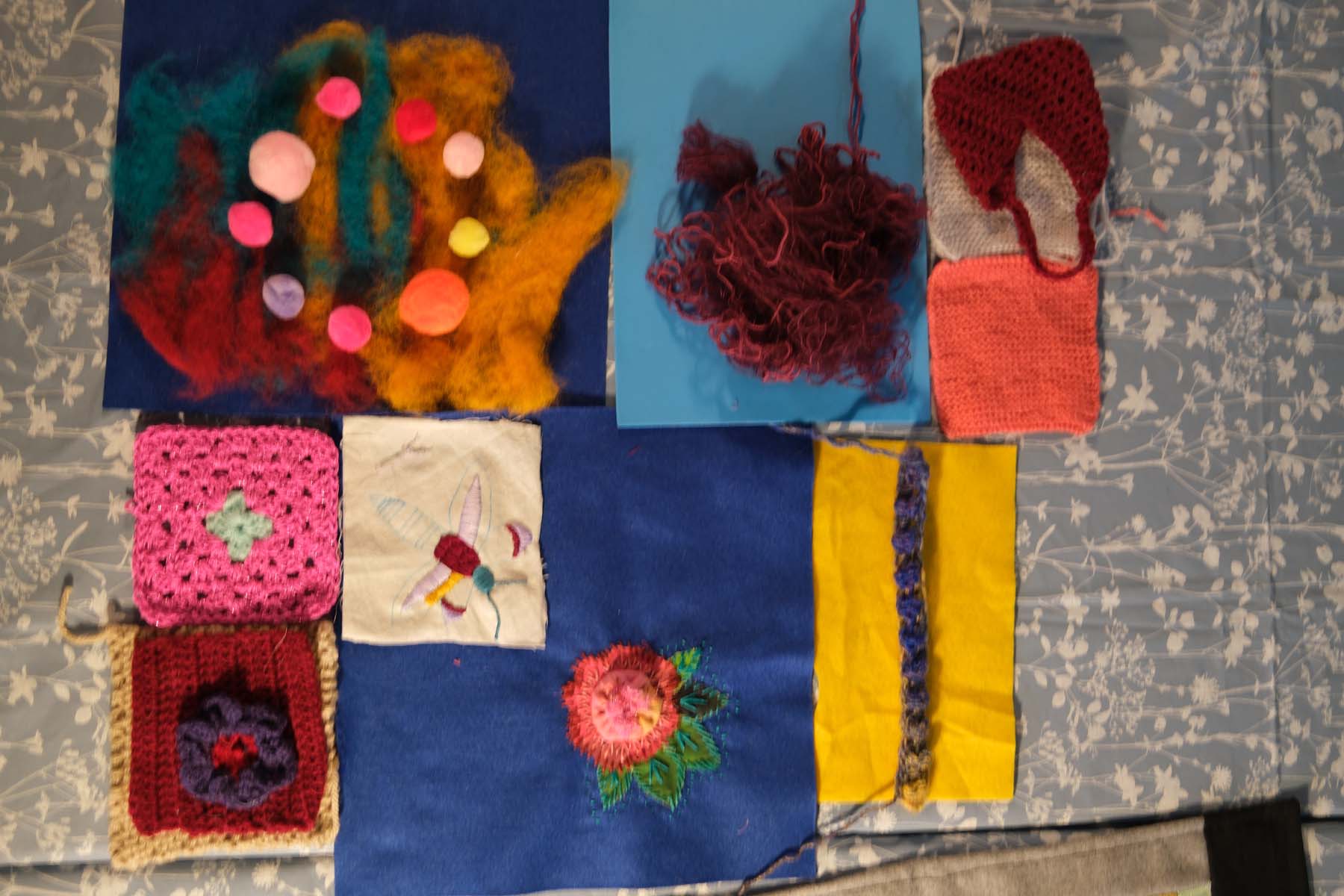
In collaboration with Laois Domestic Abuse Services, women needle workers who live in rural Laois were invited to workshop. A collective piece for the first refuge in Co. Laois was created. Alongside the artwork, the gathering strengthened networks between local needlework groups, industry, and organisations addressing domestic abuse in the region
Materiality of the Project
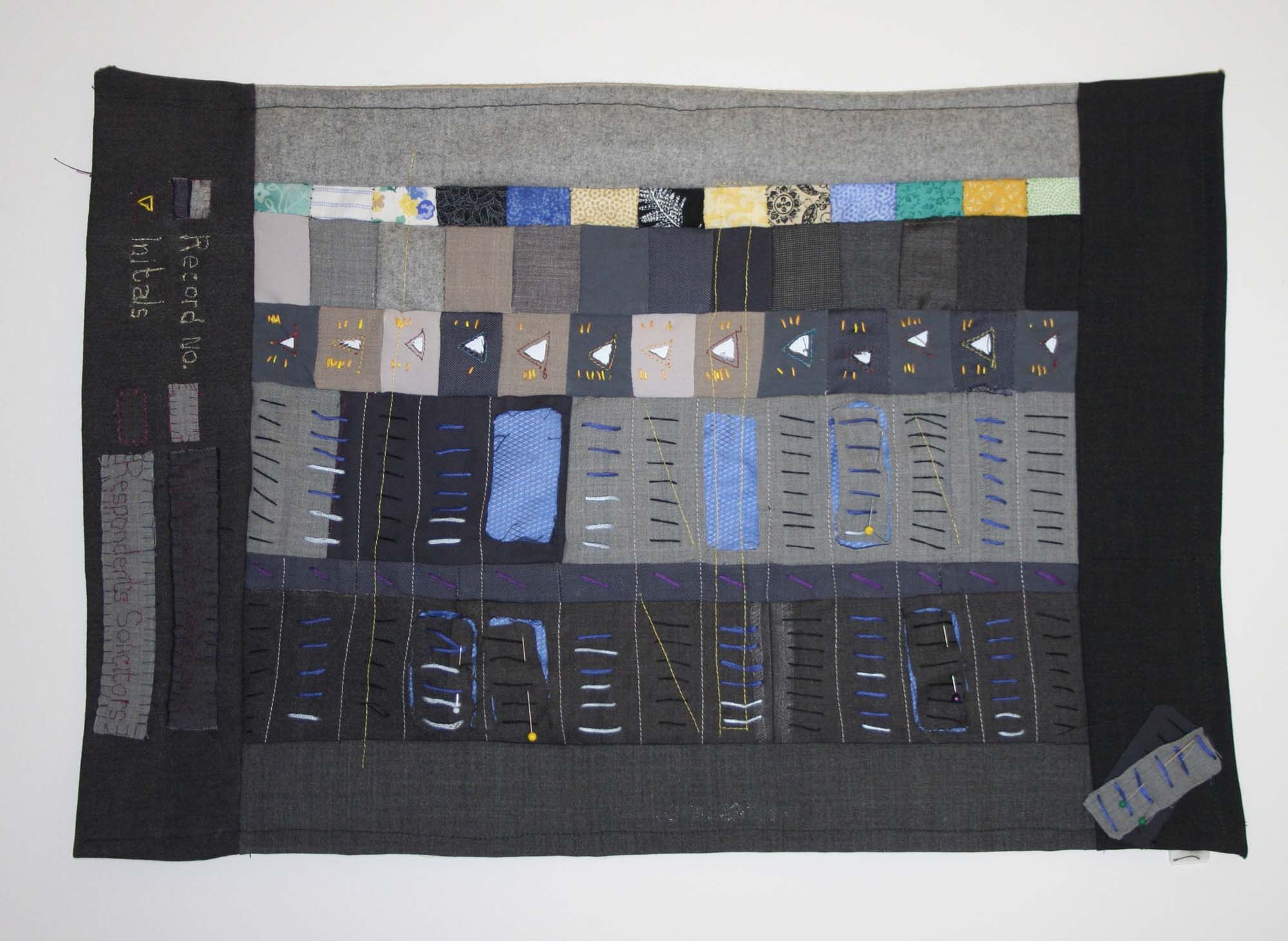
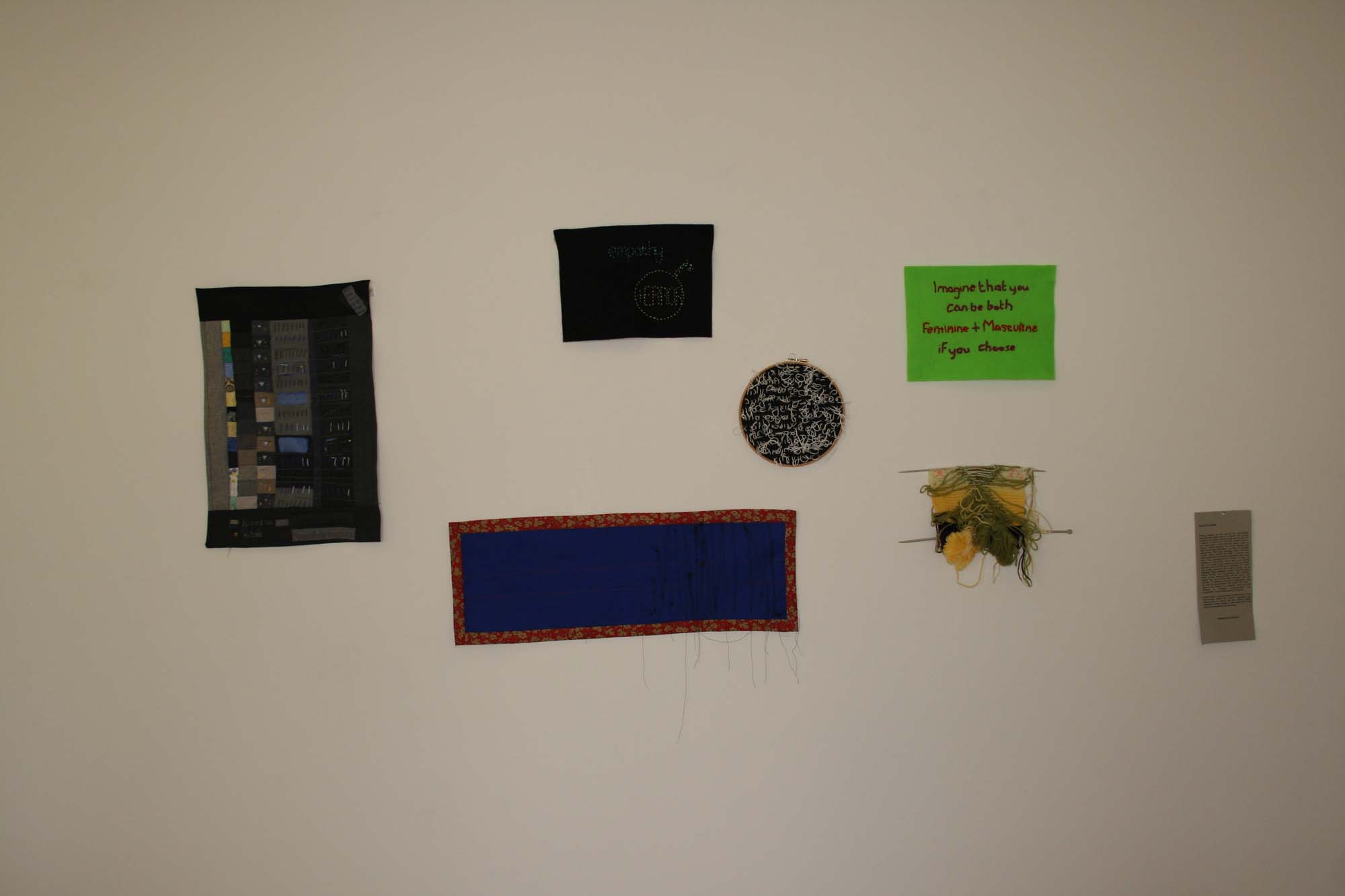
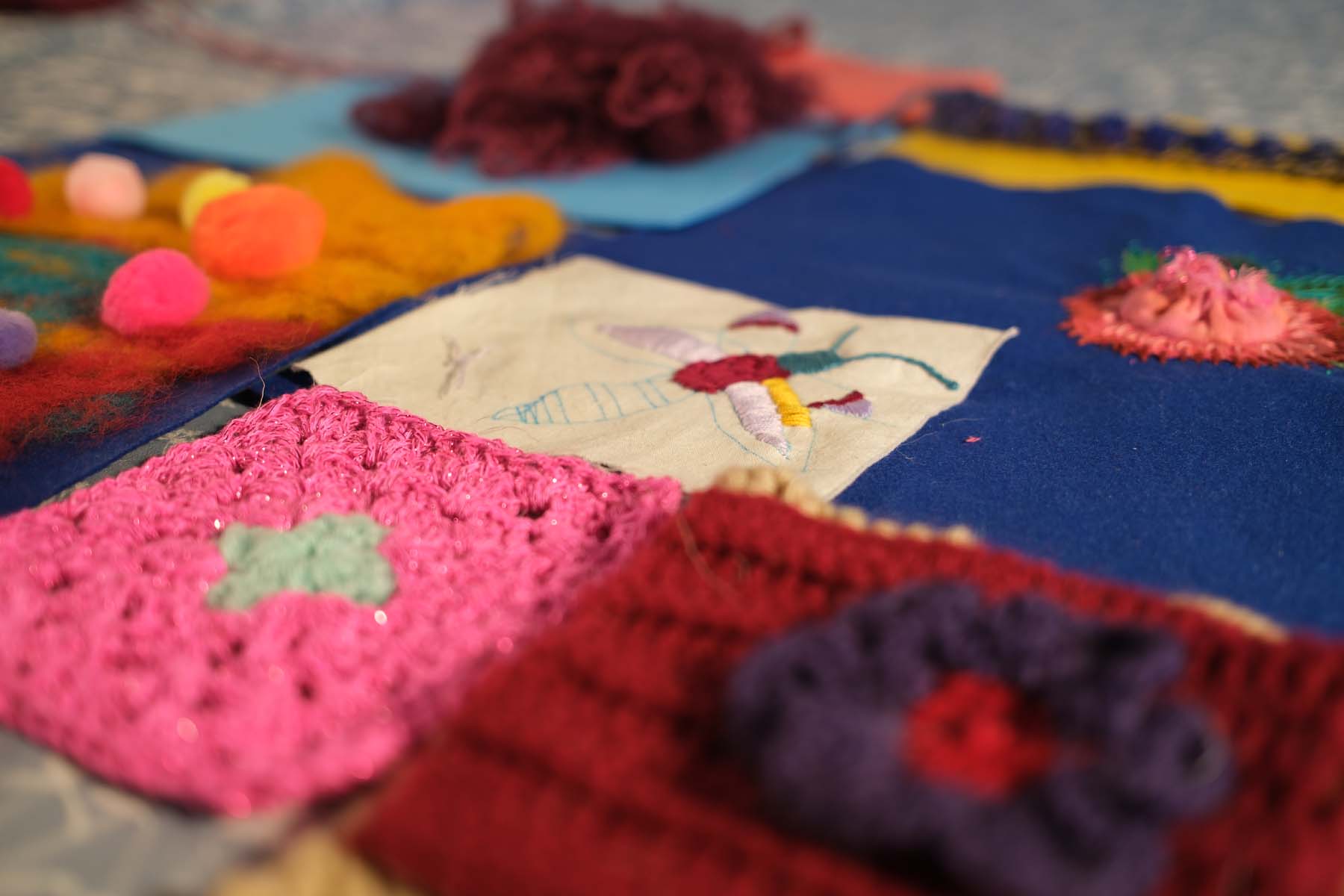
Textiles act as both record and agent. Their warm, tactile qualities counter the impersonal surfaces of courts. Knitted transcripts, stitched phrases, and sutras capture gestures, presences, and dialogue — translating fleeting, intangible experience into tangible, communal form.
Through stitching, participants slow down, reflect, and physically engage with systems of control, turning abstract procedure into textured encounter.
Court Documents and Exhibits
Hand-stitched court documents and artefacts from Empathy + Error have been exhibited in group exhibitions in Ireland, at Post Gallery, Kaunas in Lithuania, and at Enderhousen Gallery in the Netherlands.
Details & Info
Empathy + Error
4.4.2014 – 6.3.2026
Empathy + Error is a socially engaged project exploring how art can intervene in systems of control, particularly the Irish judicial system. Emerging from a court summons received in 2014, the project developed through interventions, collaborations, textile work, and public performance, examining how art can create spaces of empathy, error, and possibility inside and alongside courts of law.
- Category — Projects
- Date March 26, 2026